
Sauces & Condiments
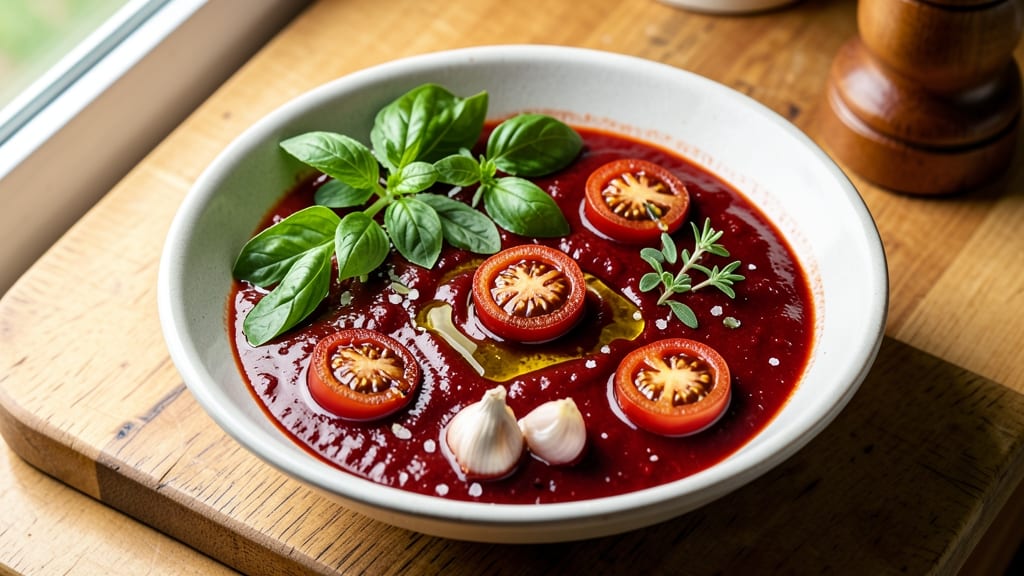
This alkaline tomato sauce recipe transforms ordinary tomatoes into a vibrant, naturally sweetened sauce without hours of simmering. The secret lies in baking soda—just a pinch—working magic to break down acids and intensify flavors while preserving freshness.
I developed this method after years of struggling with overly cooked, bitter tomato sauces that lost their bright, herbaceous qualities.
The process is straightforward but precise: tomatoes, a carefully measured baking soda ratio, and aromatic herbs simmer for just 20-30 minutes, creating a sauce that's rich yet light, with none of the heavy, reduced texture.
The result? A velvety, herb-forward sauce that's perfect for pasta, pizza, or dipping—without the long cook times or concentrated sweetness of traditional recipes.
What sets this sauce apart is its bright, fresh flavor profile—no added sugar needed to balance acidity. The alkaline method preserves the tomatoes' natural sweetness while developing deep, complex notes that build as they simmer.
You'll notice the difference immediately in how it coats pasta or enhances pizza, offering a cleaner, more vibrant taste than store-bought alternatives.
The best part? This sauce keeps beautifully in the refrigerator for up to 5 days, making it ideal for meal prep. Whether you're a home cook looking to elevate weeknight dinners or a sauce enthusiast seeking a fresh approach, this recipe delivers restaurant-quality results with minimal effort.
Let's get started—your taste buds will thank you.
Ingredients for alkaline tomato sauce
Fresh tomatoes, baking soda, and vibrant herbs—this sauce delivers restaurant-quality flavor in minutes.
| Ingredient | Amount | Notes |
|---|---|---|
| Fresh Roma Tomatoes 🍅 | 2 lb | Ripe, firm, and unblemished |
| Baking Soda 🧂 | ¼ tsp | Pure, fine-grained |
| Extra-Virgin Olive Oil 🫒 | ½ cup | High-quality, fruity |
| Fresh Basil Leaves 🌿 | ¾ cup | Packed, stems removed |
| Fresh Oregano Leaves 🌿 | ¼ cup | Packed, stems removed |
| Garlic Cloves 🧄 | 4 cloves | Peeled, roughly chopped |
| Red Onion 🧅 | 1 whole | Medium, diced |
| Sea Salt 🧂 | 1 ½ tsp | Diamond Crystal preferred |
| Black Peppercorns 🌶️ | ½ tsp | Freshly cracked |
| Red Wine Vinegar 🍷 | 1 tbsp | Dry, aged |
The tomatoes are the foundation, so pick ripe but firm Roma tomatoes—they concentrate flavor better than beefsteak varieties. Trader Joe's and local farmers markets usually have the best selection. Avoid any with soft spots or cracks. For the baking soda, use pure, food-grade quality—the kind you'd find in the baking aisle, not the laundry detergent aisle. I always grab mine from Whole Foods because their bulk section guarantees freshness. The herbs? Fresh basil and oregano make all the difference here—they add that bright, herbaceous quality that sets this sauce apart from traditional recipes.
No fresh basil? Dried oregano at half the amount works in a pinch, but fresh is ideal. Running low on red wine vinegar? Balsamic vinegar or apple cider vinegar both work, though the flavor profile shifts slightly. For the garlic, roasted cloves add a subtle sweetness that pairs beautifully with the tomatoes. The red onion can be swapped for shallots if you prefer a milder flavor. And if you're worried about the baking soda taste, don't be—it completely disappears during the simmering process, leaving only the bright, fresh tomato flavor.
This sauce is a meal prep dream—it actually tastes better the next day as the flavors meld. Store it in an airtight container in the fridge for up to 5 days. For longer storage, freeze in ice cube trays and transfer to a bag—perfect for single servings. I always make a double batch because it disappears fast on pasta, pizza, or as a dipping sauce for garlic bread. The sauce thickens slightly when chilled, so a splash of water or olive oil brings it back to the perfect consistency.
Why You'll Love This Recipe
- No-Fuss Freshness: I swear by this sauce because it’s the only one where I don’t have to blanch or peel tomatoes—just halve those Roma beauties, toss them in a pot with a pinch of baking soda, and let the magic happen. The acidity mellows out instantly, leaving you with a silky texture that tastes like summer in a jar.
- Herb Bomb Flavor: Between us, that baking soda isn’t just for science—it’s what unlocks the tomatoes’ sweetness while the fresh basil and oregano add a bright, herbal punch. Drizzle in good olive oil at the end, and suddenly your sauce tastes like it simmered for hours (but it didn’t).
- Weeknight Meal MVP: This sauce is my lazy dinner’s best friend—dump it over pasta, spread it on toast, or stir it into eggs. Honestly, I’ve even used it as a marinade for chicken (yes, really). It’s the kind of versatile sauce that turns a “what’s for dinner?” moment into something special without the fuss.
- Budget Brightener: A handful of Roma tomatoes and a teaspoon of baking soda cost next to nothing, yet they stretch into enough sauce for three meals. I make a big batch on Sundays, and by Wednesday, I’m still eating it—no waste, no guilt. Plus, the leftovers taste even better the next day.
Step-by-step instructions for alkaline tomato sauce
Here's how to transform fresh tomatoes into a vibrant, bright sauce without losing their natural sweetness.
Prepare the Tomatoes and Base Ingredients
Begin by halving the 2 lb fresh Roma tomatoes crosswise and removing the cores. I like to give them a quick rinse under cool water to remove any dirt, then pat them completely dry with paper towels. This ensures a clean start for our sauce. In a large mixing bowl, combine the halved tomatoes with the 1 whole red onion (diced), 4 cloves garlic cloves (roughly chopped), 1.5 tsp sea salt, and 0.5 tsp freshly cracked black peppercorns. The salt will begin drawing out the juices from the tomatoes while the garlic and onion infuse their flavors.
Add the 0.25 tsp baking soda to the bowl and gently stir it in. This might seem unusual, but the baking soda plays a crucial role in balancing the acidity of the tomatoes, preserving their bright color and fresh flavor. Let the mixture sit for 10-15 minutes while you prepare the remaining ingredients. You'll notice the tomatoes start to soften slightly and release their juices—this is exactly what we want.
Blend the Tomato Mixture
Transfer the tomato mixture to a blender or food processor. I prefer using a high-quality blender for this step because it creates a smoother texture. Add the 0.75 cup fresh basil leaves and 0.25 cup fresh oregano leaves (stems removed) to the blender as well. These herbs will add a vibrant, fresh dimension to the sauce that you won't get from dried herbs.
Blend the mixture on high speed until it reaches a smooth, velvety consistency. You should have about 3-4 cups of sauce at this point. If the mixture seems too thick, you can thin it slightly with 1-2 tablespoons of water—just enough to make it pourable. Taste the sauce at this stage; it should be bright, slightly tangy, and full of fresh tomato flavor. If it needs more acidity, add the 1 tbsp red wine vinegar and blend again.
Finish with Olive Oil and Rest
Transfer the blended sauce back to the mixing bowl. Slowly drizzle in the 0.5 cup extra-virgin olive oil while whisking continuously. The olive oil not only adds richness but also helps to balance the acidity and create a silky texture. Whisking ensures the oil is evenly distributed throughout the sauce.
Let the sauce rest at room temperature for 15-20 minutes before serving. This resting period allows the flavors to meld together and the sauce to reach its ideal consistency. I know it's tempting to serve it immediately, but this step makes a noticeable difference in the final result. The sauce will be bright, fresh, and full of herbaceous notes—perfect for drizzling over pasta, bruschetta, or grilled meats.
Adjust Seasoning and Serve
After resting, give the sauce a final taste and adjust the seasoning if needed. You might want to add a pinch more sea salt or a splash more red wine vinegar to balance the flavors. The sauce should be vibrant in color, with a bright acidity that cuts through the richness of the olive oil.
Serve the alkaline tomato sauce immediately over your favorite dishes. It pairs beautifully with fresh pasta, grilled vegetables, or as a topping for wood-fired pizzas. The key to this sauce is its freshness—it’s bright, herb-forward, and completely free from the heavy, cooked-down quality of traditional tomato sauces. Enjoy it while it's at its peak!
Pro Tips For Making Alkaline Tomato Sauce
- BLANCH TOMATOES FIRST: Drop whole Roma tomatoes into boiling water for 30 seconds before peeling—this loosens the skins and mellows their acidity before you even add baking soda. I learned this the hard way after making sauce that tasted aggressively bright no matter how much base I threw in.
- WEIGH YOUR SODA: Use just ¼ teaspoon baking soda per pound of tomatoes—any more and you’ll get that soapy aftertaste (yes, it’s subtle but noticeable). Sprinkle it directly over the simmering sauce, then stir immediately—don’t let it sit or it’ll turn your sauce bitter.
- LOW AND SLOW ONLY: After adding baking soda, reduce heat to a gentle simmer—not a rolling boil. I used to rush this, and the sauce would split or taste flat. Let it bubble softly for 20–25 minutes, stirring occasionally, so the flavors meld instead of fight.
- SALT THE OIL: Toss a pinch of flaky salt into the olive oil before cooking—it enhances the basil and oregano’s brightness and cuts through the tomato’s acidity upfront. (Skip this, and your herbs will fight for dominance later.) Use enough to coat your fingers when you dip them in.
Creative variations of these flavors
Herb-Infused Variations
Swap the basil and oregano for thyme and rosemary to create a Mediterranean-inspired version—perfect for roasted lamb or grilled chicken.
I add 1 tbsp chopped fresh thyme and 1 sprig rosemary (finely chopped) to the blend, then simmer slightly longer (5 extra minutes) to let the piney notes develop.
For a smoky twist, add ½ tsp smoked paprika to the baking soda step—it deepens the flavor without overpowering the tomatoes.
Spicy Kick Options
For heat lovers, blend in 1-2 chopped jalapeños (seeds removed) or ½ tsp red pepper flakes during the blending stage. I also like adding 1 tsp honey to balance the heat while keeping the sauce bright.
For a Cajun-inspired version, swap the red wine vinegar for lemon juice and add ½ tsp Cajun seasoning (like Tony Chachere’s) to the baking soda mixture.
Vegetable Boosts
Add ½ cup diced bell peppers (any color) to the initial tomato mix for natural sweetness. For a creamy texture, blend in ¼ cup ricotta cheese after the olive oil step—it adds richness without heaviness.
I’ve also experimented with roasted garlic (charred in olive oil) instead of raw, which gives a deeper, sweeter flavor profile that pairs beautifully with the tomatoes.
Protein-Packed Twists
Stir in ½ cup cooked lentils or white beans during the resting phase for a hearty, plant-based sauce. For a meaty version, blend in ½ cup cooked ground turkey or Italian sausage (drained of fat) after the initial simmer.
The baking soda method works just as well with these additions, preserving the fresh tomato brightness while adding protein.
Global Flavor Adaptations
Turn this into a Japanese-inspired sauce by adding 1 tsp grated ginger and 1 tbsp soy sauce during the blending stage. For a Mexican twist, swap the red wine vinegar for lime juice and add ½ tsp ground cumin to the baking soda step.
Both versions keep the alkaline method’s brightness while adapting to regional flavors—just adjust the baking soda to ¼ tsp if using extra acidity (like lime).
Nutrition facts
Frequently asked questions
Why does this alkaline tomato sauce taste so bright and fresh?
The baking soda (just ¼ teaspoon) neutralizes the tomatoes' natural acidity, preserving their vibrant color and sweetness. Unlike traditional sauces that simmer for hours, this method keeps the flavors fresh and herbaceous while developing depth. The short simmer time and olive oil finish also prevent bitterness that often comes from overcooking.
Can I use canned tomatoes instead of fresh?
Fresh tomatoes are ideal for this recipe because their natural sweetness and texture shine through. However, if you must use canned, drain them well and reduce the baking soda to ⅛ teaspoon—canned tomatoes are already more acidic. For best results, blend in 1 extra tablespoon of red wine vinegar to mimic fresh tomato brightness. The sauce will still be delicious but slightly less vibrant.
What if the sauce tastes too bitter or soapy?
This usually happens if the baking soda isn't fully dissolved or if too much was added. Start with the exact ¼ teaspoon and let it sit for 10-15 minutes before blending. If it tastes off, balance it with 1 extra tablespoon of red wine vinegar or a pinch of sugar. The baking soda should disappear completely during the process—never leave it to sit too long before cooking.
How can I make this sauce thicker or thinner?
For a thicker sauce, simmer it uncovered for 5-10 extra minutes to reduce the liquid. To thin it, stir in 1-2 tablespoons of water or olive oil while whisking. If the sauce separates after chilling, whisk vigorously or blend briefly to re-emulsify. The ideal consistency should coat the back of a spoon but still be pourable.
Is this alkaline sauce safe for everyone?
Yes, this recipe uses food-grade baking soda in safe amounts (¼ teaspoon per 2 lbs of tomatoes). However, if you're on a low-sodium diet, reduce the sea salt to 1 teaspoon or use a salt substitute. The sauce is also vegan, gluten-free, and free from added sugars—just the natural sweetness of ripe tomatoes. Always check ingredient labels for allergens like olive oil or herbs.