
Sauces & Condiments
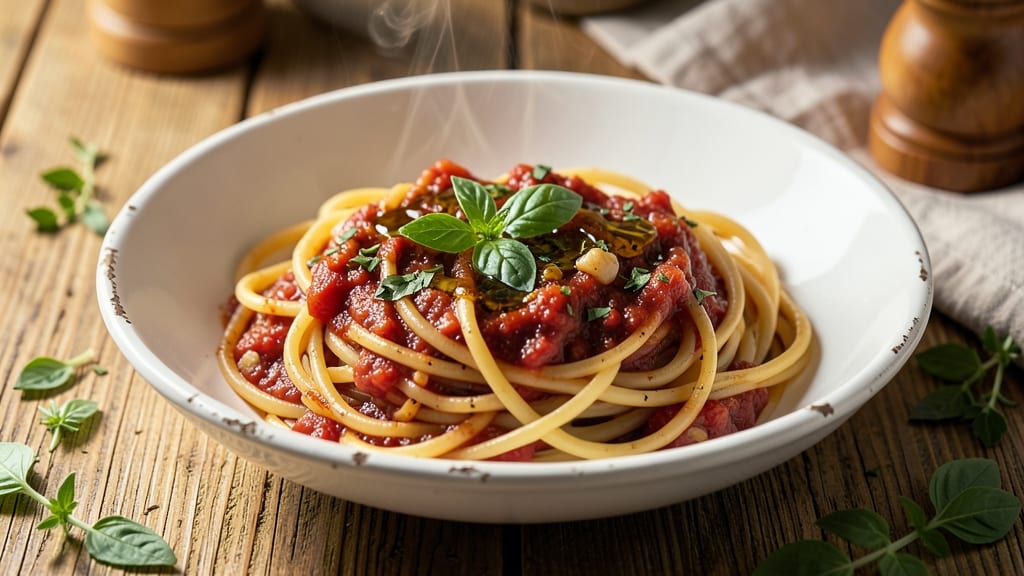
This basic Italian spaghetti sauce recipe delivers the rich, simmered tomato depth that transforms simple pasta into a restaurant-worthy meal. The secret lies in slow cooking—letting garlic, onions, and herbs meld into crushed tomatoes until the flavors develop into a velvety, aromatic sauce with just 30 minutes of active time.
I've perfected this version to be foolproof, with no complicated techniques or hard-to-find ingredients, yet it packs layers of Italian flavor that make every bite satisfying.
What sets this sauce apart is the balance: bright acidity from tomatoes, deep umami from garlic and onions, and fresh herbs that cut through the richness. The sauce thickens naturally as it simmers, creating that perfect consistency—neither too thin nor gluey—that clings beautifully to spaghetti.
I use a combination of canned and fresh tomatoes for complexity, but you can adjust based on what you have on hand. The optional ground beef or pancetta adds heartiness, though this sauce works beautifully vegetarian too.
By the time you're done, you'll have a sauce that's ready to toss with cooked pasta, garnished with fresh basil and a sprinkle of parmesan. The aroma alone will have everyone at the table anticipating that first forkful of al dente noodles coated in this vibrant, flavorful sauce.
This is the kind of simple, reliable recipe that becomes a weeknight staple once you master it.
Use it as a base for future variations—add mushrooms, spinach, or even a splash of red wine—or keep it classic. The beauty of this sauce is its versatility, but the foundation remains the same: slow-cooked tomatoes with aromatic herbs. Let's get started on creating this timeless Italian flavor profile.
Ingredients for basic italian spaghetti sauce
Simple pantry staples that build bold Italian flavor in one pot.
| Ingredient | Amount | Notes |
|---|---|---|
| Extra-Virgin Olive Oil 🫒 | 2 tbsp | High-quality for richness |
| Yellow Onion 🧅 | 1 whole | Medium size, finely chopped |
| Garlic Cloves 🧄 | 4 cloves | Fresh, minced finely |
| Canned Crushed Tomatoes 🍅 | 28 oz | San Marzano if available |
| Fresh Basil Leaves 🌿 | ½ cup | Packed, chopped finely |
| Fresh Oregano Leaves 🍃 | 1 tbsp | Or 1 tsp dried oregano |
| Dried Thyme 🌿 | ½ tsp | Or 1 tsp fresh thyme |
| Salt 🧂 | 1 tsp | Kosher or sea salt |
| Ground Black Pepper 🌶️ | ½ tsp | Freshly ground preferred |
| Granulated Sugar 🍚 | 1 tsp | Balances acidity |
| Red Wine (optional) 🍷 | ½ cup | Dry red for depth |
The tomatoes are non-negotiable—San Marzano if you can find it, but any good-quality canned crushed tomatoes work. I grab mine from Trader Joe's because they're consistent, but the regular store brand is fine too. Look for cans without added salt or preservatives. Fresh basil is ideal, but dried oregano at one-third the amount works in a pinch. The garlic and onions are where the umami magic happens—don't rush the chopping. Freshly minced garlic makes all the difference, and sweating the onions until soft is worth the 5 extra minutes.
No red wine? Substitute with extra tomato paste or beef broth—just add a splash of balsamic vinegar for that winey depth. The sugar might seem odd, but it balances the acidity beautifully—brown sugar works too. Running low on fresh basil? Dried basil at half the amount gets you close, though fresh is better. Want more richness? Stir in a spoonful of tomato paste at the end. The sauce thickens as it simmers, so if it gets too thick, add a splash of water or broth. No thin sauce? Simmer uncovered for 5 more minutes to reduce.
This sauce tastes even better the next day—make a double batch if you can. Store in an airtight container in the fridge for up to 5 days, or freeze for 3 months. I portion mine into ice cube trays for easy single-serving use later. The herbs lose potency over time, so if you're freezing, add fresh basil when reheating. Never reheat in the microwave—stovetop only to preserve texture. Garnish with extra basil and a sprinkle of parmesan right before serving.
Why You'll Love This Recipe
- No-Fuss Pantry Staples: I swear by this sauce because it only needs five things—no fancy shopping lists or last-minute grocery runs. That crushed tomato can? Always in my cupboard. The onions and garlic? I buy them in bulk. Honestly, if I’m not feeling it, I just grab what’s there and go.
- Garlic-Basil Magic: The moment I toss in those raw garlic cloves and let them sizzle in the olive oil, my kitchen smells like a Roman trattoria. Then the basil—fresh, torn right over the pot—adds that bright, herby finish that makes it taste like a restaurant dish, not a weeknight hack.
- Double-Duty Sauce: This isn’t just for spaghetti. I use it on meatballs, toss it with roasted chicken, or even slather it on garlic bread. (Yes, even on a Tuesday night.) It’s my go-to for quick lunches or when I’m feeding a crowd—just scale up the batch and call it a day.
- Leftovers That Don’t Suck: Between us, most sauces turn into sad, watery sludge after a few days. Not this one. The tomatoes hold up, the flavors deepen, and I’ve reheated this sauce for breakfast eggs or as a quick pasta fix for weeks. Budget-friendly? Absolutely. Reliable? Even more so.
Step-by-step instructions for Italian spaghetti sauce
Here's how to build a rich, balanced tomato sauce that's ready in 30 minutes.
🍳 Step 1: Sauté Onion and Garlic Until Translucent
Heat the 2 tablespoons extra-virgin olive oil in a large saucepan over medium heat. Add the whole yellow onion, chopped into small pieces, and cook for 5-6 minutes until it becomes soft and translucent. You'll see the edges start to turn golden—that's your signal it's ready for the next step.
Push the onions to the side of the pan and add the 4 minced garlic cloves. Cook for 30 seconds until fragrant—don't let it brown, or it'll turn bitter. This aromatic base forms the flavor foundation of your sauce, so take your time here. If you're using the ½ cup red wine, pour it in now and let it simmer for 2-3 minutes until mostly evaporated.
🍳 Step 2: Add Tomatoes and Seasonings
Pour in the 28 ounces canned crushed tomatoes and stir well to combine with the onions and garlic. Add the ½ teaspoon dried thyme, 1 teaspoon salt, ½ teaspoon ground black pepper, and 1 teaspoon granulated sugar. The sugar helps balance the acidity of the tomatoes, so don't skip it—it's key for that authentic Italian flavor.
Bring the mixture to a gentle boil, then reduce the heat to low and let it simmer uncovered. You want to see small bubbles forming occasionally, but not a vigorous boil. This simmering process develops the sauce's depth of flavor. Stir occasionally to prevent sticking, and let it cook for 15 minutes.
🍳 Step 3: Finish with Fresh Herbs
After 15 minutes, stir in the ½ cup chopped fresh basil leaves and 1 tablespoon chopped fresh oregano leaves. These herbs add a bright, fresh finish that cuts through the richness of the tomatoes. Taste the sauce and adjust the seasoning if needed—you might need a bit more salt or pepper depending on your tomatoes.
Let the sauce simmer for another 5 minutes to allow the flavors to meld together. The sauce should be thick enough to coat the back of a spoon but still have a smooth, saucy consistency. If it's too thick, add 1-2 tablespoons of water to loosen it. This final simmer is where all the flavors come together into a cohesive, delicious sauce.
⏰ Step 4: Rest and Serve
Remove the sauce from heat and let it rest for 5 minutes. This resting period allows the flavors to settle and the sauce to thicken slightly. Taste again and adjust seasoning if necessary—sometimes the sauce tastes better after it's had a chance to rest.
Serve the sauce immediately over cooked spaghetti, tossing it gently to coat each strand. The sauce should cling beautifully to the pasta, creating a rich, flavorful dish. If you're not serving it right away, you can store the sauce in an airtight container in the refrigerator for up to 3 days or freeze it for up to 3 months. The flavors will only deepen over time!
Pro Tips For Making Basic Italian Spaghetti Sauce
- SWEAT THE ONION FIRST: Skip the chopping board—cut the onion into even ¼-inch slices instead of mincing. They’ll soften faster on medium heat, caramelizing just enough to add depth without burning. I learned this the hard way after turning my kitchen into a smoke-filled warzone with finely diced onions.
- LOW AND SLOW TOMATOES: After adding crushed tomatoes, drop the heat to a bare simmer. Let it bubble gently for at least 20 minutes—no peeking, no stirring constantly. This breaks down the tomatoes into a rich, velvety sauce instead of a watery mess. (Yes, even if you’re impatient like me.)
- SALT THE TOMATOES: Toss the crushed tomatoes with a teaspoon of salt before adding them to the pot. This draws out excess water and seasons the sauce from the start. I was skeptical until I tried it—now it’s non-negotiable for a properly balanced sauce.
- STIR IN BASIL LATE: Add fresh basil in the last 5 minutes of cooking, then remove from heat immediately. Basil wilts fast and loses its bright flavor when overcooked. Tear the leaves by hand instead of chopping—they’ll release aroma better. (Does it look weird? Yes. Does it work? Every single time.)
Perfect pairings for this dish
Classic Pasta Pairings
This sauce is a marriage made in heaven with spaghetti—its long strands catch the sauce beautifully, creating that iconic "spaghetti and meatballs" experience. I use De Cecco #5 spaghetti because it's the perfect thickness to hold onto the sauce without becoming mushy.
For a lighter option, try linguine or fettuccine, which both work wonderfully too. 🍝
If you want to switch things up, bucatini or rigatoni add fun texture contrasts—the hollow tubes of bucatini hold extra sauce, while the ridges of rigatoni create delightful pockets of flavor.
Just ensure your pasta is al dente (firm to the bite) so it doesn't turn to mush when tossed with the sauce.
Protein Additions
For a meat lover's twist, brown ½ lb ground beef or ½ lb Italian sausage with the onions and garlic in Step 1. Drain excess fat after cooking to keep the sauce rich but not greasy.
I love using sweet Italian sausage for its subtle sweetness that complements the tomatoes. 🥓
Vegetarians can add sautéed mushrooms or white beans for heartiness—simmer 1 cup sliced mushrooms with the onions or stir in 1 can (15 oz) cannellini beans at the end. Both options add satisfying texture while keeping the dish plant-based. The beans also help thicken the sauce naturally.
Bread & Cheese Sides
A crusty Italian bread like ciabatta or focaccia is perfect for soaking up extra sauce. I toast slices lightly and serve them on the side for a satisfying crunch. For a cheesy touch, sprinkle grated parmesan or pecorino romano directly on the sauce before serving—both add nutty depth. 🧀
For a garlicky kick, serve with garlic knots or cheesy breadsticks. The buttery, herby flavors complement the tomato sauce beautifully.
If you're feeling fancy, add a simple arugula salad with lemon vinaigrette to cut through the richness—just toss 2 cups baby arugula with 1 tbsp olive oil and 1 tsp lemon juice.
Wine & Beverage Pairings
A dry Italian red wine like Chianti or Sangiovese is the classic pairing—its bright acidity and earthy notes mirror the sauce's flavors. I love a glass of Montepulciano d'Abruzzo for its approachable price and bold taste. For white wine lovers, a crisp Vermentino or Pinot Grigio works surprisingly well. 🍷
If you prefer beer, go for a light Italian lager like Peroni or Moretti—their crisp, clean profiles won't overpower the sauce. For a non-alcoholic option, sparkling water with lemon or Italian sangria (made with white wine, citrus, and herbs) are refreshing choices.
The effervescence helps cleanse your palate between bites.
Nutrition facts
Frequently asked questions
Why does the recipe call for sugar in tomato sauce?
Sugar balances the natural acidity of tomatoes, creating a more rounded flavor. The 1 teaspoon enhances sweetness without overpowering—think of it like the pinch of salt in chocolate. It also helps develop deeper caramelized flavors during simmering, which is key for that authentic Italian taste.
Can I make this sauce without fresh herbs?
Use 1 teaspoon dried basil and ½ teaspoon dried oregano instead of fresh. For best results, add the dried herbs with the tomatoes, then stir in extra fresh basil at the end if you have any. The dried versions work well but won't have the same bright aroma as fresh.
How do I fix a sauce that's too thick or too thin?
For thick sauce, add 1-2 tablespoons water or broth and simmer for 5 minutes. If too thin, simmer uncovered for 5-10 minutes to reduce. The sauce should coat the back of a spoon but still flow smoothly—this is the perfect consistency for clinging to pasta.
What's the best way to store leftovers?
Transfer to an airtight container and refrigerate for up to 5 days. For longer storage, freeze in portions—it reheats beautifully! To preserve texture, always reheat on the stovetop over medium-low heat, stirring occasionally. Add a splash of water if needed.
Can I make this sauce in a slow cooker?
Yes! Combine all ingredients (except fresh herbs) in your slow cooker and cook on low for 4-5 hours. Stir in fresh herbs at the end. The low-and-slow method deepens flavors even more—just check occasionally to prevent sticking. This works especially well for meal prep!