
Sauces & Condiments
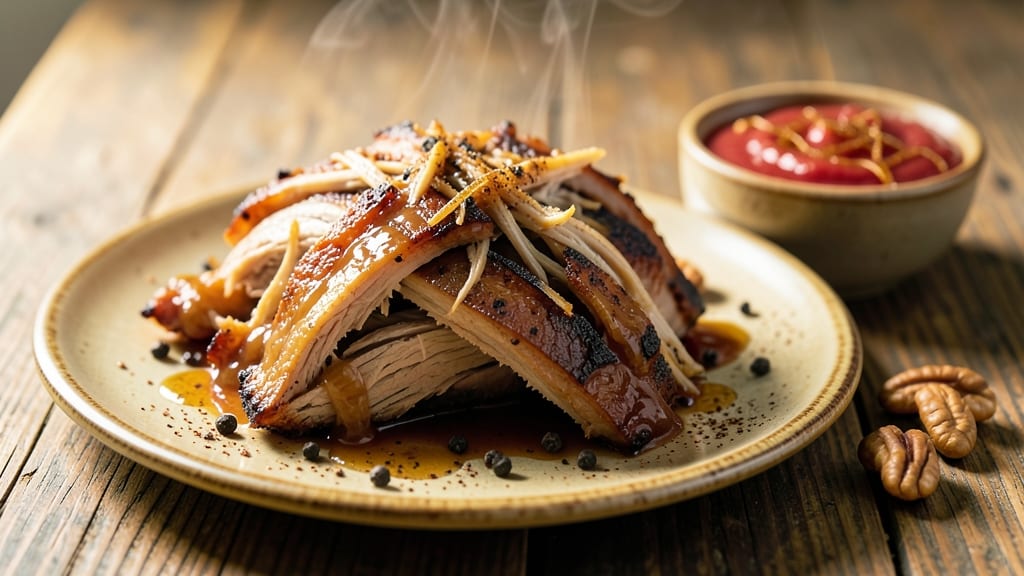
This applesauce pulled pork recipe transforms a simple pork shoulder into melt-in-your-mouth perfection with a sweet-tangy glaze that balances smoky depth. After years of perfecting slow-cooked pork at The Smoky Pig, I developed this method that delivers restaurant-quality results in your own kitchen.
The secret lies in the applesauce—it tenderizes the meat while adding a subtle sweetness that complements the rich, caramelized bark.
What sets this recipe apart is the foolproof technique that ensures tender, juicy pork every time. We start with a dry rub of brown sugar, paprika, and spices that create a flavorful crust, then slow-cook the pork until it falls apart at the touch.
The applesauce comes into play at the end, where it simmers into a glossy glaze that coats each shred with sweet, tangy perfection. This isn't just pulled pork—it's a dish that brings the comfort of a Southern Sunday to your table.
By the time you serve it, you'll have perfectly tender pork that shreds effortlessly, bathed in a glossy applesauce glaze that ties all the flavors together. The result is a dish that's rich, smoky, and just sweet enough to satisfy even the most discerning BBQ lovers.
Serve it on soft buns with a side of crisp coleslaw or buttery cornbread for the full experience.
This recipe is designed to be versatile and impressive—ideal for game day gatherings, family dinners, or even a special weekend meal. The slow-cooking process means you can prepare it ahead and let the flavors deepen over time, making it perfect for busy schedules.
Whether you're a seasoned pitmaster or a home cook looking to elevate your BBQ game, this applesauce pulled pork delivers on flavor and simplicity.
Ingredients for applesauce pulled pork
Six ingredients make the magic happen—juicy pork, sweet applesauce, and smoky spices that transform a simple shoulder into restaurant-worthy pulled pork.
| Ingredient | Amount | Notes |
|---|---|---|
| Pork Shoulder (Bone-In) 🐖 | 5 lb | Well-marbled for juiciness |
| Unsweetened Applesauce 🍎 | 1 ½ cups | Smooth, unsweetened preferred |
| Brown Sugar 🍚 | ½ cup | Packed for accurate measure |
| Smoked Paprika 🌶️ | 2 tbsp | For authentic smoky flavor |
| Ground Black Pepper 🌶️ | 1 tbsp | Freshly cracked for best taste |
| Garlic Powder 🧄 | 1 tbsp | Freshly ground preferred |
| Onion Powder 🧅 | 1 tbsp | For depth of flavor |
| Dried Thyme 🌿 | 1 tsp | Or 1 tbsp fresh thyme |
| Salt 🧂 | 1 ½ tbsp | Kosher or sea salt |
| Apple Cider Vinegar 🍎 | ¼ cup | For tangy brightness |
| Yellow Onion 🧅 | 1 whole | Diced for glaze base |
| Olive Oil 🫒 | 2 tbsp | For searing pork |
| Fresh Cilantro 🌿 | ¼ cup | Chopped, for garnish |
| Honey 🍯 | 1 tbsp | Optional for extra sweetness |
The pork shoulder is the star here, and you want the bone-in, well-marbled kind—it stays juicier during the long cook. Costco or local butchers usually have the best cuts, often pre-cut for convenience. Look for thick slabs with visible fat marbling; that's what keeps the meat tender. If you're buying a whole shoulder, trim off any excess fat but leave the cap on—it renders down into flavorful drippings. I always grab mine a day ahead and let it sit uncovered in the fridge to dry-brine slightly, which helps the rub stick better.
No smoked paprika? Regular paprika plus a pinch of liquid smoke gets you close, though it won't be quite the same. The applesauce is non-negotiable—unsweetened, smooth variety works best (none of that chunky stuff). Short on vinegar? Lemon juice at half the amount adds brightness. The brown sugar can be swapped for white sugar plus a dash of molasses if you're out, but the caramelization won't be as rich. Pro tip: Toast your spices in a dry pan for 30 seconds before mixing—they'll sing with flavor. And if you're feeling fancy, a splash of bourbon in the glaze adds depth (trust me, it's worth it).
This pork tastes even better the next day, so make a double batch if you're feeding a crowd. Store leftovers in the fridge for 4-5 days, or freeze for up to 3 months—it reheats like a dream. For serving, keep the pork warm in a slow cooker on low, and reheat the glaze separately if it thickens. The applesauce glaze thickens as it cools, so thin it with a splash of water or broth if needed. Garnish with fresh cilantro right before serving—it adds a bright pop of color and freshness that cuts through the richness.
Why You'll Love This Recipe
- Set-It-and-Forgot: (Yes, really)
- Set-It-and-Forgot (Yes, really): I swear, the applesauce does half the work—it keeps the pork moist while you slow-cook, so you’re not glued to the stove. Just layer the shoulder with brown sugar and paprika, add a cup of applesauce, and let the smoker or Instant Pot handle the rest. My lazy Sundays now include a nap.
- Sweet-Savory Magic: That combo of unsweetened applesauce and brown sugar? It’s like someone took caramelized pork and gave it a cozy hug. The smoky paprika adds depth, while the applesauce keeps it tender enough to shred with a fork—no dry bites, just pure pull-apart joy.
- Leftovers That Shine: This recipe actually improves the next day. Shred it for tacos, stuff it in buns, or toss it into a hash with potatoes. I’ve even used it as a pizza topping—don’t judge. The flavors meld even better after resting, and it’s still a crowd-pleaser when reheated.
Step-by-step instructions for applesauce pulled pork
Here's how to transform a simple pork shoulder into tender, smoky pulled pork with that perfect sweet-tangy applesauce glaze.
Prep and Season the Pork Shoulder
Start by removing the pork shoulder from the refrigerator and patting it completely dry with paper towels. This step is crucial—moisture is the enemy of crispy bark later. Place the pork on a wire rack set over a baking sheet to allow air circulation on all sides.
In a small bowl, combine the 2 tablespoons smoked paprika, 1 tablespoon garlic powder, 1 tablespoon onion powder, 1 teaspoon dried thyme, 1.5 tablespoons salt, and 1 tablespoon ground black pepper. Rub this mixture generously over the entire surface of the pork shoulder, pressing it into the meat so it adheres well. Don't forget to season the fat cap too—this will render beautifully during cooking and add flavor.
Sear the Pork for Maximum Flavor
Heat a large Dutch oven or heavy pot over medium-high heat until hot. Add the 2 tablespoons olive oil and swirl to coat the bottom. Carefully place the pork shoulder fat-side down in the pot and let it sear undisturbed for 8-10 minutes. You want the fat to render and the skin to develop a deep golden-brown crust.
Once the fat side is nicely browned, flip the pork and sear the meat side for another 5-6 minutes. This step creates that wonderful Maillard reaction that builds deep, complex flavors. After searing, remove the pork and set it aside on a plate.
Build the Sweet-Smoky Sauce Base
In the same Dutch oven, add the 1 whole yellow onion that you've diced (about 1 cup). Cook the onions over medium heat for 5-6 minutes until they begin to soften and turn translucent. This step develops their natural sweetness and forms the foundation of your sauce.
Pour in the 0.25 cup apple cider vinegar and scrape up any browned bits from the bottom of the pot with a wooden spoon. This deglazing step captures all the flavor that's stuck to the pan. Add the 0.5 cup packed brown sugar and stir until it dissolves completely. The mixture should smell rich and caramel-like at this point.
Slow Cook Until Fork-Tender
Return the pork shoulder to the Dutch oven, fat-side up. Pour in the 1.5 cups unsweetened applesauce and add 1 tablespoon honey if using. The applesauce will help keep the meat moist during the long cook, while the honey adds just a touch of extra sweetness.
Bring the liquid to a gentle simmer over low heat, then cover the pot and transfer it to a 275°F (135°C) oven. Cook for 4-5 hours, turning the pork occasionally to ensure even cooking and sauce distribution. The pork is done when it easily pulls apart with two forks and reaches an internal temperature of 195-203°F (90-95°C).
Shred and Finish with Fresh Cilantro
Once the pork is fork-tender, remove it from the pot and let it rest for 10 minutes before shredding. Use two forks to pull the meat apart against the grain. Discard any large fat chunks or connective tissue. Return the shredded pork to the pot with the sauce and stir gently to combine.
Remove the pot from heat and stir in the 0.25 cup chopped fresh cilantro. This adds a bright, fresh contrast to the rich, smoky pork. Taste and adjust seasoning if needed—you might want to add a pinch more salt or a splash of apple cider vinegar for brightness. Serve immediately on buns with coleslaw or mashed potatoes for a complete meal.
Pro Tips For Making Applesauce Pulled Pork
- USE A THICK CUT: Bone-in pork shoulder with a 1.5-inch fat cap stays juicier—skip the leaner cuts unless you’re craving dry, stringy results. (I learned this after a sad first attempt with a thin-cut roast that turned out like shoe leather.)
- SWEAT THE SPICES FIRST: Toast the smoked paprika and black pepper in a dry pan for 30 seconds before adding the pork—this deepens the flavor without burning. (Yes, it’s an extra step, but your sauce will taste like it came from a pitmaster, not a sad weeknight.)
- DON’T DROWN IT: When adding applesauce and brown sugar, keep the liquid just enough to coat the pork—not pool around it. Too much turns your pulled pork into a gloppy mess. (I once made a batch that looked like a dessert, not dinner.)
- REST BEFORE PULLING: Let the pork rest for 20 minutes under foil after pulling it from the heat—this lets the juices redistribute so you’re not left with a dry, sad pile of meat. (I know, you’re eager, but resist the urge to dive in immediately.)
Wine and beer pairings for applesauce pulled pork
Red Wine Pairings
For this sweet-savory masterpiece, I reach for a dry Riesling from Germany's Mosel region—its crisp acidity and subtle honeyed notes mirror the applesauce glaze beautifully. The wine's mineral finish cuts through the pork's richness while complementing the smoky paprika.
If you prefer red, a Pinot Noir from Oregon delivers enough fruit to stand up to the sweetness without overpowering the dish. 🍷
Beer Complements
A Belgian witbier like Hoegaarden is my go-to beer pairing—its citrusy coriander and spicy pepper notes create a refreshing contrast to the pork's sweetness. For a local Southern option, try a crisp American lager with just a touch of malt sweetness, like Budweiser or Coors Light.
The carbonation helps cleanse your palate between each bite of tender pork. 🍺
Cider Synergy
Don't overlook hard cider as a pairing—especially when your recipe features apple cider vinegar. A dry, unfiltered cider with tannic structure (like Angry Orchard Dry) enhances the dish's complexity.
For a non-alcoholic option, serve a chilled sparkling apple cider—the bubbles and tartness provide the perfect refreshing counterpoint to the rich pulled pork. 🍎
Unexpected Spirits
If you're feeling adventurous, serve this pork with a bourbon cocktail—specifically a Manhattan made with sweet vermouth and a dash of bitters. The whiskey's caramel notes harmonize with the applesauce, while the bitters add depth.
For a lighter option, a gin sour with fresh lime balances the dish's sweetness beautifully. 🥃
Regional Pairing Tips
In the Southeast, where this recipe shines, I often pair it with a local craft beer from Atlanta's SweetWater Brewing—try their 420 Blonde Ale for a crisp, citrusy complement.
For a more traditional approach, a dry Riesling from North Carolina's Shealy Vineyards works perfectly with the dish's Southern roots. 🗺️
Nutrition facts
Frequently asked questions
Can I use regular applesauce instead of unsweetened?
While you can use regular applesauce, it will make your glaze much sweeter. For the best balance, stick with unsweetened applesauce—it lets the smoky paprika and apple cider vinegar shine without overpowering the dish. If you must use sweetened, reduce the brown sugar to 0.25 cup to maintain balance.
How do I know when the pork is fully cooked?
The pork is done when it reaches an internal temperature of 195-203°F (90-95°C) and falls apart easily with two forks. Pro tip: The meat should pull apart cleanly against the grain, with no resistance. If it's still tough at this temp, let it cook another 30 minutes—patience is key for tender results.
Can I make this in a slow cooker instead of the oven?
Follow the same prep steps, then transfer the seared pork to your slow cooker with the onions, vinegar, and brown sugar. Add the applesauce and honey, then cook on low for 8 hours or high for 5-6 hours. The texture will be slightly different but still delicious. Just check the temp with a meat thermometer to ensure doneness.
What's the best way to reheat leftovers?
Reheat leftovers in a skillet over low heat with a splash of apple cider vinegar or broth to restore moisture. Avoid microwaving—it makes the pork dry. For sandwiches, warm the pork and glaze separately, then assemble to keep the buns soft. Leftovers keep well for 4-5 days in the fridge or 3 months frozen.
Why did my pork turn out dry?
Overcooking or skipping the rest time are the most common culprits. Always cook to 195-203°F (90-95°C) and let it rest 10 minutes before shredding. For extra moisture, add 1/2 cup broth to the pot during the last hour of cooking. Bone-in pork stays juicier than boneless—always choose well-marbled cuts.