
Sauces & Condiments
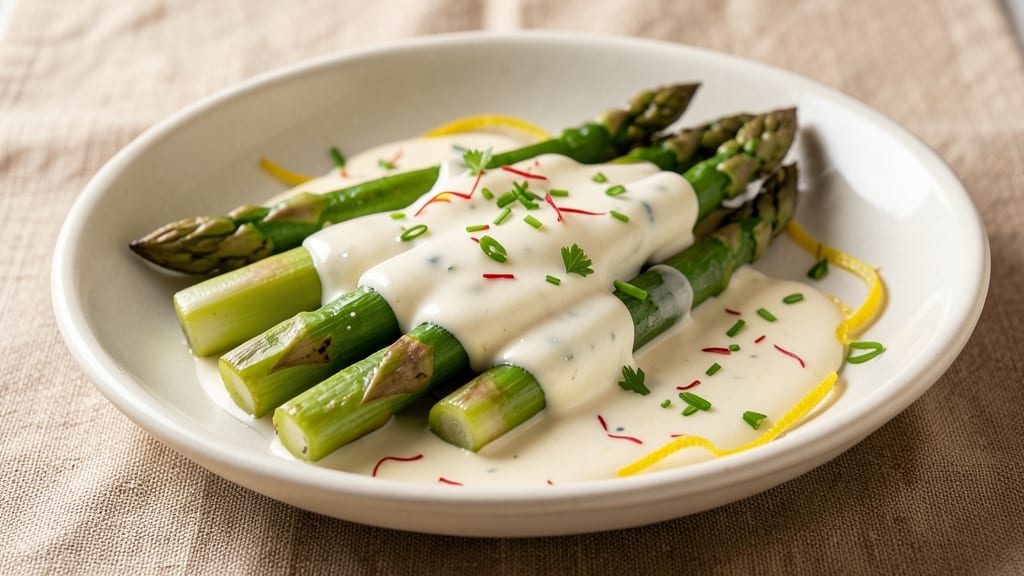
This asparagus white sauce transforms simple ingredients into a velvety, herb-infused cream that elevates any dish. The secret lies in a smooth roux and carefully chosen seasonings that create a rich, creamy base perfect for pairing with roasted or grilled asparagus.
This recipe delivers restaurant-quality results with just a few pantry staples and 20 minutes of hands-on time.
The foundation of this sauce is a classic béchamel—equal parts butter and flour cooked until golden, then slowly whisked with warm milk to create a silky texture. Fresh herbs like tarragon or chives add brightness, while a touch of lemon zest prevents the sauce from becoming too heavy.
The crisp-topped garnish adds both visual appeal and a satisfying textural contrast to each spoonful.
What you'll achieve is a sauce that's versatile enough for asparagus but equally at home with roasted chicken, fish, or even pasta. The velvety consistency clings perfectly to vegetables, while the herbaceous notes complement both delicate and hearty proteins.
Best of all, it keeps beautifully in the refrigerator for up to 5 days, making it ideal for meal prep.
Whether you're serving it alongside your favorite spring vegetables or using it as a base for a creamy pasta dish, this white sauce brings depth and sophistication to any meal.
The technique is straightforward, but the results are anything but ordinary—this is the kind of sauce that makes home cooking feel special.
Ingredients for asparagus white sauce
Simple pantry staples and fresh herbs create this velvety white sauce perfect for asparagus or any protein.
| Ingredient | Amount | Notes |
|---|---|---|
| Unsalted Butter 🧈 | ½ cup | Cold, cubed for roux |
| All-Purpose Flour 🌾 | ½ cup | Sifted for smooth texture |
| Whole Milk 🥛 | 2 cups | Warm, not hot |
| Fresh Tarragon 🌿 | ¼ cup | Chopped fine, stems removed |
| Fresh Chives 🌿 | ¼ cup | Chopped fine, for garnish |
| Lemon Zest 🍋 | 1 tbsp | Freshly grated, no pith |
| Granulated Sugar 🍚 | ½ tsp | Balances acidity |
| Salt 🧂 | ½ tsp | Kosher or sea salt |
| White Pepper 🌶️ | ¼ tsp | Freshly ground preferred |
| Panko Breadcrumbs 🍞 | ¼ cup | For crisp-topped garnish |
The butter and flour are your foundation—European-style butter gives the best flavor, but any unsalted works. King Arthur or Bob's Red Mill flour are ideal for a smooth roux. Fresh tarragon is a game-changer here, but if you can't find it, dried tarragon at one-third the amount works. The chives add brightness, and I always grab a bunch because I use them in everything. For the lemon zest, organic lemons have thicker zest—worth the extra squeeze.
No tarragon? Fresh basil or parsley adds a different but lovely flavor. The milk should be warm—not hot—when whisked in to avoid lumps. Short on panko? Regular breadcrumbs toasted in butter work just as well. The sugar is key to balancing the lemon's acidity, so don't skip it. If you're making this ahead, add the lemon zest and herbs last to keep everything vibrant. The white pepper keeps the sauce from tasting flat—black pepper would work too, but white gives a cleaner finish.
This sauce tastes even better the next day—store in an airtight container for up to 5 days. For the crisp-topped garnish, toast the breadcrumbs in butter for 2-3 minutes until golden. The sauce reheats beautifully—just warm it gently on the stove with a splash of milk if it thickens. Make a double batch; it's perfect for drizzling over roasted veggies or pairing with grilled fish.
Why You'll Love This Recipe
- No-Fuss Weeknight Win: I swear by this sauce when I’m too tired to fuss. Just melt butter, whisk in flour, then slowly add warm milk—no lumps, no stress. The tarragon and chives brighten it up so fast, I’m done before the asparagus even finishes steaming.
- Herb-Packed Creaminess: That first bite? Rich, velvety, and herby—the tarragon gives it a sophisticated kick, while the chives add a fresh finish. Honestly, it’s the kind of flavor that makes plain asparagus feel like a restaurant dish.
- Leftover Goldmine: This sauce keeps like a dream—reheat it with roasted chicken, toss it into pasta, or drizzle it over grilled fish. Between us, I’ve had it three days in a row and never once regretted it.
- Budget-Friendly Luxury: Butter and milk are pantry staples, and a bunch of fresh herbs lasts longer than you’d think. I’ll be real: it’s the kind of "fancy" that doesn’t break the bank, but still feels special enough for company.
Step-by-step instructions for asparagus white sauce
This velvety herb sauce comes together in minutes with just a few simple steps.
Create a Smooth Roux
Melt the 0.5 cup unsalted butter in a medium saucepan over medium heat. Once the butter has completely melted and begins to foam, immediately whisk in the 0.5 cup all-purpose flour all at once. This creates a roux—the foundation of your sauce.
Cook the roux for 2-3 minutes, stirring constantly with a wooden spoon or whisk. You're looking for a pale golden color—this ensures a mild flavor without any bitterness. If the roux starts to darken too quickly, reduce the heat slightly. The key here is patience; a well-made roux makes all the difference in the final texture of your sauce.
Gradually Add Warm Milk
Slowly pour in the 2 cups warm whole milk while whisking vigorously. Adding the milk gradually prevents lumps from forming. Start with just a few tablespoons at a time, whisking continuously until smooth before adding more. This step is crucial—if you add the milk too quickly, you'll end up with a grainy sauce.
Once all the milk is incorporated, increase the heat to medium-low and continue whisking for 5-7 minutes until the sauce thickens enough to coat the back of a spoon. You'll notice the sauce transform from a thin liquid to a glossy, velvety consistency. This is when you know you're on the right track—no more lumps, just smooth perfection.
Season and Simmer
Reduce the heat to low and stir in the 0.25 cup finely chopped fresh tarragon, 1 tablespoon lemon zest, 0.5 teaspoon granulated sugar, 0.5 teaspoon salt, and 0.25 teaspoon white pepper. The sugar balances the acidity from the lemon zest, while the tarragon and chives add a bright, herby flavor that pairs beautifully with asparagus.
Let the sauce simmer gently for 3-4 minutes, stirring occasionally. This allows the flavors to meld together and ensures everything is evenly incorporated. Taste and adjust the seasoning if needed—you might want to add a pinch more salt or a touch more lemon zest to suit your preference. The sauce should be smooth, flavorful, and just thick enough to coat the back of a spoon.
Prepare the Crisp-Topped Garnish
While the sauce simmers, heat a small skillet over medium heat and add the 0.25 cup panko breadcrumbs. Toast them for 1-2 minutes, stirring constantly, until they turn a light golden brown. This adds a delightful crunchy contrast to the creamy sauce.
Remove the skillet from heat and stir in the 0.25 cup finely chopped fresh chives. The chives add a fresh, oniony brightness that complements the tarragon perfectly. Once mixed, spoon the crispy breadcrumb mixture over the finished sauce just before serving. This step is what elevates the dish from ordinary to extraordinary—adding both texture and visual appeal.
Serve Warm
Ladle the warm asparagus white sauce over your choice of protein—whether it's grilled chicken, roasted fish, or even asparagus itself. The sauce should be served immediately while still warm and creamy. The contrast of the crispy breadcrumb garnish on top of the velvety sauce is what makes this recipe truly special.
Each bite should deliver a harmonious blend of creamy richness, bright herb notes, and a satisfying crunch. If you find the sauce thickens too much as it cools, simply stir in a splash of warm milk to restore its perfect consistency. Enjoy this elegant, restaurant-quality sauce that’s surprisingly easy to make at home!
Pro Tips For Making Asparagus White Sauce
- WHISK LOW AND SLOW: The moment you add milk, keep the heat at a bare simmer—not a rolling boil. I used to rush this, and my sauce would either turn grainy or taste raw. A gentle hand here guarantees a smooth, velvety finish every time.
- TOAST THE FLOUR FIRST: Cook the butter and flour together for 1-2 minutes until it smells nutty and golden. This step isn’t optional—it deepens the flavor and prevents that bland, floury aftertaste. Skip it, and your sauce will taste like a sad béchamel.
- CHOP HERBS AT THE END: Add fresh tarragon and chives raw, right before serving. Cooking them turns them bitter, and you’ll end up with a dish that tastes like you microwaved a bouquet. A quick chop with kitchen shears saves time and keeps the herbs bright.
- USE COLD MILK: Pour cold milk into the butter-flour mixture in a slow, steady stream. Hot milk makes the sauce split like a bad relationship. Cold milk? Smooth as silk. No lumps, no stress—just perfect sauce.
Essential equipment for asparagus white sauce
Medium Saucepan
Start with a 3-quart medium saucepan—this size gives you enough room to whisk the roux and milk without splattering while keeping the heat even. I recommend a stainless steel pan like the All-Clad Stainless or Cuisinart MultiClad for superior heat distribution.
Avoid nonstick pans—they can react with the acidity of the lemon zest and affect flavor. 🌡️
Whisk for Smoothness
A balloon whisk is essential for creating a lump-free sauce. I prefer the OXO Good Grips Balloon Whisk—it’s lightweight yet sturdy, and the angled handle makes whisking effortless. Use it to blend the roux and milk gradually, ensuring a silky texture.
For extra insurance, strain the finished sauce through a fine-mesh sieve into a clean bowl before adding the herbs.
Wooden Spoon
Keep a heat-resistant wooden spoon (like Lodge Cast Iron Spoon) nearby for stirring the roux. Wood prevents scratching your pan and helps distribute heat evenly. The spoon’s flat surface also makes it easier to scrape up any bits stuck to the bottom.
I always keep mine handy when making sauces—it’s my go-to for roux and reductions.
Small Skillet
For the crisp-topped garnish, use a small 8-inch nonstick skillet (I love the Calphalon Nonstick) to toast the panko breadcrumbs. Nonstick ensures even browning without burning, while the smaller size allows you to monitor the toasting process closely.
A spatula helps flip and stir the breadcrumbs for even crispiness.
Fine-Mesh Sieve
If you want ultra-smooth sauce, strain it through a fine-mesh sieve lined with a cheesecloth or paper coffee filter. This removes any lingering flour particles and creates a velvety finish.
I use a Mesh King Strainer—it’s affordable and does the job perfectly. Just pour the sauce through gently to avoid creating air bubbles.
Measuring Spoons
Precision matters with this recipe, so invest in stainless steel measuring spoons (like OXO Good Grips) for accurate measurements of the lemon zest, sugar, and pepper.
A microplane is ideal for zesting lemons—it’s faster than a grater and yields finer, more flavorful strips. I keep mine near my cutting board for quick prep.
Nutrition facts
Frequently asked questions
Can I use heavy cream instead of milk for this white sauce?
You can substitute 1 cup of heavy cream for the milk, but expect a richer, thicker sauce. For the same creamy texture, reduce the milk to 1.5 cups and add 0.5 cup heavy cream. The sauce will have a velvety mouthfeel but may be heavier—ideal for dishes like mashed potatoes or creamy pasta.
How do I prevent lumps when making the roux?
Whisk constantly when adding the flour to melted butter, and always add warm milk gradually (a few tablespoons at a time). Use a balloon whisk for smoothness, and keep heat on medium-low to avoid scorching. If lumps form, strain the sauce through a fine-mesh sieve before adding herbs.
Can I make this sauce ahead of time?
Store the finished sauce (without the crispy garnish) in an airtight container in the fridge for up to 5 days. Reheat gently on the stove with a splash of warm milk to restore creaminess. Add fresh herbs and lemon zest just before serving to keep flavors bright.
What other vegetables pair well with this white sauce?
This sauce works beautifully with green beans, broccoli, or zucchini. It also elevates roasted carrots or cauliflower. For a heartier dish, try it over grilled chicken or baked fish—the creamy texture complements both delicate and bold flavors.
Why did my sauce turn out too thin?
This often happens if the milk was too hot when added or if the sauce wasn't simmered long enough. To fix it, mix 1 tablespoon cornstarch with 1 tablespoon cold water, stir into the sauce, and simmer for 1-2 minutes until thickened. For future batches, whisk the roux longer or reduce the milk slightly.