
Sauces & Condiments
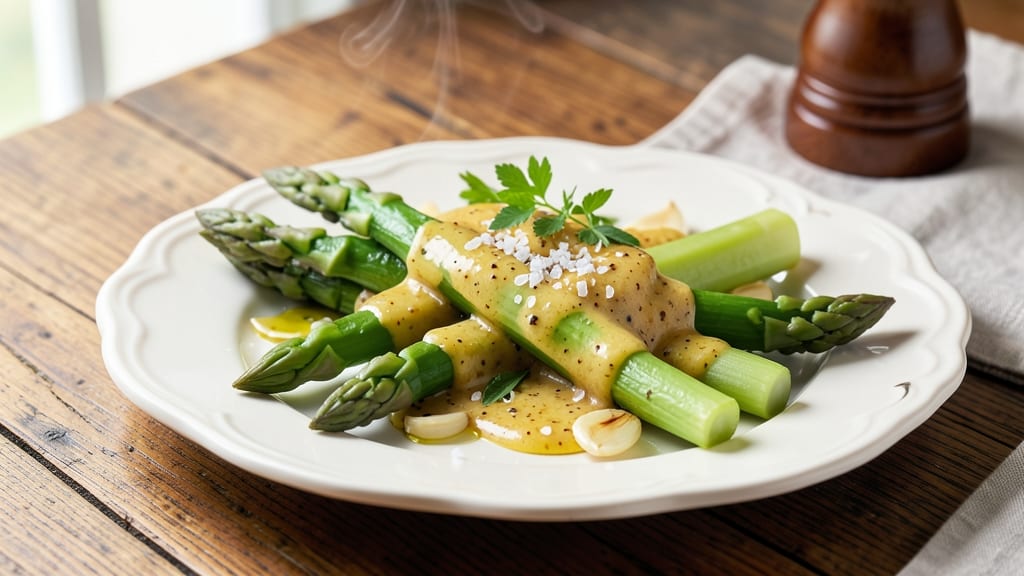
This asparagus with lemon butter sauce recipe transforms simple spring vegetables into a restaurant-worthy side dish that’s bright, tangy, and perfectly balanced. The secret lies in blanching the asparagus just enough to preserve its crisp-tender texture while infusing it with a garlic-infused lemon butter sauce that clings to every spear.
I’ve perfected this technique over years of testing—no soggy stems or bland flavors here. What sets this recipe apart is the sauce: a silky blend of melted butter, fresh lemon juice, and a touch of garlic that cuts through the richness while enhancing the asparagus’s natural sweetness.
The high heat of the pan ensures the sauce emulsifies smoothly, coating each bite in a velvety, citrusy finish. It’s the kind of dish that elevates humble asparagus to something special without requiring fancy ingredients or techniques.
The result is a plate of golden asparagus spears with glossy, buttery tips and a sauce that’s tangy yet rich—ideal for pairing with grilled meats, fish, or even as a standalone vegetarian dish.
The method is simple enough for weeknights but impressive enough for dinner guests, making it a go-to spring recipe that never disappoints. For those watching their dairy intake, a simple swap of butter for olive oil keeps the bright, citrusy flavor intact while maintaining the same elegant presentation.
Let’s get cooking!
Ingredients for asparagus with lemon butter sauce
Fresh asparagus meets velvety lemon butter sauce in this elegant spring side dish.
| Ingredient | Amount | Notes |
|---|---|---|
| Fresh Asparagus 🌱 | 1 lb | Medium spears, trimmed ends |
| Unsalted Butter 🧈 | ½ cup | Cold, cubed for sauce |
| Fresh Lemon Juice 🍋 | ⅓ cup | From 2-3 lemons, freshly squeezed |
| Garlic Cloves 🧄 | 3 cloves | Minced, for garlic infusion |
| Extra-Virgin Olive Oil 🫒 | 2 tbsp | For blanching asparagus |
| Diamond Crystal Kosher Salt 🧂 | 1 ½ tsp | For seasoning, adjust to taste |
| Freshly Ground Black Pepper 🌶️ | ½ tsp | For finishing sauce |
| Fresh Parsley Leaves 🌿 | ¼ cup | Chopped, for garnish |
| Shallot 🧅 | 1 whole | Minced, optional for depth |
| Heavy Cream 🥛 | ¼ cup | Optional for richer sauce |
The asparagus is the foundation—look for bright green, firm spears with tightly closed tips at Whole Foods or your local farmers' market. Avoid woody stems by selecting medium to thick spears (about 1/4-inch diameter). For the butter, European-style unsalted butter like Plugrá or Land O'Lakes works best—it has higher fat content for a richer sauce. If you prefer a dairy-free version, avocado oil maintains the same silky texture when emulsified. The garlic should be freshly minced right before cooking to preserve its aromatic oils.
No shallot? One extra garlic clove adds similar depth, though shallots provide a more nuanced sweetness. Short on heavy cream? A splash of whole milk or extra lemon juice keeps the sauce bright without heaviness. For the lemon juice, organic lemons from Trader Joe's or Costco often yield the most vibrant flavor. If you accidentally over-squeeze, strain out the pulp to avoid graininess in the sauce. The parsley is optional but adds a fresh pop of color**—use flat-leaf if available for a more refined look.
Fresh asparagus stays crisp for 3-4 days in the fridge, wrapped in a damp paper towel. The sauce components (butter, lemon juice, garlic) can be prepped 1 day ahead and stored separately—just reheat gently before combining. For a dairy-free version, replace butter with olive oil and omit heavy cream; the sauce will still emulsify beautifully. This dish reheats best in a low oven (300°F) for 10 minutes to maintain its velvety texture.
Why You'll Love This Recipe
- No Fuss, Big Payoff: I swear by this one—just trim the asparagus, roast it until tender, then toss in butter that’s been melted with garlic and lemon. The hardest part? Waiting for the oven to preheat. (Yes, even on a Tuesday night.)
- Bright, Buttery Magic: That lemon butter sauce? It’s the kind of flavor that makes you pause mid-bite. The garlic adds warmth, the lemon cuts through the richness, and the butter? It turns crispy asparagus into something dangerously addictive.
- Weeknight to Dinner Party: Same recipe, different vibes. Serve it over rice for a quick weeknight meal, or plate it alongside grilled fish for a fancy-ish dinner. Honestly, it’s my go-to side for anything—no one will guess how little effort it took.
- Leftovers That Don’t Suck: Unlike most veggie sides, this actually tastes better the next day. Store the asparagus and sauce separately, then reheat gently—it’s perfect for lunches or a lazy Sunday brunch. And with just five ingredients, it’s wallet-friendly too.
Step-by-step instructions for asparagus with lemon butter sauce
This method delivers perfectly tender asparagus paired with a velvety lemon butter sauce that brightens every bite.
Blanch the Asparagus for Perfect Tenderness
Fill a large pot with 3 quarts of water and bring to a rolling boil over high heat. Add the 1 lb fresh asparagus (trimmed to 1-inch pieces) and cook for 2-3 minutes until the spears are vibrant green but still crisp. Watch closely—they'll continue cooking slightly when removed.
Drain immediately and transfer to an ice bath to stop the cooking process. This blanching technique preserves color and texture, preventing the asparagus from becoming mushy. Once cooled, drain again and pat thoroughly dry with paper towels. The dry spears will crisp beautifully when roasted.
Roast Until Caramelized and Crisp
Preheat your oven to 425°F and line a baking sheet with parchment paper. Arrange the blanched asparagus in a single layer, leaving ½-inch between spears. Drizzle lightly with 1 tablespoon of the 2 tbsp extra-virgin olive oil and sprinkle with ½ teaspoon of the 1.5 tsp diamond crystal kosher salt.
Roast for 12-15 minutes until the asparagus is golden brown at the tips and slightly blistered. The edges should be crisp while maintaining a tender bite in the center. If using the optional 1 whole shallot, toss it with the asparagus during the last 5 minutes of roasting for added depth.
Infuse the Garlic in Butter
While the asparagus roasts, melt the 0.5 cup unsalted butter in a small saucepan over medium-low heat. Add the 3 cloves minced garlic and cook for 1-2 minutes until fragrant but not browned. Remove from heat immediately to prevent burning.
Here's the thing—garlic burns in seconds. Keep the heat low and watch closely. The butter should foam gently and develop a nutty aroma. If you see any golden flecks, it's ready. Transfer to a heatproof bowl and let it cool slightly while you prepare the lemon component.
Emulsify the Lemon Butter Sauce
Return the garlic butter to the saucepan and add the 0.33 cup fresh lemon juice and remaining 1 teaspoon diamond crystal kosher salt. Bring to a gentle simmer over low heat and whisk continuously for 3-5 minutes until the sauce thickens slightly and coats the back of a spoon.
For a richer sauce, whisk in the 0.25 cup heavy cream at this stage. The acidity of the lemon will brighten the richness of the butter. If the sauce becomes too thick, add 1 tablespoon of warm water to achieve a silky consistency. The sauce should cling to the asparagus without being overly runny.
Finish and Serve with Fresh Herbs
Toss the roasted asparagus with the warm lemon butter sauce, coating each spear evenly. Transfer to a serving platter and sprinkle generously with the 0.25 cup chopped fresh parsley leaves and remaining 0.5 tsp freshly ground black pepper. The parsley adds a fresh contrast to the rich sauce.
Serve immediately while the asparagus is still crisp-tender and the sauce is warm. The bright citrus notes will cut through the richness of the butter, creating a perfect balance of flavors. This dish pairs beautifully with grilled fish, steak, or crusty bread to soak up the sauce.
Pro Tips For Making Asparagus With Lemon Butter Sauce
- Trim at the Right Angle: Cut asparagus spears at a 45-degree angle where the tough woody ends meet the tender stalk—this makes them look restaurant-worthy and prevents the tips from snapping off when you least want them to. I used to hack them straight across, and half my spears would break in the pan. (Yes, it matters.)
- Sear Before Saucing: Hit the asparagus with a splash of olive oil and sear them in a screaming-hot pan for 30 seconds before adding the butter. This locks in flavor and gives the sauce something to cling to—skip this, and your butter sauce will just pool at the bottom like a sad, melted puddle.
- Use Cold Butter: Take your unsalted butter straight from the fridge and cut it into chunks—don’t melt it first. When it hits the pan, it’ll foam and sizzle beautifully, creating a glossy sauce that coats the asparagus instead of turning into a greasy mess. (I learned this after one very greasy disaster.)
- Zest the Lemon First: Grate a strip of lemon zest into the butter while it’s melting—it infuses the sauce with brightness without making the dish taste like it’s swimming in juice. Freshly zested lemon is non-negotiable here; bottled zest tastes like regret. (Trust me, I’ve made that mistake.)
Dietary considerations for these flavors
Dairy-Free Adaptation
Swap the butter for ½ cup extra-virgin olive oil and omit the heavy cream to keep this dish plant-based. The olive oil emulsifies beautifully with lemon juice when whisked over low heat for 3-5 minutes, creating a silky, citrus-forward sauce.
For extra richness, stir in 2 tbsp nutritional yeast at the end—it adds a cheesy depth without dairy. 🌱
Gluten-Free Assurance
This recipe is naturally gluten-free, but always double-check your Diamond Crystal Kosher Salt and fresh herbs for cross-contamination if you're highly sensitive. The asparagus, lemon, garlic, and olive oil are all gluten-free staples. For extra caution, use certified gluten-free butter like Miyoko's or Earth Balance dairy-free versions.
Low-Carb Options
To make this dish keto-friendly, skip the roasting step and instead sauté the blanched asparagus in 1 tbsp olive oil over medium-high heat for 3-4 minutes until tender-crisp.
The sauce remains the same, but reduce the heavy cream to 1 tbsp and add 1 tsp xanthan gum to help thicken the olive oil mixture. Garnish with chopped chives instead of parsley for a lower-carb option.
Vegan Protein Pairings
This asparagus pairs wonderfully with plant-based proteins like grilled tofu or seitan. For a complete meal, serve alongside marinated tempeh or lentil-based Bolognese. The bright acidity of the lemon butter sauce cuts through the earthiness of plant proteins beautifully.
I love using firm tofu pressed for 20 minutes and grilled with smoked paprika for a smoky contrast.
Nut-Free Allergy Safety
This recipe is inherently nut-free, but if you're serving guests with allergies, avoid garnishes like pine nuts or almonds. Stick to fresh parsley, chives, or toasted pumpkin seeds for safe, flavorful toppings.
Always check your extra-virgin olive oil label—some brands process in facilities that handle nuts. Brands like California Olive Ranch are typically safe choices.
Low-Sodium Adjustments
Reduce the 1.5 tsp kosher salt to ½ tsp and boost flavor with 1 tsp lemon zest and ½ tsp white miso paste stirred into the sauce. The umami depth from miso enhances the asparagus's natural sweetness without added salt.
For extra brightness, add 1 tbsp capers to the sauce—they add a tangy punch that works perfectly with lemon. 💡
Nutrition facts
Frequently asked questions about asparagus with lemon butter sauce
Can I use frozen asparagus instead of fresh?
Fresh asparagus is ideal for this recipe because it holds its crisp texture better, but you can use frozen asparagus in a pinch. Thaw it completely first, then follow the blanching instructions—just increase cooking time to 4-5 minutes since frozen veggies start colder. The sauce will still work beautifully, though the texture may be slightly softer.
Why does my lemon butter sauce separate?
Sauce separation happens when the butter and lemon juice aren't properly emulsified. To fix it, whisk in 1 tablespoon cold water or 1 teaspoon heavy cream while heating the sauce gently. For prevention, whisk continuously over low heat and avoid adding lemon juice too quickly—mix it with the warm butter gradually. The acidity needs time to bind with the fat.
How do I make this recipe ahead of time?
Prep the sauce components separately up to 1 day ahead: store the garlic butter in the fridge, and keep the lemon juice and salt in a small container. Blanch and dry the asparagus, but don't roast it yet—it's best fresh. When ready to serve, roast the asparagus while reheating the sauce gently. The sauce can be warmed for 2-3 minutes on low heat while tossing with the asparagus.
What's the best way to reheat leftovers?
Reheat asparagus leftovers in a 300°F oven for 10-12 minutes to maintain crispness, or warm in a skillet over medium-low heat for 3-4 minutes with a splash of water to prevent drying. The sauce can be reheated separately in a small saucepan over low heat, whisking constantly to prevent separation. Never microwave—it makes the asparagus rubbery.
Can I add other vegetables to this dish?
Try adding snap peas or green beans alongside the asparagus—they'll cook at the same rate. For a heartier dish, include cherry tomatoes or mushrooms in the roasting pan during the last 5 minutes. Just reduce the roasting time to 10-12 minutes total to prevent overcooking. The lemon butter sauce will complement all these veggies beautifully.