
Sauces & Condiments
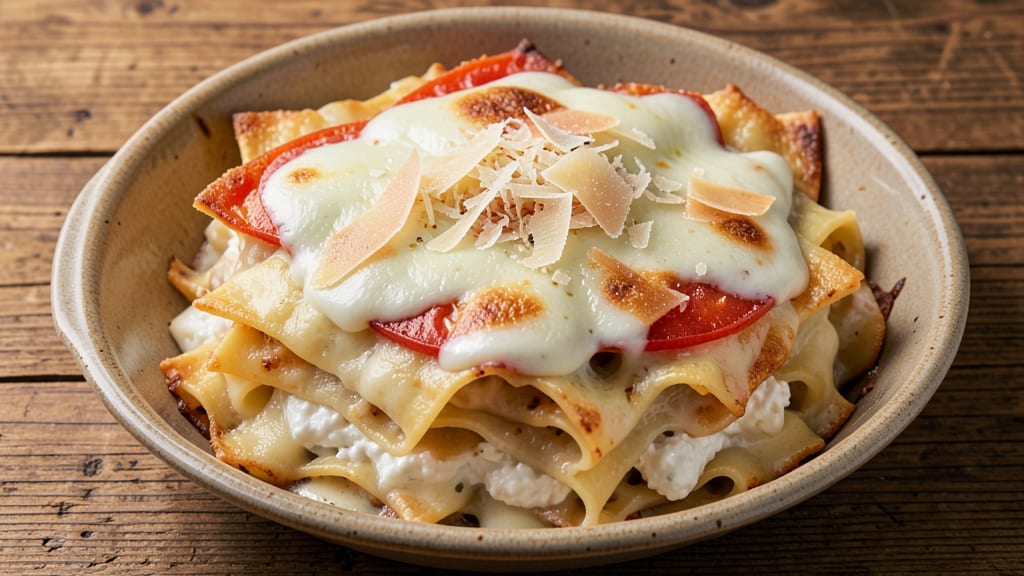
This authentic Italian lasagna recipe with bechamel sauce and ricotta delivers the creamy, layered perfection that makes it a Sunday staple in Italian homes. The secret lies in the bechamel sauce—silky, velvety, and perfectly balanced with ricotta’s lightness—creating a texture that’s rich without being heavy.
I’ve perfected this version after years of testing, ensuring every layer achieves that signature melt-in-your-mouth tenderness.
The key to authenticity starts with the sauce: a classic bechamel made with just butter, flour, and milk, enriched with nutmeg and a touch of Parmesan.
Ricotta adds a delicate creaminess that prevents the lasagna from becoming too dense, while a blend of mozzarella and Parmesan creates that iconic golden crust. Regional variations matter—this recipe leans toward the Roman style, where bechamel takes center stage, but I’ve included adjustments for Bolognese lovers too.
Assembling the lasagna is where the magic happens. Thin, handmade pasta sheets (or high-quality dried lasagna noodles) are layered with sauce, cheese, and a sprinkle of fresh basil for brightness.
Baked until bubbling and golden, the result is a dish that’s as impressive as it is comforting—each forkful revealing layers of flavor and texture that define Italian comfort food at its best.
Serve with a crisp green salad and a glass of Chianti for the full experience. The leftovers? Even better the next day, as the flavors meld and the structure holds perfectly. This isn’t just lasagna—it’s a celebration of Italian home cooking, brought to your table with professional precision.
Ingredients for authentic italian lasagna recipe with bechamel sauce and ricotta
Here's what you need to recreate that authentic Italian lasagna with creamy bechamel and ricotta layers.
| Ingredient | Amount | Notes |
|---|---|---|
| Unsalted Butter 🧈 | ¾ cup | Cold, cubed for bechamel |
| All-Purpose Flour 🌾 | ¾ cup | Sifted for smooth sauce |
| Whole Milk 🥛 | 4 cups | Whole for creaminess |
| Fresh Ricotta Cheese 🧀 | 15 oz | Drained overnight in cheesecloth |
| Fresh Mozzarella Cheese 🧀 | 12 oz | Low-moisture, sliced thin |
| Parmesan Cheese 🧀 | 1 ½ cups | Freshly grated from block |
| Lasagna Noodles 🍝 | 12 whole | No-boil or pre-cooked |
| Ground Nutmeg 🌿 | ¼ tsp | Freshly grated preferred |
| Fresh Basil Leaves 🌿 | ½ cup | Chopped for garnish |
| Large Eggs 🥚 | 2 whole | Beaten for ricotta mixture |
| Garlic Cloves 🧄 | 2 cloves | Minced for bechamel |
| Sea Salt 🧂 | 1 ½ tsp | Diamond Crystal preferred |
| Black Pepper 🌶️ | ½ tsp | Freshly cracked |
| Olive Oil 🫒 | 2 tbsp | For greasing baking dish |
The ricotta and Parmesan are non-negotiable for that authentic texture. Whole milk ricotta from the Italian deli section (like De Cecco or Galbani) makes all the difference—it’s richer and less watery. If you can’t find it, drain store-bought ricotta overnight in cheesecloth to remove excess moisture. For the Parmesan, a 12-month aged wedge from Whole Foods or a specialty Italian market gives that nutty depth. Fresh mozzarella should be soft but not mushy—look for the kind in tubs, not pre-sliced. The flour? King Arthur or Caputo for that Italian touch, but regular all-purpose works too.
No ricotta? Mascarpone mixed with cream cheese gets you close, though it’s heavier. Short on Parmesan? Pecorino Romano at a 1:1 swap adds a sharper bite. The nutmeg is subtle but essential—if you’ve got whole nutmeg seeds, grate them fresh right before using. For the noodles, De Cecco or Barilla are my go-tos, but any no-boil lasagna works. The bechamel needs patience—whisking constantly over medium heat is key. If it gets lumpy, strain it through a fine-mesh sieve. And trust me, the extra 10 minutes to drain the ricotta is worth it.
Assemble the lasagna the night before and refrigerate—it holds together better and bakes more evenly. Store leftovers covered in the fridge for 4-5 days, or freeze for 3 months (wrap tightly in foil first). The bechamel sauce can be made ahead too—it actually tastes better the next day as the flavors meld. For reheating, cover with foil and bake at 350°F until bubbly. And if you’re serving a crowd, double the ricotta and cheese—it’s worth the extra effort.
Why You'll Love This Recipe
- No-Fuss Layers: This lasagna doesn’t require perfect slicing or fancy techniques—just spread that velvety bechamel between ricotta and mozzarella, then bake. My kids (and my patience) thank me every time.
- Creamy-Rich Magic: That homemade bechamel—just butter, flour, and milk—turns ordinary lasagna into something luxurious. The ricotta adds that signature Italian creaminess, while the mozzarella melts into gooey pockets. Honestly, it’s the kind of dish that makes you pause mid-bite.
- Weeknight Crowd-Pleaser: I’ve served this at family dinners, potlucks, and even lazy Sundays—it disappears fast. The ricotta keeps it light enough for summer but hearty enough for winter, and the bechamel makes it feel special without the fuss.
- Leftovers That Shine: Unlike dry lasagnas, this one actually tastes better the next day. The bechamel stays creamy, the mozzarella holds its stretch, and the ricotta doesn’t turn rubbery. Reheat it, and it’s like eating a warm hug—again. (Yes, even on a Tuesday night.)
Step-by-step instructions for authentic Italian lasagna with bechamel and ricotta
Here's how to build layers of rich flavors—creamy bechamel, tangy ricotta, and melty mozzarella—just like Nonna would make.
Prepare the Bechamel Sauce
Melt the 0.75 cup unsalted butter in a medium saucepan over medium-low heat. Once fully melted, whisk in the 0.75 cup all-purpose flour all at once. Cook for 2-3 minutes, stirring constantly, until the mixture turns a pale golden color and smells nutty—this is your roux.
Gradually whisk in the 4 cups whole milk, about ½ cup at a time, letting each addition fully incorporate before adding more. Bring the mixture to a gentle simmer, then reduce heat to low and cook for 5-7 minutes, stirring frequently, until thickened enough to coat the back of a spoon. Stir in the 2 cloves minced garlic, 1.5 tsp sea salt, 0.5 tsp black pepper, and 0.25 tsp ground nutmeg. Remove from heat and set aside—this creamy base will bind your lasagna layers.
Mix the Ricotta Cheese Filling
In a large bowl, combine the 15 oz fresh ricotta cheese (make sure it's drained overnight), 2 whole large eggs, 0.5 cup chopped fresh basil leaves, 0.5 tsp black pepper, and 1 tsp sea salt. Using a wooden spoon or rubber spatula, gently fold everything together until just combined—don't overmix, or the ricotta will become grainy. This mixture should be smooth and slightly thick, like a light batter.
Fold in ½ cup freshly grated Parmesan cheese (reserve the rest for layering). The ricotta should now have a bright, creamy color with visible flecks of basil. This layer will add that signature Italian richness between your noodles.
Assemble the Lasagna Layers
Preheat your oven to 375°F. Grease a 9x13-inch baking dish with 2 tbsp olive oil—this prevents sticking and makes cleanup easier. Start by spreading a thin layer of bechamel sauce on the bottom of the dish to prevent the noodles from burning.
Arrange 4 lasagna noodles (no-boil or pre-cooked) horizontally in the dish, slightly overlapping if needed. Spread ⅓ of the ricotta mixture evenly over the noodles, then sprinkle ⅓ of the remaining Parmesan cheese. Add another layer of 4 noodles, followed by ⅓ of the bechamel sauce and ⅓ of the sliced mozzarella cheese. Repeat this process once more, ending with a final layer of noodles, bechamel, and a generous sprinkle of Parmesan on top.
Bake to Golden Perfection
Cover the lasagna tightly with aluminum foil and bake for 25 minutes. Remove the foil and bake for an additional 15-20 minutes until the top is golden brown and bubbly. The edges should be slightly crispy, and the cheese should be melted and stretchy when pulled gently.
Let the lasagna rest for 10 minutes before slicing—this allows the layers to set and makes it easier to serve. The dish should be hot, with creamy bechamel peeking through the mozzarella layers and a crispy, cheesy crust on top. Serve with a fresh green salad and a glass of Chianti for an authentic Italian meal.
Pro Tips For Making Authentic Italian Lasagna Recipe With Bechamel Sauce And Ricotta
- Whisk Bechamel Like Mad: I used to stir my béchamel half-heartedly, and it’d either clump or taste bland. Now I whip it on medium-high heat with a flat whisk—no lumps, no waiting for the milk to warm. Once it thickens, drop the heat to low and cook another 3-4 minutes to fully cook the flour. (Yes, even if it looks weirdly smooth.)
- Drain Ricotta Properly: Fresh ricotta is basically watery cottage cheese. Spread it on a clean kitchen towel, fold the edges, and let it sit for 10 minutes before using it in the lasagna. This removes excess moisture so your layers stay creamy, not soggy. (I learned this the hard way after a lasagna that tasted like a wet blanket.)
- Layer Mozzarella Thin: Tear that fresh mozzarella into small, uneven pieces—no big hunks. When it melts, it’ll stretch and fill gaps, but thick chunks stay rubbery. Sprinkle it between the béchamel and ricotta layers, not just on top. (Your future self will curse you if you skip this.)
- Pre-Bake the Lasagna: Assemble your lasagna, then bake it uncovered at 375°F (190°C) for 20 minutes before adding foil. This sets the bottom layers so the ricotta doesn’t turn to glue when you bake it longer. I was skeptical until I tried it—now it’s non-negotiable.
Storing and reheating your authentic italian lasagna recipe with bechamel sauce and ricotta
Refrigerator Storage
Store your lasagna in an airtight container with a tight-fitting lid to preserve moisture and prevent drying. I recommend using glass Pyrex containers—they’re sturdy and won’t absorb odors. Keep it refrigerated at 40°F or below for up to 4-5 days, though I find the flavors actually deepen overnight.
Always let it cool completely before covering to avoid condensation. 🧊
Freezer Prep Tips
For long-term storage, wrap the lasagna tightly in heavy-duty aluminum foil first, then place it in a freezer-safe bag with all air squeezed out. This prevents freezer burn and keeps the layers intact.
Label with the date—it stays fresh for up to 3 months at 0°F or below. I like to freeze it before baking for easy meal prep.
Thawing Methods
For refrigerated storage, transfer the lasagna to the fridge 24 hours before reheating to thaw evenly. If you’re in a hurry, place it in a leak-proof plastic bag and submerge it in cold water for 30-45 minutes, changing the water every 10 minutes.
Never microwave to thaw—it creates uneven heating and risks uneven cooking.
Oven Reheating
Preheat your oven to 350°F and cover the lasagna tightly with aluminum foil. Bake for 30-40 minutes until heated through and bubbly. If the top looks dry, add a splash of whole milk or bechamel sauce before covering. The internal temperature should reach 165°F for food safety. 🔥
Microwave Shortcuts
For quick reheating, cover the lasagna with a damp paper towel and microwave on medium power (50%) in 2-minute intervals, stirring between each interval. Total reheating time should be 6-8 minutes—this prevents the noodles from becoming rubbery.
Add a splash of water if it looks dry, then cover again to restore moisture.
Garnish Refresh
After reheating, brighten up the lasagna with fresh chopped basil leaves or a sprinkle of freshly grated Parmesan. A drizzle of high-quality olive oil (like Colavita) adds a fresh, vibrant finish. Serve with a simple arugula salad and Chianti Classico for that authentic Italian touch. ✨
Nutrition facts
Frequently asked questions
Why does your recipe use bechamel instead of tomato sauce?
This is a classic Roman-style lasagna where bechamel takes center stage for its silky, creamy texture. Unlike Bolognese versions, Roman lasagna relies on the richness of bechamel to balance the ricotta's lightness—creating that signature melt-in-your-mouth experience. The nutmeg in the bechamel adds warmth that complements the cheese perfectly.
Can I make this lasagna ahead of time?
Assemble the lasagna up to 24 hours in advance and refrigerate uncovered. The next day, bake covered for 5-10 minutes longer than fresh to compensate for the cold start. For freezing, assemble and bake partially (before the final uncovered time), then freeze. This ensures the layers stay intact when reheated.
What's the secret to preventing a soggy lasagna?
Three key steps: draining ricotta overnight, using no-boil noodles, and baking with foil on for the first 25 minutes. The ricotta's moisture is critical—skip this step, and you'll get a watery mess. Also, let the lasagna rest 10 minutes before slicing to let the bechamel set properly.
How do I adjust this for a vegetarian version?
This recipe is already vegetarian! For vegan, swap butter for olive oil, use plant-based milk in the bechamel, and replace ricotta with a blend of tofu ricotta and vegan Parmesan. Mozzarella can be substituted with vegan cheese, though the texture will differ slightly. The bechamel remains the star of the show!
Can I use store-bought ricotta instead of fresh?
Yes, but you must drain it overnight in cheesecloth to remove excess moisture. Store-bought ricotta often contains more water, which can make your lasagna soggy. For best results, use whole milk ricotta from the Italian deli section—it's richer and less watery, giving you that authentic texture.