
Sauces & Condiments
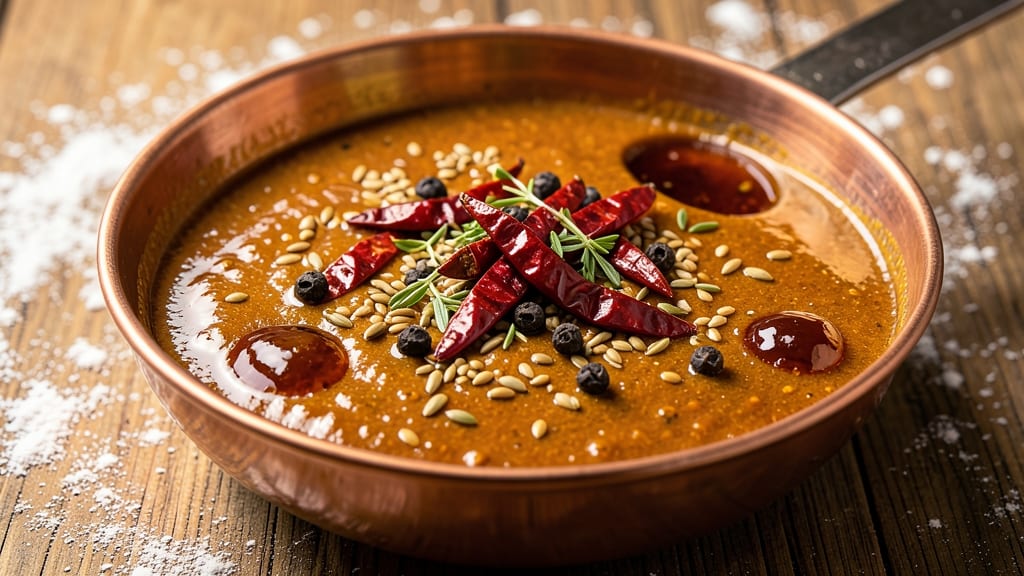
This authentic Madras sauce recipe transforms simple ingredients into a bold, tangy condiment that brings South Indian heat to your table. The secret lies in balancing tamarind's sharp tang with sweet tomatoes and aromatic spices, creating a sauce that's both complex and deeply flavorful.
I've perfected this version after years of testing—it's the same sauce I use for dosas, sambar, and even as a marinade for grilled meats.
The process begins with toasting whole spices until fragrant, then grinding them with dried red chilies to build a vibrant, aromatic base. Tamarind pulp and tomatoes add the signature tang and depth, while a touch of jaggery balances the acidity.
The sauce simmers until thick and velvety, reducing into a concentrated burst of flavor that clings to every bite.
What sets this Madras sauce apart is its versatility—use it as a dipping sauce, stir it into rice dishes, or drizzle it over curries for an instant flavor boost.
The tangy-sweet-spicy profile cuts through rich foods beautifully, making it a pantry staple. Store it in the fridge for up to 2 weeks, or freeze for longer shelf life.
For an extra layer of authenticity, let the sauce ferment for 24 hours before using—this deepens the flavors and creates a richer, more complex taste. The result is a sauce that's restaurant-quality at home, with none of the guesswork. Let's get started!
Ingredients for authentic madras sauce
Nine spices, two tangy stars—tamarind and tomatoes—plus a touch of sweetness make this bold Madras sauce.
| Ingredient | Amount | Notes |
|---|---|---|
| Dried Red Chilies 🌶️ | 1 tbsp | Whole, stems removed |
| Black Peppercorns 🌶️ | 1 tsp | Whole, lightly toasted |
| Cumin Seeds 🌿 | 1 tsp | Whole, toasted until fragrant |
| Corriander Seeds 🌿 | 1 tsp | Whole, toasted lightly |
| Fennel Seeds 🌿 | ½ tsp | Whole, toasted |
| Tamarind Pulp 🍈 | ½ cup | Fresh or high-quality block |
| Ripe Tomatoes 🍅 | 2 cups | Chopped, vine-ripened preferred |
| Jaggery 🍯 | ¼ cup | Grated, or dark brown sugar |
| Fresh Ginger 🧄 | 2 tbsp | Grated, peeled |
| Garlic Cloves 🧄 | 4 cloves | Peeled, rough chopped |
| Asafoetida Powder 🌿 | ¼ tsp | Optional, for depth |
| Salt 🧂 | 1 tsp | Adjust to taste |
The spices are where the magic happens. Toast your whole spices in a dry pan until fragrant—that aroma locks in the flavor. Penzeys or Indian grocery stores have the best quality whole spices, but don’t stress if you can’t find them; the regular grocery store stuff works fine. Tamarind pulp can be tricky—look for blocks at Indian markets or use bottled pulp if that’s all you’ve got. The tomatoes? Vine-ripened with a little give make all the difference. I always grab extra because they’re the heart of this sauce.
No tamarind? Lemon juice plus a pinch of sugar gets you close, though it won’t be quite the same. Short on jaggery? Dark brown sugar or even maple syrup works in a pinch—just reduce the sauce a bit longer. The asafoetida (hing) is optional but adds that unmistakable umami depth. Skip it if you’re sensitive to its strong flavor. Fresh ginger and garlic should be roughly chopped—no need to mince them finely. If you’re making this ahead, fermenting for 24 hours deepens the flavors, but it’s not required.
This sauce keeps beautifully. Store it in a clean glass jar in the fridge for up to 2 weeks, or freeze for up to 3 months. The longer it sits, the more complex the flavors get—trust me on this. I like to portion it into small jars so I can grab exactly what I need. The sauce thickens as it cools, so if it seems too thick after refrigerating, just add a splash of warm water and stir. Perfect for dosas, sambar, or drizzling over grilled meats.
Why You'll Love This Recipe
- Here’s what sold me: it costs next to nothing to make, and a little goes a long way. I’ll often double the batch, freeze half, and pull it out for lazy weeknights. Not the prettiest, but the taste makes up for it—and my wallet thanks me every time. Plus, no fresh ingredients to wilt or spoil. Just pure, reliable flavor.
- Spice Cabinet Magic: I swear by this—no fresh herbs, no last-minute grocery runs. Just pull those dried chilies and seeds from your pantry, toast them in a pan, and boom. That smoky, layered warmth comes from cumin and coriander seeds alone. Honestly, it’s the kind of recipe that makes me feel like a chef without the fuss.
- Heat That Lingers: Between us, the dried red chilies pack a punch that stays with you. Not the kind of heat that fades after two bites—this one builds, then settles into a cozy burn that’s oddly satisfying. (Yes, even on a Tuesday night.) The black peppercorns add this sharp, bright edge that cuts through the richness, like a secret handshake in every spoonful.
- Sauce for Everything: This isn’t just for curries—it’s my go-to for roasted chicken, grilled fish, or even drizzled over rice and beans. I’ll be real: my daughter picks out the chilies when I make it for her pasta, but she still asks for seconds. That’s the kind of sauce people can’t resist, no matter what’s on the plate.
Step-by-step instructions for authentic Madras sauce
This fiery tamarind and tomato sauce delivers bold South Indian flavor—let's build it from scratch.
Toast the Whole Spices
Heat a dry skillet over medium heat and add the 1 tbsp dried red chilies, 1 tsp black peppercorns, 1 tsp cumin seeds, 1 tsp coriander seeds, and 0.5 tsp fennel seeds. Toast them for 2-3 minutes, stirring constantly, until they release their aroma and turn a deeper color. You'll smell their nutty, earthy fragrance—this is when they're ready.
Watch carefully—they burn quickly. If they start smoking too much, reduce the heat immediately. Transfer the toasted spices to a small bowl and set aside. The aroma should be intense and slightly smoky, signaling they're ready for grinding.
Grind the Spices with Tamarind and Jaggery
In a blender, combine the toasted spices with the 0.5 cup tamarind pulp and 0.25 cup jaggery. Add 2 tbsp fresh ginger and 4 cloves garlic. Grind into a smooth paste, adding 1-2 tablespoons of water if needed to help the blending process. The mixture should look like a thick, vibrant red-brown paste with no visible grains.
Here's the thing—this paste forms the backbone of the sauce. If you skip grinding properly, you'll get a grainy texture that ruins the silky finish. Taste a small amount at this stage—it should be tangy, sweet, and spicy all at once.
Cook the Tomato Base
Heat 1 tablespoon oil in a heavy-bottomed pan over medium heat. Add the spice paste and sauté for 3-4 minutes until it darkens slightly and releases its rich aroma. This step develops the sauce's depth of flavor—don't rush it.
Add the 2 cups chopped ripe tomatoes and cook until they break down completely, about 8-10 minutes. Stir occasionally, letting the tomatoes caramelize at the bottom of the pan. You'll see the sauce reduce and turn a deep red color—this is when the tomatoes release their natural sweetness.
Finish with Asafoetida and Salt
Stir in the 0.25 tsp asafoetida powder and 1 tsp salt. Cook for another 2-3 minutes until the sauce thickens to a velvety consistency. The asafoetida adds that signature umami depth that makes this sauce truly authentic. Taste and adjust the salt if needed—you want a balance of sweet, tangy, and spicy.
Remove from heat and let it cool slightly. The sauce should coat the back of a spoon smoothly, with a vibrant red color and a hint of gloss. This is your finished Madras sauce—ready to pair with dosas, idlis, or any South Indian dish you love.
Pro Tips For Making Authentic Madras Sauce
- TOAST SEEDS LOW AND SLOW: Madras sauce hinges on those whole spices, and I learned the hard way—blasting them on high just burns their oils before they release flavor. Instead, toast cumin, coriander, and fennel over medium-low heat in a dry pan, stirring constantly, until they smell freshly baked (about 2-3 minutes). The moment they darken just slightly is when you pull them out—no need for deep color, just aroma.
- CRUSH CHILIES IN OIL: Whole dried red chilies need to soften before they break down into paste. My shortcut? Add them to the hot oil with the other spices, then smash them lightly with the back of a spoon while they toast. This keeps them from floating away and ensures they render their heat evenly—no need to pre-soak or chop them first.
- STOP WHEN IT’S REDDISH, NOT BROWN: Madras sauce turns a deep, vibrant red when the tomatoes cook down, but if you let it darken to brown, you’ve crossed into burnt territory. Watch closely after 15 minutes of simmering—pull it off heat the second it’s a rich, tomato-red color. Let it cool slightly before tasting; the color will darken further as it rests.
- USE FENNEL SEEDS SPARINGLY: Fennel seeds add a subtle licorice note, but too much can overpower the dish. Start with half a teaspoon—that’s all you need. If you’re unsure, skip it entirely; the cumin and coriander already carry the warmth, and you can always add more later. (I’ve ruined batches by doubling it—don’t do that.)
Serving suggestions for this dish
Dosa & Idli Drizzle
Madras sauce transforms crispy dosas and fluffy idlis into a flavor explosion. Drizzle 1-2 tablespoons over each serving just before eating—watch the sauce soak into the crispy edges while keeping the inside soft. For extra drama, heat the sauce lightly before drizzling to enhance its aromatic spices. 🌶️
Sambar & Curry Boost
Stir 2-3 tablespoons into your sambar or curry in the last 5 minutes of cooking. The tangy-sweet-spicy profile cuts through coconut milk's richness and balances lentils' earthiness. I like to add it to rasam too—just 1 tablespoon per bowl for a zesty kick that brightens the broth.
Grilled Meats & Fish
Use this sauce as a marinade or finishing glaze for grilled chicken, lamb, or fish. Coat ½ cup of sauce over 1-2 pounds of protein and marinate for 30-60 minutes before grilling.
The tamarind tenderizes while the spices create a caramelized crust. For seafood, brush on in the last 2 minutes of grilling to avoid overpowering delicate flavors.
Rice & Appam Pairing
Mix 1-2 tablespoons into steamed rice or serve alongside appam (South Indian pancakes). The sauce's acidity prevents rice from becoming sticky, and the spices complement the mild flavors. For a quick fix, spread ½ teaspoon on each appam before serving—it's a restaurant-style trick that works at home too.
Vegetable Stir-Fries
Toss 2-3 tablespoons with sautéed vegetables like okra, eggplant, or drumsticks for an instant flavor upgrade. The sauce clings beautifully to crisp-tender veggies, turning simple stir-fries into restaurant-worthy dishes. I love using it with bhindi masala—just stir it in at the end for a tangy finish.
Storage & Reuse Tips
Store leftovers in a clean glass jar in the fridge for up to 2 weeks. The sauce thickens when cold—simply add 1-2 teaspoons of warm water to restore its consistency. Freeze in ice cube trays for single-use portions—perfect for quick flavor boosts in future meals. 💡
Nutrition facts
Frequently asked questions
What makes this Madras sauce different from regular chutneys?
This sauce stands out because of its tamarind-tomato base combined with a unique blend of toasted whole spices like fennel and coriander. Unlike mild coconut chutneys, it has a bold tangy-sweet-spicy profile that develops deeper when fermented. The sauce also has a smooth, velvety texture from proper grinding and reduction, making it perfect for drizzling rather than just dipping.
Can I make this sauce without tamarind?
Yes, but the flavor will differ. Replace the 0.5 cup tamarind pulp with 3-4 tablespoons lemon juice plus 1 teaspoon sugar to mimic the tang and balance. For authenticity, try using dried mango powder (amchur) instead—it adds a fruity depth that works surprisingly well. The sauce will be less complex but still delicious.
How do I adjust the spice level?
Start with the 1 tbsp dried red chilies as written, then adjust to taste. For milder heat, remove the seeds and membranes before grinding. For extra heat, add ½ tsp cayenne powder at the end. Remember, the sauce's spice builds as it cooks—taste before removing from heat to gauge intensity.
What's the best way to use leftover Madras sauce?
Store it in a glass jar in the fridge for up to 2 weeks. The sauce thickens when cold—simply add 1-2 tsp warm water to restore consistency. Use it to enhance rice dishes, grilled meats, or stir-fries. For quick reuse, freeze in ice cube trays—just pop out what you need and toss into hot dishes. The flavors actually improve with time!
Can I make this sauce without jaggery?
Replace the 0.25 cup jaggery with 0.25 cup dark brown sugar or maple syrup for a similar sweetness. If you prefer less sweetness, reduce to 0.2 cup and add ½ tsp extra salt to balance flavors. The sauce will still develop its signature tangy-spicy profile, just with a slightly different sweetness level.