
Sauces & Condiments
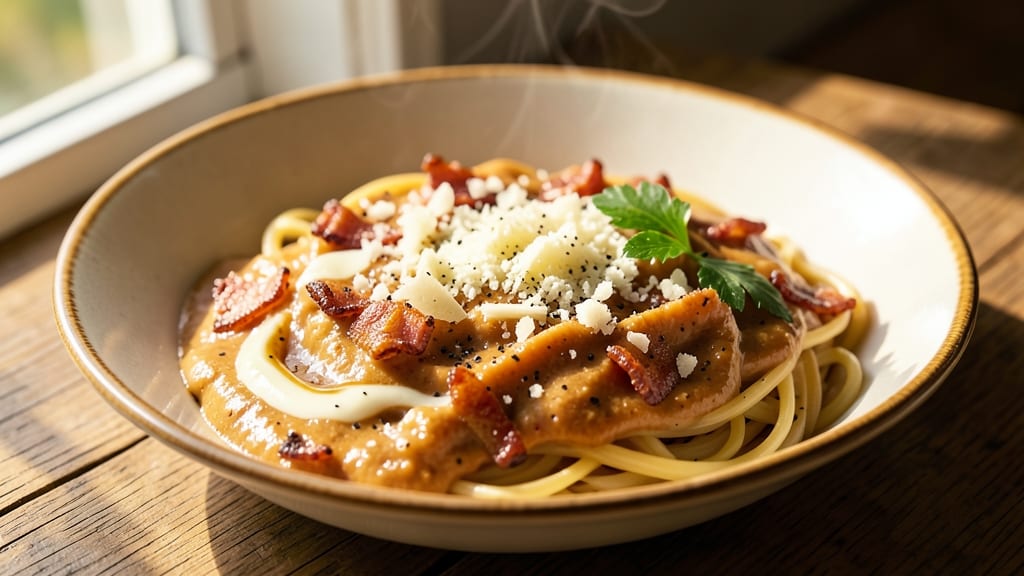
This bacon carbonara sauce recipe transforms simple ingredients into a velvety, smoky emulsion that clings to pasta like a dream.
The secret lies in pancetta rendered to crispy perfection and a perfect balance of egg yolks, cheese, and cream—creating a sauce that's rich yet light, with just the right amount of smoky depth. I developed this recipe after years of perfecting the emulsion technique, ensuring it's foolproof even for beginners.
The foundation starts with crispy pancetta, which adds a smoky, savory backbone to the sauce. Cooked low and slow, the fat infuses the cheese and egg yolks, creating a luxurious texture that's neither greasy nor heavy.
The key is tempering the yolks with warm pasta water, which prevents scrambling while ensuring the sauce binds perfectly. This method guarantees a sauce that's creamy, cohesive, and packed with flavor.
What makes this sauce truly special is its versatility—it can be made ahead and stored in the refrigerator for up to three days, or even frozen for longer shelf life. When reheated gently, it retains its velvety consistency, making it perfect for meal prep or last-minute dinners.
The addition of Pecorino Romano and Parmesan adds a sharp, salty tang that cuts through the richness, balancing every bite.
Whether you're tossing it with fresh pasta or using it as a luxurious topping for grilled meats, this sauce delivers restaurant-quality results at home. The emulsion technique ensures a smooth, glossy finish that's impossible to resist. Ready to elevate your pasta game? Let’s get started.
Ingredients for bacon carbonara sauce
Nine essential ingredients create a smoky, velvety sauce that transforms simple pasta into a restaurant-worthy dish.
| Ingredient | Amount | Notes |
|---|---|---|
| Pancetta 🥓 | 6 oz | Thinly sliced, not bacon |
| Large Egg Yolks 🥚 | 4 whole | Fresh, room temperature |
| Heavy Cream 🥛 | ½ cup | Full-fat for richness |
| Pecorino Romano Cheese 🧀 | ¾ cup | Freshly grated, aged |
| Parmesan Cheese 🧀 | ½ cup | Freshly grated, aged |
| Unsalted Butter 🧈 | 2 tbsp | Cold, cubed |
| Freshly Ground Black Pepper 🌶️ | 1 tsp | Freshly cracked |
| Diamond Crystal Kosher Salt 🧂 | ½ tsp | Fine grain preferred |
| Pasta Water 💧 | 1 cup | Reserved from cooking |
Pancetta is the star here—it needs to render slowly to crisp while infusing the sauce with deep smokiness. Look for thick-cut slices at specialty butchers or Italian markets; pre-packaged bacon just won't cut it. The cheeses? Pecorino Romano and Parmigiano-Reggiano are non-negotiable for that sharp, salty bite—skip the pre-grated stuff, it's full of anti-caking agents. For the yolks, room temperature is critical—they'll emulsify better and won't curdle. I always buy extra yolks when I see them on sale at Whole Foods—they're worth the investment for this sauce.
No pancetta? Guanciale works perfectly if you can find it, but thick-cut bacon in a pinch will do—just increase to 8 oz. Running low on Pecorino? Substitute with extra Parmesan, but you'll lose some of that tangy depth. The butter should be cold when you add it—this prevents the sauce from separating. For the pasta water, save at least 1 cup from your cooked pasta; it's the secret to a silky emulsion. And if you're worried about the sauce being too rich, remember: the pepper and salt balance everything perfectly—don't skimp on either.
This sauce keeps beautifully—3 days in the fridge sealed in an airtight container with a thin layer of oil on top to prevent a skin from forming. For longer storage, freeze in 1-tablespoon portions (perfect for single servings) or in 1-cup batches for larger meals. When reheating, do it gently over low heat, adding a splash of pasta water to restore that velvety texture. And here's a pro tip: Add a pinch of salt to the cold sauce before serving—it enhances all the flavors and makes it taste even more restaurant-worthy.
Why You'll Love This Recipe
- Same sauce, two vibes: slather it over spaghetti for a quick family dinner, or drizzle it on roasted chicken thighs when you’re feeling fancy. (Yes, even on a Tuesday night.) It’s the kind of recipe that works everywhere.
- Five-Ingredient Magic: I swear, that’s all it takes—crispy pancetta, rich yolks, a splash of cream, and those sharp cheeses. No chopping, no fuss, just toss everything in the right order and let the sauce do its thing.
- Umami Bomb: The pancetta alone carries the salty, smoky depth, but when you fold in those yolks and grated Pecorino? That creamy, cheesy, melty finish is like a hug for your taste buds. Honestly, I’ll take this over any sad store-bought Alfredo.
- Weeknight or Date Night: Same sauce, two vibes: slather it over spaghetti for a quick family dinner, or drizzle it on roasted chicken thighs when you’re feeling fancy. (Yes, even on a Tuesday night.) It’s the kind of recipe that works everywhere.
Step-by-step instructions for bacon carbonara sauce
This method delivers a perfectly balanced sauce with rich pancetta flavor and velvety egg emulsion every time.
Render the Pancetta Until Crispy
Place the 6 oz pancetta in a large skillet over medium heat—no oil needed as the fat will render out naturally. Cook for 8-10 minutes, stirring occasionally, until the pancetta is deep golden brown and crispy. The fat should pool in the pan, creating a flavorful base for your sauce. If the heat gets too high and the pancetta starts to smoke, reduce it to medium-low to prevent burning.
Remove the pancetta from the pan using a slotted spoon and transfer it to a paper towel-lined plate. Leave the rendered fat in the skillet—this is where all the magic happens. The crispy pancetta will be used later to add texture and depth to the sauce. Don't drain the fat completely; it contains concentrated flavor that will help emulsify the sauce.
Prepare the Cheese and Egg Mixture
In a medium bowl, whisk together the 4 whole large egg yolks, 0.5 cup heavy cream, 0.75 cup Pecorino Romano cheese, and 0.5 cup Parmesan cheese until smooth and fully combined. The mixture should be thick and pale yellow, almost like a custard. Add the 1 tsp freshly ground black pepper and 0.5 tsp Diamond Crystal kosher salt, whisking until evenly distributed. This step is crucial for creating the creamy, velvety texture that defines carbonara.
Set the bowl aside and keep it at room temperature. The mixture should be ready to go when you're finished cooking the pancetta. If you're working ahead, cover the bowl with plastic wrap and refrigerate until needed. The cold temperature will help prevent the eggs from cooking prematurely, ensuring a smooth sauce when you're ready to combine everything.
Cook the Pasta and Reserve Water
Cook your pasta according to package instructions until it is 1 minute shy of al dente. Reserve 1 cup of pasta water before draining—this starchy liquid is essential for creating the perfect emulsion. Drain the pasta and return it to the pot, tossing it with 1 tablespoon of the rendered pancetta fat to prevent sticking. Keep the pot off the heat while you prepare the sauce.
Here's the thing—pasta water is more than just a liquid. It contains starch that helps bind the sauce to the pasta and emulsify the egg mixture. If you don't have enough reserved, you can add a splash of water or even a little pasta water from another pot, but the reserved 1 cup is ideal for this recipe.
Combine and Emulsify the Sauce
Place the skillet with the rendered pancetta fat over low heat—the goal is to gently warm the fat without letting it smoke. Add the drained pasta to the skillet and toss to coat it evenly in the fat. Then, immediately add the cheese and egg mixture, stirring constantly with a wooden spoon or spatula. The residual heat from the pasta will begin to cook the eggs, creating a silky sauce.
Work quickly but carefully—this is the moment that matters. The sauce should start to thicken within 1-2 minutes of stirring. If it looks too thick or curdles slightly, add 1-2 tablespoons of reserved pasta water at a time until it reaches a smooth, creamy consistency. The sauce should coat the back of a spoon and cling to the pasta beautifully. If it's too thin, let it simmer gently for an additional 30 seconds to thicken further.
Finish and Serve Immediately
Return the crispy pancetta to the skillet and toss everything together to combine. The pancetta will add a smoky, savory contrast to the creamy sauce. Taste and adjust the seasoning if needed—you might need a pinch more kosher salt or black pepper to balance the flavors. The sauce should be rich, slightly salty, and perfectly balanced with the smoky pancetta.
Serve the carbonara immediately while the sauce is still warm and creamy. Each bite should deliver a harmonious blend of crispy pancetta, silky egg emulsion, and sharp, aged cheeses. If you're serving it to guests, keep the sauce warm in a low oven (200°F) until ready to serve, but try not to wait too long—the sauce is best enjoyed fresh off the stove.
Pro Tips For Making Bacon Carbonara Sauce
- CRISP THE PANCETTA LOW: Take that pancetta out of the fridge cold—no need to thaw it first—and cook it on medium-low heat. I learned this the hard way: high heat renders fat too fast, leaving you with greasy, uneven bits instead of crispy, flavorful shards. Let it render slowly, stirring occasionally, until the fat pools and the meat turns golden. That’s when you know it’s ready.
- GRATE CHEESE FINE: Skip the food processor for Pecorino and Parmesan—your fingers will thank you. Use a microplane or the smallest holes on a box grater, and grate it fresh right before mixing with the eggs. Pre-grated cheese has anti-caking agents that make the sauce grainy, and it loses sharpness fast. Do this step last, or the cheese will dull.
- TEMPER EGGS WITH CREAM: Don’t just toss cold yolks into hot pasta—you’ll end up with scrambled eggs. First, whisk the yolks with a splash of cold heavy cream (about 1 tablespoon), then slowly drizzle in the hot pasta water while stirring like your life depends on it. This creates a silky emulsion without cooking the eggs. Trust me, your sauce won’t curdle.
- USE PASTA WATER WISELY: Save a generous cup of starchy pasta water before draining—this is liquid gold for carbonara. If the sauce seems too thick, add it a little at a time, but don’t overdo it. The goal is to loosen the sauce, not dilute it into soup. And no, you can’t substitute milk or water—this isn’t risotto.
Pro cooking tips for great bacon carbonara sauce
Emulsion Perfection
The key to a silky sauce lies in the tempering technique—slowly warming the egg mixture over low heat while stirring constantly. I use a double boiler method by placing my bowl over a saucepan of barely simmering water, which gently cooks the yolks without scrambling them.
This creates a stable emulsion that clings to pasta beautifully. If your sauce breaks, don’t panic—just whisk in 1 tablespoon of reserved pasta water at a time until it smooths out again. 💫
Pancetta Fat Magic
Never drain all the rendered fat from your pancetta! The golden, smoky fat is what transforms this sauce from ordinary to extraordinary. It carries the pancetta’s flavor and helps emulsify the egg mixture.
I like to keep the fat in the skillet and use it to toss the cooked pasta before adding the sauce—this extra step adds an extra layer of richness. For best results, use thick-cut pancetta (not bacon), as it renders more flavorful fat.
Cheese Ratio Secrets
The Pecorino Romano to Parmesan ratio (3:2) is non-negotiable for authentic flavor. Pecorino adds a sharp, salty tang, while Parmesan provides a creamy depth. I always grate my own cheese using a microplane—pre-grated cheese contains anti-caking agents that prevent a smooth sauce.
For extra richness, add 1 tablespoon of cold butter at the end, stirring until fully melted into the sauce. This little trick makes the sauce feel even more luxurious. 🧀
Pasta Water Rescue
Never skip reserving pasta water—it’s the secret weapon for a perfect emulsion. The starch in the water acts as a natural thickener and helps bind the sauce to the pasta.
If your sauce seems too thick, add 1 tablespoon of pasta water at a time until it reaches a smooth, velvety consistency. I keep a small bowl of reserved water nearby while cooking, so I can adjust the sauce texture instantly.
Pro tip: If you don’t have enough, a splash of warm water works in a pinch.
Low-and-Slow Heat
Heat control is everything when combining the sauce. Too high, and your eggs will scramble; too low, and the sauce won’t emulsify properly. I always use low heat and stir constantly with a wooden spoon—this gentle motion helps the sauce thicken evenly.
If the sauce starts to curdle, immediately remove it from heat and whisk in more pasta water. The goal is a smooth, glossy finish that coats the back of a spoon. Patience here pays off in the best way! 🔥
Finishing Touches
The final step is where the sauce comes together. Return the crispy pancetta to the skillet and toss everything gently—this adds texture contrast to the creamy sauce. Taste and adjust seasoning with kosher salt and freshly cracked black pepper.
For an extra touch of elegance, finish with a drizzle of truffle oil or fresh parsley leaves. Serve immediately while the sauce is still warm and glossy—this is when it’s at its absolute best! ✨
Nutrition facts
Frequently asked questions
Can I make this sauce without heavy cream?
For a lighter version, replace the ½ cup heavy cream with ½ cup whole milk or even ¼ cup warm water—just add it gradually while stirring to maintain the emulsion. The sauce will be slightly less rich but still creamy. For extra depth, use ¼ cup chicken or pancetta stock instead of water.
Why did my sauce separate or get grainy?
This usually happens when the eggs cook too fast or the heat is too high. To fix it, immediately whisk in 1-2 tablespoons of reserved pasta water while stirring vigorously. For prevention: 1) Keep the egg mixture cold until ready to use, 2) Use low heat when combining, and 3) Temper the eggs slowly by adding them to the warm pasta fat gradually.
How can I make this sauce ahead of time?
This sauce stores beautifully! Prepare it completely (without the crispy pancetta) and refrigerate in an airtight container for up to 3 days. When ready to serve, reheat gently over low heat with a splash of pasta water, then stir in the crispy pancetta at the end. For longer storage, freeze in 1-tablespoon portions—thaw overnight in the fridge before reheating.
What's the difference between pancetta and bacon?
Pancetta is the Italian version of bacon, made from pork belly and traditionally cured with herbs and spices (no sugar). It's thicker-cut, fattier, and more flavorful than regular bacon, with a perfect balance of meat and fat. For this sauce, pancetta's rich, smoky fat is essential—it creates the velvety texture and deep flavor. If you must substitute, use thick-cut bacon (not pre-sliced) and increase to 8 oz.
Can I use this sauce for dishes other than pasta?
This versatile sauce works beautifully on grilled chicken, steak, or even as a dip for crudités. For proteins, toss the sauce with cooked meat over medium-low heat for 1-2 minutes until warmed through. For dipping, chill the sauce slightly first to thicken it. It also makes an amazing topping for baked potatoes or roasted vegetables—just add a pinch of salt and pepper to refresh the flavors.