
Sauces & Condiments
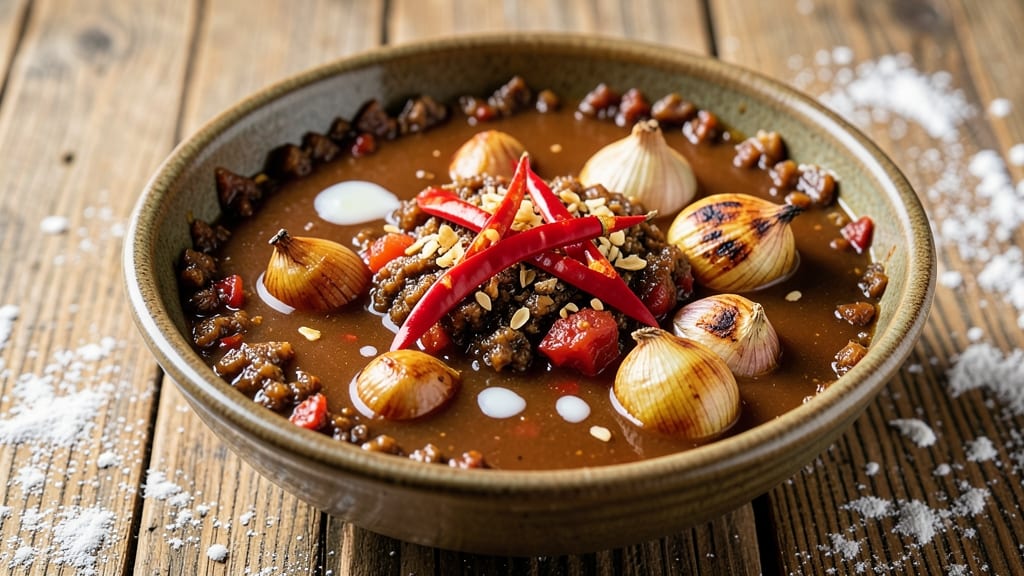
Balado sauce transforms any dish with its bold, tangy-spicy profile—equal parts heat and depth. This Indonesian staple starts with fermented shrimp paste (terasi), which carries smoky, umami richness, then brightens with tomatoes and vinegar for a balanced kick. The key lies in blending fresh garlic, shallots, and chili peppers into a paste before simmering, ensuring every spoonful delivers complex flavor without overpowering.
The sauce’s magic comes from its layered preparation: first toasting spices to deepen their aroma, then simmering with tomatoes until reduced to a glossy, jammy consistency. A splash of vinegar cuts through the richness, while a touch of sugar rounds out the acidity.
This version stays true to traditional methods but simplifies the process for home cooks—no special equipment required, just patience and attention to balance.
Perfect for dipping, drizzling over noodles, or marinating proteins, this sauce elevates simple dishes into restaurant-worthy meals. The heat builds gradually, rewarding careful tasting as you adjust spice levels to taste. Once made, it keeps for weeks in the fridge, ready to transform meals with minimal effort.
For best results, use fresh chilies and let the sauce sit overnight before using—this allows flavors to meld and intensify. Store in an airtight container, and you’ll have a pantry staple that turns ordinary ingredients into extraordinary dishes.
Ingredients for balado sauce
Ten essential ingredients transform into Indonesia's fiery, umami-rich balado sauce—bold enough to stand alone.
| Ingredient | Amount | Notes |
|---|---|---|
| Fermented Shrimp Paste (Terasi) 🦐 | 2 tbsp | Smoky, umami-rich, essential for authentic flavor |
| Fresh Red Chili Peppers 🌶️ | 4 whole | Bird's eye or Thai chilies for maximum heat |
| Shallots 🧅 | 4 whole | Finely chopped, not minced |
| Garlic Cloves 🧄 | 6 cloves | Peeled, roughly chopped |
| Canned Crushed Tomatoes 🍅 | 14 ½ oz | San Marzano preferred for sweetness |
| White Vinegar 💧 | 2 tbsp | Distilled vinegar for tangy balance |
| Granulated Sugar 🍚 | 1 tbsp | White sugar for flavor rounding |
| Ground Coriander 🌿 | ½ tsp | Freshly ground for aromatic depth |
| Ground Cumin 🌿 | ½ tsp | Toasted for enhanced earthiness |
| Salt 🧂 | ½ tsp | Diamond Crystal kosher preferred |
The fermented shrimp paste (terasi) is non-negotiable—it carries the sauce's signature smoky depth. Asian markets carry authentic versions, or use belacan as a substitute if unavailable. Fresh chilies are critical; Thai bird's eye or habanerored or yellow varieties work best, but yellow onions in a pinch. Toast your spices (coriander and cumin) in a dry pan for 30 seconds to deepen their aroma—this step makes all the difference. The tomatoes should be San Marzano if possible, but any high-quality canned crushed tomatoes will work.
No terasi? Anchovy paste at half the amount provides umami, though the flavor profile shifts slightly. Short on fresh chilies? Red pepper flakes or cayenne at one-third the heat level. Vinegar substitutes? Rice vinegar or lemon juice both work, but distilled white vinegar offers the cleanest tang. The sugar can be swapped for palm sugar or brown sugar for a more complex sweetness. For a smoother sauce, blend the garlic, shallots, and chilies into a paste before cooking—immersion blender or food processor works perfectly. If you prefer texture, leave them roughly chopped.
Balado sauce develops deeper flavor over time. Let it sit overnight in the fridge before using—this allows the heat to mellow and the umami to intensify. Store in an airtight container for up to 2 weeks in the refrigerator. The sauce thickens as it cools, so thin with a splash of water or vinegar when reheating. Freezes beautifully for 3 months—portion into ice cube trays for easy single-use servings. Always taste as you go; adjust heat with more chilies or sweetness with additional sugar or vinegar.
Why You'll Love This Recipe
- Five-Ingredient Magic: I swear by this—just terasi, chilies, shallots, garlic, and tomatoes. No fancy prep, no hidden spices lurking in my pantry. The terasi gives that unmistakable umami punch while the crushed tomatoes soften the heat into something smooth and addictive.
- Heat with Depth: That first char of the shallots and garlic? Chef’s kiss. The terasi adds this funky, salty complexity that makes the chili peppers sing without overpowering. It’s not just spicy—it’s layered, like a flavor sandwich where every bite reveals something new.
- Weeknight to Party: Slap this on grilled fish, stir it into noodles, or drizzle it over rice—it’s my go-to when I’m too tired for a full recipe. Honestly, I’ve even used it as a marinade for chicken skewers at summer BBQs. The sauce keeps well, so I make a big batch and let it shine in different ways.
- Budget Stretch: Terasi and chilies last forever, and crushed tomatoes? You’ll use them for other things before they go bad. I’ve turned a $5 bag of shallots and garlic into enough sauce for three meals, with leftovers that taste just as bold the second time around. Practical, but never boring.
Step-by-step instructions for balado sauce
This method delivers authentic Balado sauce with perfect balance between fiery shrimp paste and tangy tomato sweetness.
Toast and Prepare the Aromatics
Heat a medium saucepan over medium-high heat until hot. Add the 4 whole shallots and 6 cloves garlic, leaving them whole to prevent burning. Toast for 3-4 minutes until the shallots begin to soften and develop a golden hue around the edges. This step builds deep, nutty aromatics that form the sauce's foundation.
Remove the shallots and garlic from the pan and set aside. In the same pan, add the 2 tablespoons fermented shrimp paste (terasi) and cook for 1 minute until fragrant. The terasi will release its signature umami-rich aroma—this is your signal it's ready. Be careful not to let it burn, as the shrimp paste can darken quickly.
Char the Chili Peppers
While the terasi cooks, carefully char the 4 whole fresh red chili peppers directly over a gas flame or under a broiler for 2-3 minutes per side until blackened in spots. The charring deepens the chili's natural heat and adds smoky complexity. Place the charred peppers in a bowl, cover with plastic wrap, and let steam for 10 minutes to soften.
After steaming, remove the stems and seeds, then finely chop the peppers. The heat level will vary based on chili type—bird's eye peppers deliver intense heat, while Thai chilies offer a slightly milder but still fiery profile. I prefer to keep some seeds for maximum heat, but adjust based on your tolerance.
Build the Sauce Base
Return the pan to medium heat and add the chopped charred chili peppers. Cook for 1 minute to release their oils. Add the 14.5 oz canned crushed tomatoes, stirring to combine. The mixture will bubble vigorously—reduce heat to medium-low and let it simmer for 5 minutes to develop initial flavor.
Add the toasted shallots and garlic, along with the 2 tablespoons white vinegar, 1 tablespoon granulated sugar, 0.5 teaspoon ground coriander, 0.5 teaspoon ground cumin, and 0.5 teaspoon salt. Stir well to incorporate all ingredients. The vinegar will brighten the sauce, while the sugar rounds out the acidity and balances the heat.
Simmer to Perfection
Continue simmering for 15-20 minutes until the sauce thickens slightly and reduces by about one-third. You're looking for a consistency that coats the back of a spoon but remains pourable. Taste and adjust seasoning—add more sugar if the acidity is too sharp, or more salt if the flavors need balance.
The sauce should have a vibrant red color with visible flecks of shrimp paste and chili. If it's too thick, add 1-2 tablespoons water to reach your desired consistency. Remove from heat and let cool for 5 minutes before serving. This resting period allows flavors to meld completely.
Pro Tips For Making Balado Sauce
- Bloom the Aromatics: Sauté shallots and garlic in oil until they’re soft and golden—about 3-4 minutes—before adding anything else. I used to rush this, and the sauce tasted flat. Patience here builds the base flavor, so don’t skip it.
- Toast the Terasi: Fry the fermented shrimp paste (terasi) for 30 seconds until it sizzles and releases its funky aroma. This deepens its umami punch instead of letting it just sit there like a forgotten afterthought.
- Blister the Chilies: Char the fresh red chilies directly over the flame for 20-30 seconds per side before blending. The smoky bitterness cuts through the sweetness of the tomatoes and adds complexity—don’t just chop and toss them in.
- Simmer the Tomatoes: Reduce the crushed tomatoes with the sauce for 5-7 minutes until thickened. Skipping this step leaves you with a watery, unbalanced sauce—low heat is key, or you’ll end up with a burnt mess.
Creative variations of this recipe
Indonesian Street Food Style
For a street-vendor-inspired version, blend the finished sauce until completely smooth using an immersion blender. Stir in 1 tbsp toasted sesame oil and ½ tsp shrimp paste for extra richness. This version is perfect for dipping fried tofu or tempeh, or drizzling over nasi goreng.
I like to add ½ tsp shrimp paste to the pan during the final 5 minutes of simmering for that authentic street food punch. 🌶️
Thai-Inspired Balado
Swap the fermented shrimp paste for 1 tbsp fish sauce and add 1 tsp palm sugar instead of granulated sugar. Include ½ tsp white pepper and 1 stalk lemongrass (bruised and removed after cooking) for a Thai-inspired twist.
This version works beautifully with grilled chicken satay or as a dipping sauce for spring rolls. The fish sauce adds a salty depth that complements the heat perfectly.
Smoky Grilled Balado
Take your sauce to the next level by finishing it with a smoky char. After simmering, transfer the sauce to a small cast-iron skillet and cook over direct flame for 2-3 minutes until slightly caramelized. This technique mimics traditional open-flame cooking and adds a smoky dimension.
I recommend using mesquite or hickory wood chips in your grill or smoker for an authentic smoky flavor. Perfect for grilled shrimp skewers or beef ribs. ⚡
Sweet and Tangy Fusion
For a fusion version, add ½ cup pineapple juice and 1 tbsp honey during the final 5 minutes of simmering. This balances the heat with sweet-tart notes that work wonderfully with grilled pork or shrimp tacos.
The pineapple juice also adds a subtle fruity brightness that cuts through the richness of the shrimp paste. For extra depth, finish with ½ tsp ground cinnamon and a pinch of black pepper.
Spicy Dry Balado Paste
For a concentrated paste version, reduce the sauce until it forms a thick, spreadable consistency—about 30-40 minutes of simmering. Use this paste as a marinade for grilled meats or as a bold condiment for fried snacks. Store in an airtight container and thin with water or oil as needed.
I often use this version in Indonesian-style fried rice for an intense flavor boost. The paste keeps for 3 months in the fridge, making it a versatile pantry staple.
Balado for Vegetarian Dishes
Replace the shrimp paste with 1 tbsp soy sauce and ½ tsp miso paste for a vegetarian-friendly version. Add ½ tsp smoked paprika to mimic the umami depth of terasi.
This version works beautifully with tofu stir-fries, mushroom skewers, or as a dipping sauce for vegetable spring rolls. The miso adds a subtle fermented richness that bridges the gap without shrimp paste. 💫
Nutrition facts
Frequently asked questions
Can I make balado sauce without fermented shrimp paste?
Yes! For a vegetarian version, replace the 2 tbsp shrimp paste with 1 tbsp soy sauce + ½ tsp miso paste to mimic umami depth. Add ½ tsp smoked paprika for extra richness. The sauce will still pack heat and tanginess, though the flavor profile shifts slightly away from traditional Indonesian notes.
How do I adjust the heat level in balado sauce?
Start with 2-3 whole chilies for mild heat, or use 4-5 bird's eye chilies for maximum fire. For customization, remove seeds before chopping or add more sugar (½ tsp extra) to balance the burn. Always taste as you simmer—you can't remove excess heat once added!
What’s the best way to store homemade balado sauce?
Keep in an airtight container in the fridge for up to 2 weeks, or freeze for 3 months. The sauce thickens when cold—thin with 1 tsp water or vinegar before reheating. For long-term storage, portion into ice cube trays and transfer to a freezer bag for single-use servings.
Can I use this sauce in non-Indonesian dishes?
Drizzle over grilled chicken, fried rice, or pasta for instant heat. It also works as a marinade for beef skewers or a dipping sauce for spring rolls. The tangy-spicy balance elevates any protein or noodle dish. For fusion flavors, try adding pineapple juice or honey during the final simmer.
Why does my balado sauce look too thin?
Simmer uncovered for 5-10 extra minutes to reduce the liquid. If it’s still too runny, mix 1 tsp cornstarch with 1 tbsp water, stir into the sauce, and cook for 2 more minutes until thickened. Avoid adding too many tomatoes initially—they’re the main culprit for thinness.