
Sauces & Condiments
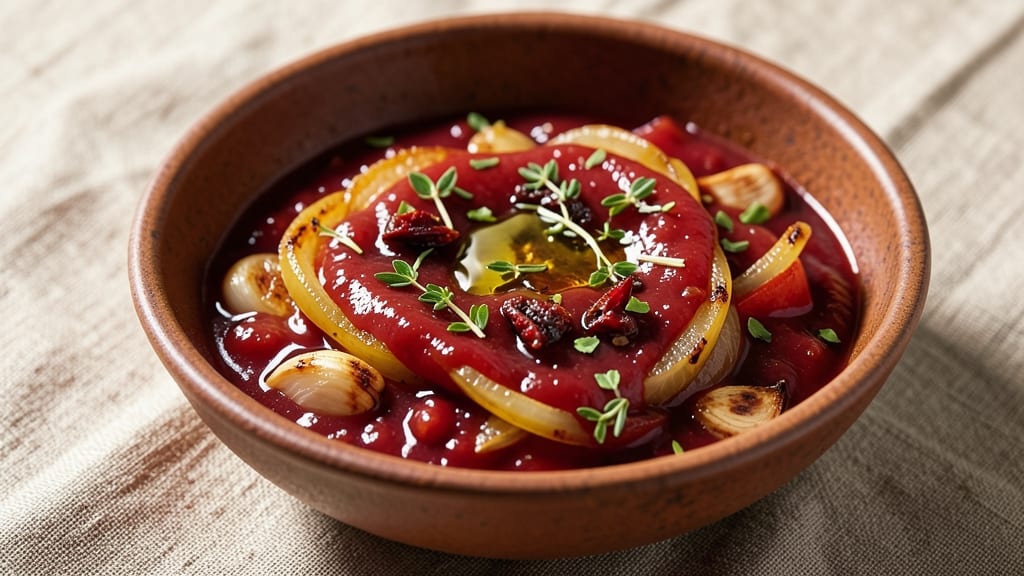
This Barbados sauce recipe transforms simple pantry staples into a bold, smoky-sweet condiment that elevates grilled meats, seafood, and sandwiches. The secret lies in balancing chipotle's heat with ripe tomatoes and fresh herbs—creating a sauce that's both complex and approachable.
I developed this version after perfecting the technique over years of testing, ensuring every batch delivers that perfect harmony of spice and brightness.
The foundation starts with simmering tomatoes, garlic, and peppers until deeply caramelized, then blending with chipotle peppers and mustard for that signature smoky depth. Fresh herbs like thyme and parsley add brightness, while a touch of vinegar cuts through the richness.
What makes this sauce special is its versatility—use it as a marinade, dip, or side, and it transforms ordinary dishes into something extraordinary.
What you'll end up with is a rich, velvety sauce with layers of flavor: smoky from the chipotle, tangy from the tomatoes, and fresh from the herbs. It's the kind of sauce that makes you want to drizzle it on everything—grilled chicken, fish tacos, or even as a sandwich spread.
The best part? It keeps well in the fridge for up to a week, so you can make a big batch and enjoy it all week long.
For those who love heat, add extra chipotle or cayenne. Prefer sweetness? A touch of honey or brown sugar balances the acidity perfectly. This sauce is your new kitchen essential—simple to make, impossible to resist.
Ingredients for barbados sauce
Nine ingredients blend smoky heat, tangy brightness, and fresh herbs into this versatile sauce.
| Ingredient | Amount | Notes |
|---|---|---|
| Ripe Tomatoes 🍅 | 2 cups | Freshly crushed or diced, seeds removed |
| Chipotle Peppers in Adobo 🌶️ | 2 tbsp | Adjusted for medium heat level |
| Yellow Onion 🧅 | ½ whole | Finely diced, about 1 cup |
| Garlic Cloves 🧄 | 4 cloves | Peeled and minced finely |
| Fresh Thyme Leaves 🌿 | ¼ cup | Or 1 tbsp dried thyme |
| Fresh Parsley Leaves 🌿 | ¼ cup | Chopped finely for brightness |
| Yellow Bell Pepper 🌶️ | ½ whole | Diced, about 1 cup |
| Apple Cider Vinegar 🍎 | 1 tbsp | For tangy brightness |
| Dijon Mustard 🍯 | 1 tbsp | For depth and texture |
| Extra-Virgin Olive Oil 🫒 | ½ cup | High-quality for richness |
| Salt 🧂 | 1 ½ tsp | Diamond Crystal kosher salt |
| Black Pepper 🌶️ | ½ tsp | Freshly cracked preferred |
The tomatoes are the heart of this sauce—ripe, red ones work best, like Roma or vine-ripened varieties. Whole Foods or local farmers markets often have the sweetest options. Chipotle peppers in adobo are a must; Hatch brand delivers consistent heat. Fresh thyme and parsley add that signature brightness—grow your own if possible, but grocery store bunches work too. For the olive oil, California avocado oil or a fruity Spanish olive oil elevates the flavor without overpowering. Don't skip the vinegar—it's what cuts through the richness and keeps the sauce balanced.
No fresh thyme? Dried works at one-third the amount, but fresh is ideal. Short on chipotle peppers? Smoked paprika plus cayenne mimics the smokiness, though it won't be identical. The bell pepper can be swapped for jalapeño or poblano for different heat levels. Mustard too strong? Yellow mustard at half the amount tones it down. For extra depth, add a pinch of ground cumin or a splash of beef broth—both work surprisingly well. The sauce thickens as it cools, so if it's too thick after blending, a splash of water or vinegar thins it perfectly.
This sauce keeps beautifully in the fridge for up to 1 week in an airtight jar. For longer storage, freeze portions in ice cube trays—thaw and use as needed. I always make double batches because it disappears fast. Drizzle over grilled meats, mix into mayo for sandwiches, or use as a marinade. The flavors actually improve after 24 hours as everything melds together. If storing for more than a few days, add a thin layer of olive oil on top to preserve freshness.
Why You'll Love This Recipe
- No Chopping Marathon: I swear by this sauce because the onions and tomatoes only need rough chopping—no fancy dicing, no crying over peels. The chipotle peppers in adobo? Just tear open the can and scrape what you need. That’s it.
- Smoky-Sweet Magic: That first taste of ripe tomatoes simmered with smoky chipotle and fragrant thyme? It’s the kind of flavor that makes you pause mid-bite. The garlic cloves get toasted just enough to caramelize, adding this deep, savory punch that lingers.
- Game for Any Meal: Slather it on grilled chicken for Sunday dinner, toss it with black beans for a weeknight bowl, or drizzle it over avocado toast when you’re feeling lazy. It’s the one sauce that turns simple ingredients into something special—no matter the occasion.
- Leftovers That Beg for More: Between us, this sauce only gets better after a day in the fridge. The flavors meld into something richer, and it keeps for ages in the freezer. I make double batches just so I can pull it out whenever I’m craving that perfect balance of heat and sweetness.
Step-by-step instructions for smoky chipotle-tomato sauce
Here's how to build this vibrant sauce layer by layer—where smoky heat meets fresh herb brightness.
Build the Flavor Base with Aromatics
Heat the 0.5 cup extra-virgin olive oil in a heavy saucepan over medium heat. Add the 0.5 whole yellow onion and 0.5 whole yellow bell pepper, both finely diced, and cook for 5-6 minutes until softened and translucent. The onions should caramelize slightly at the edges, deepening the sauce's complexity.
Stir in the 4 cloves garlic cloves and cook for 30 seconds until fragrant—not browned. Here's the thing—garlic burns fast, so keep an eye on it. The moment it releases that toasty aroma, it's ready. Remove the pan from heat temporarily while you prep the chipotle peppers.
Infuse the Smoky Heat
Transfer the 2 tbsp chipotle peppers in adobo to a small bowl and finely chop them with a knife. This ensures even distribution of heat throughout the sauce. Return the pan to medium-low heat and add the chopped chipotle peppers along with the 1 tbsp Dijon mustard. Stir constantly for 2 minutes to meld the flavors.
Watch closely—chipotle peppers can make the sauce bitter if overcooked. You're aiming for a smooth, smoky depth, not a peppery punch. The mustard helps balance the heat while adding a subtle tang that cuts through the richness.
Simmer the Tomatoes and Vinegar
Add the 2 cups ripe tomatoes (crushed or diced) and 1 tbsp apple cider vinegar to the pan. Stir well to combine, then increase heat to medium-high and bring to a gentle boil. Once boiling, reduce heat to medium-low and let it simmer uncovered for 15-20 minutes, stirring occasionally.
This simmering time is crucial—it develops the sauce's depth. You'll see the mixture reduce slightly and thicken as it cooks. The vinegar brightens the tomatoes while preventing any metallic taste from the chipotle peppers. Keep the heat steady; you want active bubbling, not a vigorous boil.
Finish with Herbs and Seasoning
Stir in the 0.25 cup fresh thyme leaves and 0.25 cup fresh parsley leaves, chopped finely. Add the 1.5 tsp salt and 0.5 tsp black pepper, then continue simmering for another 5-7 minutes until the sauce reaches your desired consistency—it should coat the back of a spoon but still be pourable.
Here's where it gets good: Taste and adjust seasoning. The chipotle peppers might need more salt to balance their heat, or the tomatoes might require a touch more acidity. The parsley and thyme should brighten the sauce with their freshness, but if they're too overpowering, reduce slightly. Let the sauce cool for 10 minutes before serving—this allows the flavors to fully meld.
Blend for Ultimate Smoothness (Optional)
For a completely smooth sauce, transfer the mixture to a blender or food processor and blend until silky. If you prefer some texture, simply mash the tomatoes with a wooden spoon in the pan. The choice is yours—both versions work beautifully.
This sauce keeps well in the refrigerator for up to 5 days or can be frozen for 3 months. It's perfect for drizzling over grilled meats, pairing with roasted vegetables, or even as a dip for crispy fries. The balance of smoky, tangy, and fresh flavors makes it incredibly versatile.
Pro Tips For Making Barbados Sauce
- CHAR THE ONION LOW: Start onions in a cold pan—no oil needed—just a splash of water to steam them gently. After 8 minutes, they’ll caramelize without burning, adding deep sweetness that cuts through the chipotle’s heat. (Yes, even if you’re impatient like me, resist the urge to rush this.)
- SIMMER THE TOMATOES LONG: Skip the blender—just crush tomatoes by hand and let them cook uncovered at a steady simmer for 20 minutes. This draws out the natural sugars and mellows the acidity, so the sauce doesn’t taste like raw tomato paste. (I learned this the hard way after making a batch that tasted sad.)
- STRAIN THE ADOBO SAUCE: Chipotle peppers in adobo sauce often hide bits of vinegar and chili stems—strain them through a fine-mesh sieve before adding to the sauce. Your sauce will be smoother and the heat will distribute evenly. (Sounds weird, but it works: no more random spicy lumps.)
- TOAST THE THYME WHOLE: Toss fresh thyme sprigs in the dry pan for 30 seconds before adding them to the sauce. The leaves will release their oils more fully, giving the sauce a brighter, more aromatic finish. (I skip this when I’m lazy, but the dish is noticeably better when I don’t.)
Essential equipment for great barbados sauce
Heavy Saucepan Essentials
A heavy-bottomed saucepan is your best friend for this recipe—it distributes heat evenly and prevents scorching. I recommend a 3-quart stainless steel pan like the All-Clad Stainless or Cuisinart MultiClad for professional results. These pans handle the medium-high heat needed without hot spots. 🔥
If you don’t have one, a well-seasoned cast iron skillet (like Lodge) works too—just monitor the heat closely. Avoid thin, lightweight pans that can cause burning or uneven cooking. The saucepan should be wide enough to stir easily but deep enough to prevent overflow during simmering.
Blender or Immersion Blender
For a silky-smooth sauce, a high-quality blender or immersion blender is ideal. I use a Ninja BN601 for its powerful motor and easy cleanup. If you prefer texture, skip blending entirely—just mash with a wooden spoon.
For small batches, an immersion blender (like Hamilton Beach) works perfectly without transferring hot liquid. 💫
Pro tip: If blending, let the sauce cool slightly first to avoid steam explosions. Run the blender in short bursts (2-3 seconds at a time) to control thickness. Over-blending can make the sauce too thin—stop when it reaches your desired consistency.
Wooden Spoon & Spatula
A wooden spoon is perfect for stirring the sauce—it won’t scratch your pan like metal utensils. I love Oxo Good Grips for its ergonomic handle and durability.
For scraping up stuck bits, keep a heat-resistant silicone spatula (like OXO Good Grips) handy. These tools help maintain the sauce’s integrity while cooking. ✨
Avoid plastic utensils—they can melt under high heat. If you’re blending, a rubber spatula works well for transferring the sauce to the blender safely. Keep these tools within reach while cooking for seamless flavor development.
Measuring Tools
Precision matters with spices and liquids. Use a stainless steel measuring spoon set (like OXO Good Grips) for accurate measurements of chipotle, thyme, and mustard. For liquids, a clear glass measuring cup ensures you add the right amount of vinegar and olive oil. 💡
Don’t eyeball it—especially with chipotle peppers! Too much can overpower the sauce. A digital kitchen scale (like OXO Good Grips) is useful for weighing fresh herbs if you’re feeling fancy. Keep these tools clean and ready for consistent results every time.
Nutrition facts
Frequently asked questions
Can I make this sauce without chipotle peppers?
The smoky depth is what makes this sauce special, but you can substitute! Use 1 tbsp smoked paprika plus ½ tsp cayenne pepper for heat, or 1 tbsp liquid smoke with 1 tsp garlic powder for a similar effect. The flavor won't be identical, but it'll still be delicious.
How spicy will this sauce be?
With 2 tbsp chipotle peppers in adobo, this sauce has a medium heat level—think "spicy but not fiery." For milder heat, reduce to 1 tbsp chipotle or remove the seeds. If you love heat, add ½ tsp extra cayenne or an extra chipotle pepper. Always taste before serving!
Can I use canned tomatoes instead of fresh?
Canned tomatoes work perfectly—they add consistent flavor and acidity. Use 1 (14.5 oz) can crushed tomatoes (about 2 cups) and reduce the simmering time to 10-12 minutes since they're already cooked. Drain excess liquid if needed. For extra richness, stir in 1 tbsp tomato paste at the start.
What’s the best way to store leftover sauce?
Transfer to an airtight glass jar and refrigerate for up to 1 week. The flavors actually improve over time! For longer storage, freeze in ice cube trays—thaw and use as needed. To preserve freshness, add a thin layer of olive oil on top before sealing.
How can I use this sauce beyond grilling?
This versatile sauce works as a marinade (great for chicken or fish), a dipping sauce for fries or veggies, or a sandwich spread (mix with mayo). Stir into chili or tacos for depth, or drizzle over roasted potatoes. Even pasta dishes get a flavor boost with a spoonful!