
Sauces & Condiments
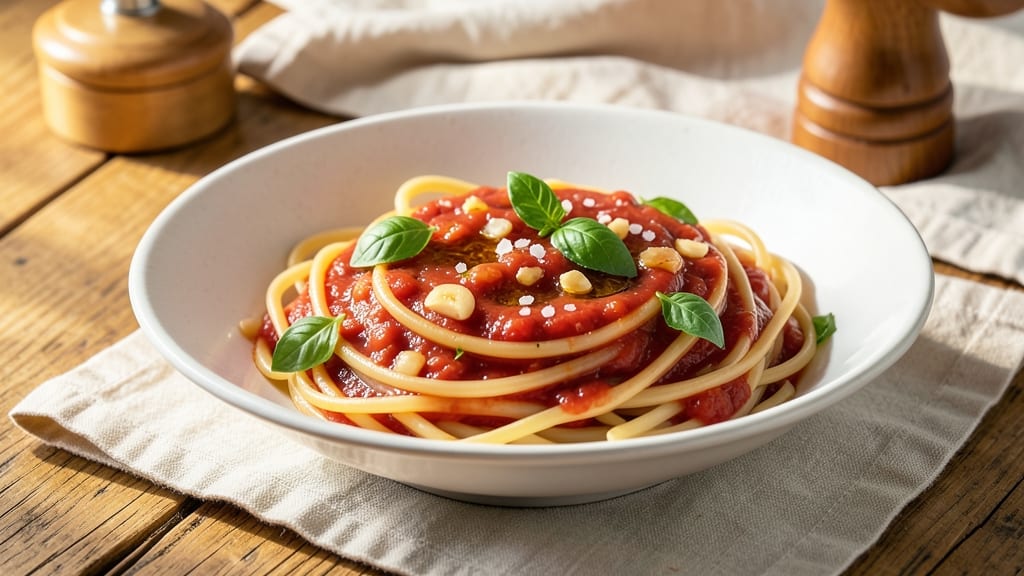
This basic red sauce pasta recipe delivers restaurant-quality tomato depth in just 20 minutes—no fancy techniques required. The secret lies in simmering canned tomatoes until their natural sweetness emerges, creating a rich, velvety sauce that clings perfectly to al dente pasta.
I've perfected this method after years of testing, ensuring every bite delivers that perfect balance of tangy, herby flavor without overpowering the simple ingredients.
The beauty of this recipe is its simplicity: you'll use pantry staples like canned tomatoes, garlic, olive oil, and fresh herbs to build a sauce that's far more complex than it appears.
The key steps are letting the tomatoes simmer until thickened (about 10 minutes) and toasting the garlic just until fragrant—not browned—to avoid bitterness. This method transforms basic ingredients into something that tastes like it's been simmering for hours.
By the time you're done, you'll have perfectly cooked pasta tossed in a sauce that's rich, slightly sweet, and aromatic from fresh basil or parsley. The sauce clings to each noodle, creating that satisfying "first bite" experience that makes homemade pasta feel like a restaurant meal.
This is the kind of weeknight dinner that comes together faster than takeout but tastes like you put in real effort.
Best of all, this recipe scales effortlessly—double the sauce for leftovers or serve it as a base for meatballs and grilled chicken. The technique works with any short pasta shape, from spaghetti to penne, so you can adapt it to whatever you have on hand.
Let's get cooking—your dinner table is about to get an upgrade.
Ingredients for basic red sauce pasta
Pantry staples and fresh herbs transform into restaurant-quality red sauce pasta in minutes.
| Ingredient | Amount | Notes |
|---|---|---|
| Canned San Marzano Tomatoes 🍅 | 28 oz | Crushed by hand for texture |
| Extra-Virgin Olive Oil 🫒 | ½ cup | High-quality, fruity variety |
| Garlic Cloves 🧄 | 4 cloves | Freshly minced, not pre-minced jar |
| Yellow Onion 🧅 | 1 whole | Medium size, finely diced |
| Fresh Basil Leaves 🌿 | ½ cup | Packed, stems removed |
| Short Pasta 🍝 | 12 oz | Penne or spaghetti preferred |
| Kosher Salt 🧂 | 1 ½ tsp | Diamond Crystal preferred |
| Ground Black Pepper 🌶️ | ½ tsp | Freshly ground preferred |
| Red Pepper Flakes 🌶️ | ¼ tsp | Optional for heat |
| Granulated Garlic 🧄 | ¼ tsp | Substitute if no fresh garlic |
| Fresh Parsley 🌿 | ¼ cup | Chopped for garnish |
| Reserved Pasta Water 💧 | ½ cup | From cooking pasta |
The tomatoes are the foundation—San Marzano if you can find them, but any high-quality canned tomatoes work. Look for cans without added salt, as you'll control the seasoning here. Fresh garlic and basil are non-negotiable; Trader Joe's and Whole Foods carry excellent quality. The onion adds depth, but don't overcook it—you want sweetness, not bitterness. For the pasta, De Cecco or Barilla are my go-tos—they cook evenly and hold sauce well. If you're short on time, grab pre-crushed tomatoes from the canned goods aisle; just drain them well before using.
No fresh basil? Dried works at one-third the amount, but fresh is ideal. Running out of garlic? Granulated garlic is a fine substitute—just use half the amount. The olive oil should be extra-virgin; California or Italian varieties have the best flavor. For heat lovers, add red pepper flakes to taste. Want more umami? A splash of balsamic vinegar or a pinch of sugar balances the acidity beautifully. The reserved pasta water is crucial—it helps the sauce cling to the noodles, so don't skip saving some while cooking.
This sauce reheats beautifully—simply warm with a splash of water or reserved pasta water. Keeps for 4-5 days in the fridge, though it's best within 2 days. For longer storage, freeze in portions for up to 3 months. I always make extra sauce to toss with grilled chicken or meatballs later in the week. The pasta itself cooks in about 10-12 minutes—just be sure to salt the water generously. If you're serving with protein, add it to the sauce at the very end to keep it warm without overcooking.
Why You'll Love This Recipe
- No Pantry Stress: I swear by this recipe when my fridge is half-empty but I still crave something real. One can of San Marzano tomatoes, a head of garlic, and a yellow onion—no fancy ingredients, just honest flavor that comes together while I wait for water to boil.
- Garlic-Basil Magic: That moment when the sauce simmers and the fresh basil hits? It’s like a flavor upgrade for my whole day. The olive oil caramelizes the garlic until it’s sweet and golden, then the basil finishes it with a bright, herbal punch—no secret spices needed.
- Weeknight Superhero: Between us, this is my go-to when I’m exhausted but still want to feel like I cooked something special. Toss it with spaghetti or penne, serve it over grilled chicken, or even stuff it into shells—it’s the kind of sauce that makes me look like a chef without any effort.
- Leftovers That Don’t Suck: Honestly, I make double batches because the sauce only gets better the next day. The tomatoes deepen, the flavors meld, and reheating it is just about adding a splash of water. Perfect for lazy lunches or when I forget to eat dinner but still have a crowd to feed.
Step-by-step instructions for simmered tomato pasta
Here's the straightforward method for building rich, balanced tomato sauce that clings perfectly to pasta.
Build the Flavor Base
Heat the 0.5 cup extra-virgin olive oil in a large pot over medium heat. Add the 1 whole yellow onion and cook for 5 minutes until softened and translucent. Add the 4 cloves garlic cloves and cook for another 30 seconds until fragrant—don't let it brown or it'll turn bitter.
This foundational step develops the sauce's depth. The onion provides sweetness while the garlic adds aromatic complexity. Keep the heat moderate so the garlic doesn't burn before releasing its full flavor potential.
Develop the Tomato Sauce
Pour in the 28 oz canned San Marzano tomatoes and add 1.5 tsp kosher salt, 0.5 tsp ground black pepper, 0.25 tsp red pepper flakes, and 0.25 tsp granulated garlic. Stir well to combine, then bring to a gentle simmer over medium-low heat. Let it cook uncovered for 10 minutes while you prepare the pasta.
Simmering breaks down the tomatoes' natural pectin, creating a velvety texture. The acidity will mellow slightly, allowing the natural sweetness to emerge. Keep the heat low to prevent the sauce from boiling vigorously, which can make it watery.
Cook the Pasta Al Dente
Bring a separate pot of well-salted water to a rolling boil. Add the 12 oz short pasta and cook until 1 minute before the package instructions for al dente. Reserve 0.5 cup reserved pasta water before draining, then set the pasta aside.
Al dente pasta absorbs sauce beautifully without becoming mushy. The reserved pasta water acts as an emulsifier, helping the sauce cling to each strand. Don't rinse the pasta—surface starch is essential for proper sauce adhesion.
Combine and Finish
Add the drained pasta to the simmering tomato sauce. Stir gently to coat, then add 0.5 cup reserved pasta water. If the sauce seems too thick, add more pasta water 1 tablespoon at a time until it reaches a creamy consistency that coats the back of a spoon.
This is where the sauce comes together. The pasta water loosens the sauce just enough to create that signature clingy texture. Taste and adjust seasoning—you might need a pinch more salt to balance the acidity from the tomatoes.
Add Fresh Herbs and Serve
Remove the pot from heat and stir in the 0.5 cup fresh basil leaves and 0.25 cup fresh parsley. Let the pasta sit covered for 2 minutes to allow the flavors to meld, then toss again before serving.
The fresh herbs add brightness and cut through the richness of the tomato sauce. The brief resting period ensures even distribution of flavors. Serve immediately while the sauce is still warm and vibrant.
Pro Tips For Making Basic Red Sauce Pasta
- CRUSH THE ONION FIRST: Chop that yellow onion fine—think rice grains, not dice—so it dissolves into the sauce instead of lurking as chewy chunks. I used to skip this, and half the time, I’d end up picking out onion bits. A sharp knife and a quick crosshatch before slicing makes all the difference.
- SWEAT THE GARLIC LOW: After the onion softens, drop in the garlic and turn the heat down to medium-low. Toasting it until it’s golden and nutty takes 30-60 seconds—no, it won’t burn if you’re patient. I learned this the hard way when my sauce tasted bitter from overcooked garlic. Let it sing, not scream.
- SALT THE TOMATOES: Dump the crushed San Marzano tomatoes into the pan and add 1 teaspoon of salt right away. This breaks down the skins and pulls out the natural sweetness while the sauce simmers. Skipping this step means you’ll end up chasing flavor with extra herbs or sugar later.
- FINISH WITH COLD BASIL: Tear the fresh basil leaves (don’t chop—it gets bitter) and stir them in off the heat for 30 seconds. The cold leaves release their aroma instantly, and the sauce won’t turn to mush. I was skeptical until I tried it—now I never add basil to hot sauce.
Perfect pairings for basic red sauce pasta
Classic Wine Pairings
A crisp Chianti Classico from Tuscany is my go-to pairing—its bright acidity and cherry notes complement the tomato sauce beautifully. Look for a Sangiovese-based Chianti with 12-14% alcohol to balance the dish's richness. Serve slightly chilled (55-60°F) to enhance its vibrant fruit flavors. 🍷
For a white wine option, try a Vermentino from Sardinia. Its citrusy profile cuts through the tomato's acidity while highlighting the fresh basil. A Pinot Grigio from Alto Adige also works well, especially if your sauce has a touch of sweetness from simmering.
Both wines should be served at 45-50°F for optimal refreshment.
Beer Complements
A light Italian lager like Peroni or Moretti cleanses the palate between bites without overpowering the dish. The subtle maltiness enhances the tomato's natural sweetness. For craft beer lovers, a Belgian witbier with its peppery, citrus notes creates an unexpected but delightful contrast. 🍺
Non-Alcoholic Options
Sparkling San Pellegrino Aranciata—a blood orange soda—mirrors the sauce's acidity with its citrus undertones. For a more herbal option, try Sanbitter, an Italian bitter orange soda that pairs surprisingly well with basil. Both drinks should be served chilled (38-42°F) to refresh the palate.
Cheese Pairings
Serve with Parmigiano-Reggiano or Pecorino Romano for a classic Italian touch. The nutty, salty cheese contrasts the sauce's acidity beautifully. Grate it fresh over each serving so guests can customize their portions. A small wedge of burrata on the side adds creamy richness that complements the dish's tangy-sweet profile.
Side Dish Harmony
A simple arugula salad with lemon vinaigrette adds peppery brightness that cuts through the richness. Toss 4 cups baby arugula with 2 tbsp olive oil and 1 tbsp lemon juice, then finish with ¼ cup shaved Parmesan.
For a heartier option, serve with garlic bread made from a crusty Italian loaf like Ciabatta or Focaccia. 🥗
Dessert Balance
End the meal with affogato—vanilla gelato drowned in a shot of hot espresso—to cleanse the palate. The sweetness contrasts the tomato's acidity while the coffee's bitterness bridges the savory and sweet.
For a lighter option, serve limoncello sorbet with fresh berries for a citrusy finish that echoes the dish's bright flavors.
Nutrition facts
Frequently asked questions
Can I use fresh tomatoes instead of canned for this red sauce?
Fresh tomatoes work but require extra prep time. For a quick version, roast 4 large tomatoes at 400°F for 20 minutes until softened, then peel, seed, and blend with 1 tbsp olive oil and 1 tsp salt. Use 1.5 cups of this puree to replace the canned tomatoes. Fresh tomatoes need longer simmering (15 minutes) to break down properly.
Why does my tomato sauce turn out watery?
Watery sauce usually means one of two things: either the tomatoes weren't simmered long enough to thicken, or you didn't use enough pasta water. First, always simmer uncovered for the full 10 minutes to reduce liquid. Then, when combining with pasta, add reserved pasta water 1 tablespoon at a time until you reach a creamy consistency that coats the back of a spoon.
What's the best pasta shape for this sauce?
Short pasta shapes like penne, rigatoni, or farfalle work best because their ridges and crevices trap the sauce. For long pasta like spaghetti, use 1 minute less than package instructions to ensure al dente texture. Avoid delicate shapes like angel hair—they can break when tossed with chunky tomato pieces.
Can I make this sauce ahead of time?
This sauce actually tastes better the next day as the flavors meld. Store in an airtight container in the fridge for up to 4 days. When reheating, add 1-2 tablespoons of water or reserved pasta water to loosen the sauce. For longer storage, freeze in portions for up to 3 months. Thaw overnight in the fridge before reheating.
How can I add protein to this dish without overpowering the sauce?
For a balanced meal, add protein at the very end when serving. Grilled chicken breast or shrimp cooks in 3-4 minutes over high heat—just toss it with the pasta and sauce for 1 minute to warm through. For meatballs, simmer them in the sauce for 10 minutes before adding pasta. Never cook protein directly in the sauce before adding pasta, as it can make the sauce too acidic.