
Sauces & Condiments
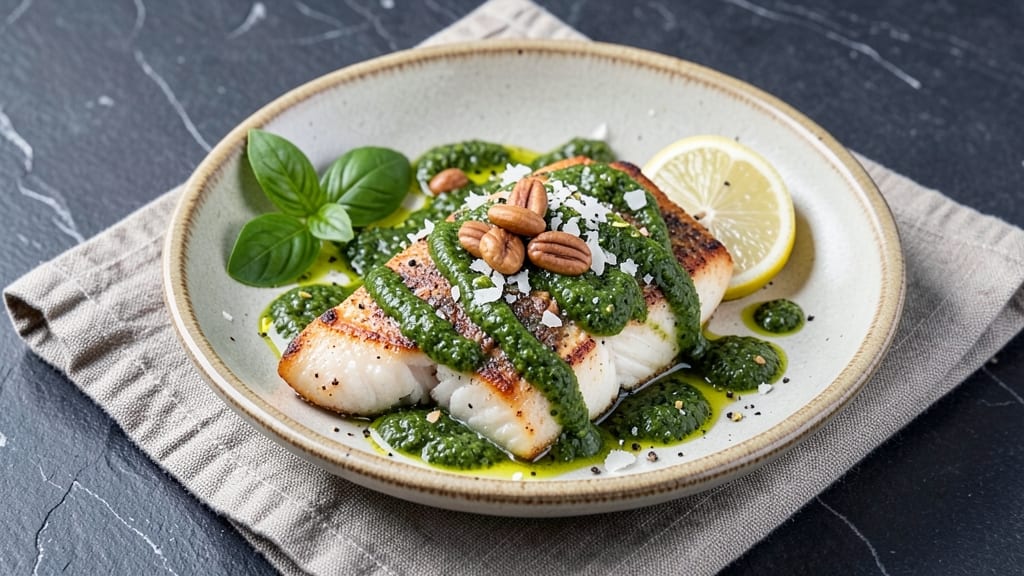
This basil sauce recipe for fish transforms simple ingredients into a vibrant, herbaceous sauce that clings perfectly to grilled, baked, or pan-seared fillets. The secret lies in balancing fresh basil, garlic, and lemon—creating a bright, aromatic sauce that enhances delicate fish flavors without overpowering them.
I developed this recipe after realizing most store-bought pesto lacks the acidity and freshness needed for seafood.
The sauce comes together in 10 minutes with just a handful of ingredients: fresh basil, garlic, olive oil, lemon juice, and a touch of parmesan. The key is blending the basil until smooth while keeping the texture light enough to coat fish evenly.
A splash of lemon brightens the sauce, ensuring it cuts through rich fish flavors while adding a refreshing zing.
What makes this sauce special is its versatility—it elevates everything from flaky white fish like cod to robust salmon or even shellfish. The sauce’s herbaceous depth and subtle tang make it a foolproof way to turn a simple fish dinner into something restaurant-worthy.
Plus, it stores well in the fridge for up to 5 days, making it perfect for meal prep.
Pair it with grilled lemon butter fish, baked haddock, or even as a dip for shrimp. The sauce’s simplicity ensures it won’t compete with the fish but instead enhances its natural taste. Ready to elevate your seafood dishes? Let’s make this bright green pesto.
Ingredients for basil sauce recipe for fish
This vibrant basil sauce transforms simple ingredients into a restaurant-quality pesto perfect for seafood dishes.
| Ingredient | Amount | Notes |
|---|---|---|
| Fresh Basil Leaves 🌿 | 3 cups | Packed, stems removed for maximum flavor |
| Extra-Virgin Olive Oil 🫒 | ¾ cup | High-quality, fruity variety preferred |
| Garlic Cloves 🧄 | 4 cloves | Peeled, roughly chopped for even distribution |
| Parmesan Cheese 🧀 | ½ cup | Freshly grated from a high-quality wedge |
| Fresh Lemon Juice 🍋 | 2 tbsp | Freshly squeezed for optimal acidity |
| Diamond Crystal Kosher Salt 🧂 | ½ tsp | Fine grain for precise seasoning |
| Freshly Ground Black Pepper 🌶️ | ¼ tsp | Freshly cracked for robust flavor |
| Pine Nuts 🥜 | ¼ cup | Toasted lightly for enhanced nuttiness |
The fresh basil is non-negotiable here—look for vibrant green leaves at your local farmers market or grocery store's produce section. Whole Foods or Trader Joe's typically carry high-quality basil that holds up well during blending. For the olive oil, invest in a high-quality extra-virgin variety like California Olive Ranch or Colavita, as the flavor profile significantly impacts the final sauce. The garlic should be plump and firm, with no green shoots or soft spots, ensuring maximum flavor without bitterness. Parmesan cheese is best when freshly grated from a wedge—pre-grated cheese contains anti-caking agents that can dull the sauce's richness.
No fresh basil? Dried basil at one-third the amount works in a pinch, though the texture won't be as smooth. Substitute pine nuts with walnuts or cashews for a different but equally delicious profile—just toast them first for enhanced flavor. If you're avoiding dairy, omit the Parmesan and increase the lemon juice to 3 tablespoons for added brightness. For a creamier texture without cheese, blend in 2 tablespoons of nutritional yeast. The lemon juice can be swapped for white wine vinegar if needed, though the flavor will be slightly more acidic. Always taste as you blend—adjust the salt and pepper to balance the sauce's acidity and richness.
This sauce stores beautifully in an airtight container with a thin layer of olive oil poured over the top to preserve freshness. It keeps in the refrigerator for up to 5 days, though the flavor continues to develop over time. For longer storage, freeze the sauce in ice cube trays—thaw and blend briefly before use. The sauce pairs perfectly with grilled fish, baked fillets, or as a dip for shrimp. To prevent bitterness, avoid over-blending—stop when the sauce is smooth but still vibrant green. Always use the sauce within 2 hours of blending for optimal freshness when serving.
Why You'll Love This Recipe
- I’ll be real: fresh basil and good olive oil aren’t cheap, but this recipe stretches them further than you’d think. A little goes a long way, and the leftovers? Perfect for tossing with grains or roasted veggies the next day. It’s the kind of sauce that makes simple fish feel like a splurge without breaking the bank.
- Foolproof Freshness: I swear by this sauce because it’s the rare recipe where fresh basil actually shines—no wilting, no overcooking, just bright, herby goodness straight from the jar to the pan. The moment I toss in those leaves with warm olive oil, the kitchen smells like a Mediterranean sunset, and that’s before the fish even hits the plate.
- Zero-Fuss Technique: Between us, I’ve tried those complicated sauces that require whisking and reducing and timing everything perfectly. This? Just pulse basil, garlic, and Parmesan in a food processor with olive oil until it’s chunky but smooth—maybe squeeze in lemon at the end. Done. Not the prettiest, but the taste makes up for it every time.
- Weeknight to Weekend: Honestly, this sauce works for everything: flaky white fish on Tuesdays, grilled salmon at summer BBQs, even as a drizzle over cold pasta salads when I’m too tired to cook. The lemon keeps it bright, the Parmesan adds depth, and it’s the one sauce I never skip—no matter the occasion.
Step-by-step instructions for bright green basil pesto
This vibrant basil sauce transforms simple fish into a gourmet masterpiece with just minutes of work.
Toast the Pine Nuts for Maximum Flavor
Heat a dry skillet over medium-low heat and add the 0.25 cup pine nuts. Toast them for 3-4 minutes, stirring constantly, until they turn a rich golden brown and release their nutty aroma. Watch carefully—they burn quickly once they reach this color. Remove immediately and let cool for 2 minutes before processing.
Toasted pine nuts add depth and prevent the sauce from becoming bitter. I like to use a small, heavy skillet for even toasting. If you don't have pine nuts, you can substitute walnuts or pecans, but the texture will differ slightly.
Process the Basil and Aromatics
In a food processor, combine the 3 cups fresh basil leaves (packed tightly), 4 cloves garlic cloves (peeled), 0.5 tsp diamond crystal kosher salt, and 0.25 tsp freshly ground black pepper. Pulse until the basil is finely chopped but not completely pureed—you want to preserve some texture. Scrape down the sides of the processor to ensure even blending.
This step is crucial for achieving that perfect balance between smooth and chunky. Too fine, and the sauce loses its vibrant texture; too coarse, and it won't blend properly with the olive oil. I like to pulse in short bursts to maintain that fresh basil brightness.
Gradually Incorporate the Olive Oil
With the processor running, slowly drizzle in the 0.75 cup extra-virgin olive oil through the feed tube. This gradual addition prevents the sauce from becoming too thick and ensures the oil emulsifies perfectly with the basil mixture. Process for an additional 30-45 seconds until the sauce reaches a smooth, vibrant green consistency.
The olive oil should be high-quality—its fruity notes complement the basil beautifully. If the sauce looks too thick, add 1-2 teaspoons of water to loosen it slightly. The texture should coat the back of a spoon but still be spreadable.
Fold in the Parmesan and Lemon Juice
Transfer the pesto to a bowl and fold in the 0.5 cup freshly grated Parmesan cheese and 2 tbsp fresh lemon juice using a silicone spatula. The lemon juice brightens the sauce and balances the richness of the cheese and nuts. Taste and adjust the seasoning—you may need a touch more salt or pepper to enhance the flavors.
This is where the sauce comes together. The Parmesan adds a salty, umami depth, while the lemon juice cuts through the richness, creating a perfect harmony. I like to let the sauce sit for 10 minutes before using it—this allows the flavors to meld completely.
Store and Use for Optimal Freshness
Transfer the basil pesto to an airtight container and press a piece of plastic wrap directly onto the surface to prevent oxidation. Store in the refrigerator for up to 5 days or freeze for up to 3 months. To use, simply stir or pulse again to restore the smooth texture.
This vibrant green sauce pairs beautifully with grilled or baked fish, pasta, or even as a sandwich spread. For the best results, use it within 24 hours of making it—freshness is key to that bright, herbaceous flavor.
Pro Tips For Making Basil Sauce Recipe For Fish
- Pulse the Basil: The food processor isn’t your enemy here—use it for 3-4 seconds max to chop basil leaves. Any longer and you’ll turn them into mush, which kills that fresh, bright flavor we’re all after. (Yes, even if you’re impatient like me.)
- Use Cold Garlic: Peel and smash those garlic cloves with the flat side of your knife before adding them to the oil. Cold garlic burns faster than you’d think, and once it turns bitter, there’s no fixing it. Smash it first, then let it sit in the oil for 30 seconds—just enough to wake up the flavor without turning it to ash.
- Strain the Oil: After cooking the garlic and basil, pour the sauce through a fine-mesh strainer to remove any bits. I learned this the hard way—one tiny garlic speck can make the whole dish taste uneven. It’s a 10-second effort that makes a real difference, especially if you’re serving this over delicate fish fillets.
- Finish with Lemon Last: Add the lemon juice after removing the sauce from heat—acid reacts with heat, and if you add it too early, you’ll dull the brightness. A quick squeeze right before serving keeps that zesty punch sharp. (Pro move: zest a little extra lemon into the sauce for complexity.)
Common mistakes when making this recipe
Over-Blending the Sauce
One of the biggest mistakes is blending the basil until it turns into a thick paste—this kills the sauce's vibrant texture and fresh flavor. Stop blending as soon as it reaches a smooth but still slightly chunky consistency.
I’ve ruined batches by over-processing, which makes the sauce taste bitter and lose its bright green color. 🌿
Using Low-Quality Olive Oil
Cheap or low-quality olive oil can make your basil sauce taste dull and flat. Always use a high-quality extra-virgin olive oil like California Olive Ranch or Colavita—their fruity notes elevate the sauce. I once used a generic store brand and was disappointed by the lack of depth in flavor.
Skipping the Lemon Juice
Omitting the lemon juice is a common mistake—it’s what balances the richness of the cheese and nuts while brightening the basil. Without it, the sauce can taste heavy and one-dimensional. I recommend using freshly squeezed lemon juice for the best acidity and flavor.
Not Toasting the Nuts
Using raw pine nuts (or any nuts) can make the sauce taste bland and underdeveloped. Always toast them lightly in a dry skillet until golden brown—this enhances their nuttiness and prevents bitterness. I’ve learned the hard way that skipping this step dulls the sauce’s overall flavor profile.
Adding Too Much Cheese
While Parmesan adds depth, overdoing it can make the sauce too salty or heavy. Stick to ½ cup freshly grated Parmesan—pre-grated cheese contains anti-caking agents that can dull the flavor. I’ve had to rescue batches by thinning them with extra olive oil or lemon juice.
Storing Without Oil
Leaving the sauce exposed to air in the fridge causes it to oxidize quickly, turning it brown and bitter. Always cover it with a thin layer of olive oil before sealing the container.
I store mine in a small jar with plastic wrap pressed directly on the surface to lock in freshness for up to 5 days.
Nutrition facts
Frequently asked questions
Can I use dried basil instead of fresh?
Fresh basil is ideal for that vibrant flavor, but you can substitute 1 tablespoon dried basil for every 3 tablespoons fresh. The texture will be less smooth, though. For best results, blend the dried basil with a splash of water first to rehydrate slightly before adding other ingredients.
How do I prevent the sauce from turning bitter?
Over-blending is the main culprit! Stop blending as soon as the sauce reaches a smooth but slightly chunky consistency. Also, always use fresh ingredients—wilted basil or stale garlic can develop bitter flavors. Toasting the nuts properly (until golden) also prevents bitterness from developing.
What fish pairs best with this sauce?
This sauce works beautifully with delicate white fish like cod, halibut, or mahi-mahi, but also enhances richer fish like salmon or tuna. For shellfish lovers, it's perfect with shrimp or scallops. The bright lemon-basil flavor complements fish that needs a little acidity to balance its natural oils.
Can I make this sauce ahead of time?
Yes! Store it in an airtight container with a thin layer of olive oil on top to preserve freshness. It keeps well in the fridge for up to 5 days. For longer storage, freeze in ice cube trays—thaw and blend briefly before using. The flavor actually improves slightly after resting overnight.
What if I don't have pine nuts?
No problem! Toasted walnuts, cashews, or even sunflower seeds work well as substitutes. For a nut-free version, simply omit them—the sauce will be lighter but still delicious. Just be sure to toast any substitute nuts first to enhance their flavor and prevent bitterness.