
Sauces & Condiments
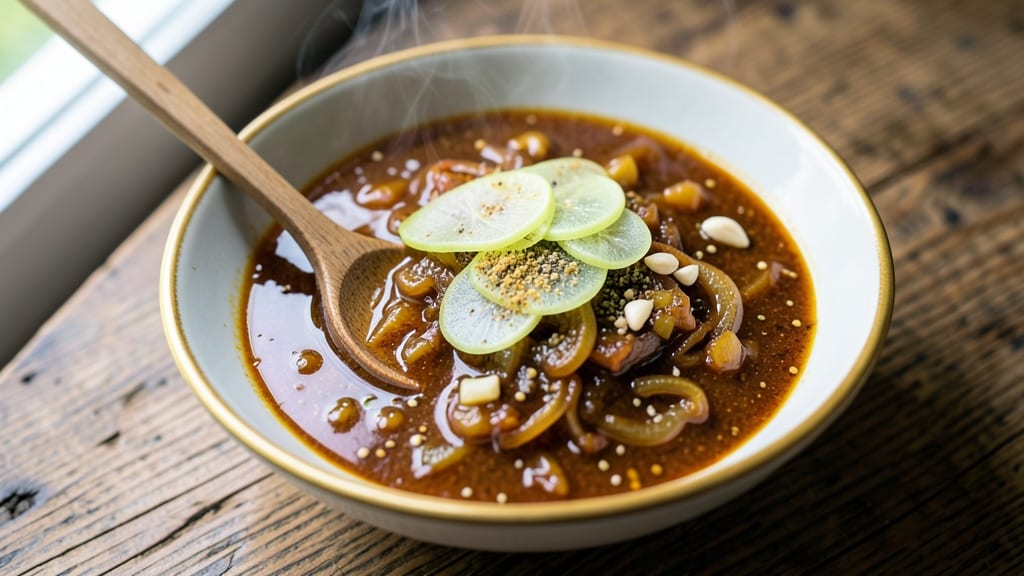
This slow-simmered curry sauce transforms ordinary meals into aromatic masterpieces with just a few simple ingredients. The secret lies in fresh ginger and a balanced blend of UK-friendly spices that build depth over time.
Unlike store-bought versions, this sauce delivers layers of flavor that evolve with each use—perfect for curries, stir-fries, or even as a bold marinade.
The recipe begins with a fragrant base of onions, garlic, and ginger, gently caramelized before introducing ground spices like cumin, coriander, and turmeric. A splash of tomato paste and a touch of coconut milk create the perfect balance between richness and acidity.
The sauce thickens beautifully as it simmers, absorbing all those warm, earthy notes into every spoonful.
What makes this sauce truly adaptable is its heat level flexibility—start with mild curry powder, then adjust with chili flakes or fresh chili to suit your taste.
It keeps well in the fridge for up to 5 days, or you can freeze portions for months, making it an essential pantry staple. The versatility doesn’t end there; use it to elevate everything from roasted vegetables to grilled meats.
For best results, let the sauce rest for 10 minutes after simmering—this allows the flavors to meld completely. The subtle sweetness of the caramelized onions pairs perfectly with the bright, zesty kick of fresh ginger, creating a harmony that’s impossible to resist.
Whether you're cooking for family or meal prepping, this sauce will become your go-to flavor enhancer.
Ingredients for curry sauce recipe uk
Fresh ginger and UK-friendly spices transform simple pantry staples into an aromatic sauce masterpiece.
| Ingredient | Amount | Notes |
|---|---|---|
| Yellow Onions 🧅 | 1 ½ cups | Finely diced for caramelization |
| Fresh Ginger Root 🌿 | ½ cup | Finely grated, vibrant color |
| Garlic Cloves 🧄 | 4 cloves | Minced, for aromatic depth |
| Ground Cumin 🌿 | 1 tbsp | Toasted for deeper flavor |
| Ground Coriander 🌿 | 1 tbsp | Freshly ground preferred |
| Turmeric Powder 🌶️ | 1 tsp | Bright yellow color |
| Mild Curry Powder 🌶️ | 2 tbsp | UK blend preferred |
| Tomato Paste 🍅 | ½ cup | Smooth, no lumps |
| Light Coconut Milk 🥥 | 1 cup | Full-fat for creaminess |
| Vegetable Stock 💧 | 1 cup | Homemade or low-sodium |
| Red Chili Flakes 🔥 | 1 tsp | Adjust for heat preference |
| Extra-Virgin Olive Oil 🫒 | 2 tbsp | High quality for richness |
| Lemon Juice 🍋 | 1 tbsp | Freshly squeezed |
| Salt 🧂 | 1 tsp | Kosher or sea salt |
The ginger is non-negotiable—fresh, vibrant root from a well-stocked supermarket like Waitrose or Tesco makes all the difference. Look for bright, plump ginger with no wrinkles or soft spots. The onions? Red or yellow work best—they caramelize beautifully, adding natural sweetness. For the spices, Mace or Kew brand curry powder is a UK favorite, but any good-quality blend will do. Toast your cumin and coriander in a dry pan for 30 seconds before adding to the sauce—trust me, it’s worth the extra minute.
No fresh ginger? Powdered ginger at half the amount works in a pinch, but it lacks that bright zing. Running low on coconut milk? Greek yogurt or crème fraîche adds creaminess without the tropical notes. The tomato paste can be swapped for passata or blended tomatoes if you prefer a smoother texture. For heat lovers, swap mild curry powder for hot curry powder or add fresh chili. The sauce is forgiving—adjust to taste as you go.
This sauce tastes even better the next day as flavors meld. Store in an airtight container in the fridge for up to 5 days, or freeze for 3 months in ice cube trays for single-use portions. The caramelized onions keep well, so you can prep them ahead and store separately. For extra richness, stir in a splash of coconut cream before serving—game-changer for curries and stir-fries.
Why You'll Love This Recipe
- Here’s what sold me: this sauce costs pennies but works for everything. Too posh for a curry? Slather it on naan or drizzle it over chips. Too lazy for a full meal? Stir it into lentils or beans. The cumin alone makes cheap cuts of meat taste like a restaurant dish—no lie.
- Fewer Ingredients, Bigger Payoff: Honestly, I was skeptical at first—just onions, ginger, garlic, and those two spices? But that cumin and coriander combo transforms everything. The onions caramelize into sweetness while the ginger adds that zingy warmth, and suddenly, you’ve got depth without the ingredient list.
- Weeknight Magic: Between us, this sauce is my secret weapon for those nights when I’m too tired to think. Fry the onions low and slow, toss in the garlic and ginger, and by the time the cumin starts to bloom, dinner’s already halfway there. No fancy techniques—just patience and a pot.
- Leftovers That Don’t Suck: I make a double batch every time because this sauce keeps like a dream. Freeze half for lazy nights or stash it in the fridge to toss with rice, roasted veggies, or even scrambled eggs. That earthy coriander flavor actually gets better after a day or two—no sad, watery leftovers here.
Step-by-step instructions for slow-simmered curry sauce
This aromatic curry sauce builds flavor layer by layer—don't rush the process!
Develop the Flavor Base
Heat the 2 tablespoons extra-virgin olive oil in a heavy-bottomed saucepan over medium heat. Add the 1.5 cups finely diced yellow onions and cook for 8-10 minutes until softened and beginning to caramelize—that golden color means sweetness is developing. Here's the thing: don't walk away. You want those onions to turn a beautiful amber, not burn.
Once the onions are caramelized, add the 0.5 cup finely grated fresh ginger root and 4 cloves minced garlic cloves. Cook for another 2-3 minutes until the raw garlic smell disappears and the mixture becomes fragrant. This step is where all the magic begins—those aromatics form the foundation of your sauce. If you smell something burning, reduce the heat slightly and give it another minute to mellow out.
Toast the Spices
Lower the heat to medium-low and stir in the 1 tablespoon ground cumin, 1 tablespoon ground coriander, 1 teaspoon turmeric powder, and 2 tablespoons mild curry powder. Toast the spices for 1-2 minutes, stirring constantly—you'll see them sizzle and release their oils. This step deepens their flavor and prevents that bitter, raw taste. You're looking for the spices to smell warm and inviting, not burnt or acrid.
After toasting, immediately add the 0.5 cup tomato paste and stir vigorously to distribute it evenly. Cook for another 2 minutes, letting the tomato paste caramelize slightly against the spices. This creates a rich, concentrated base that will carry all the other flavors. If the mixture starts to stick, add 1-2 tablespoons vegetable stock to loosen it—this prevents burning while maintaining depth.
Build the Sauce
Pour in the 1 cup vegetable stock and 1 cup light coconut milk, then add the 1 teaspoon red chili flakes and 1 teaspoon salt. Bring everything to a gentle simmer over medium heat, then reduce the heat to low and let it cook uncovered for 15-20 minutes. Stir occasionally to prevent sticking, and watch for the sauce to thicken gradually—this slow simmer develops complex flavors.
Here's where patience pays off: the sauce should reduce by about one-third, becoming rich and velvety. You'll see the spices settle at the bottom, creating a beautiful, aromatic layer. If the sauce gets too thick before you're ready, add a splash more stock or coconut milk to reach your desired consistency. The goal is a sauce that coats the back of a spoon with a glossy sheen.
Finish and Brighten
Once the sauce has thickened to your liking, remove it from heat and stir in the 1 tablespoon freshly squeezed lemon juice. This brightens all the rich, earthy flavors and adds a touch of acidity that balances the dish. Taste and adjust the seasoning—you might need a pinch more salt or chili flakes to suit your preference. Real talk: this is where you decide if your sauce is going to be mild and comforting or bold and fiery.
Let the sauce sit off heat for 5 minutes before using. This resting period allows the flavors to meld completely. The sauce should be vibrant yellow-orange with flecks of spice throughout, and it should coat your spoon smoothly. If you're serving it with rice or curry, now's the time to add any protein or vegetables you're using—just toss them in gently to heat through without breaking up the sauce.
Pro Tips For Making Curry Sauce Recipe Uk
- SWEAT THE ONIONS LOW: I learned this the hard way—drowning onions in oil on high heat just burns them before they soften. Instead, use a medium-low flame and stir every 30 seconds until they’re translucent but not brown. That golden edge comes later, but you’ll never taste bitter onion if you take your time.
- GRATE GINGER FINELY: Sounds weird, but it works: use the small holes of a box grater (not the big ones) for ginger. This way, it blends smoothly into the sauce without clumps that make you wonder why your curry tastes like you’re chewing. No food processor? A sharp knife and a good chop will do, but grate if you can.
- TOAST SPICES SEPARATELY: After burning three batches of cumin and coriander, I finally figured out: toast them in the dry pan for 30 seconds before adding onions. This deepens their flavor without overpowering the dish. Just keep your eye on them—it’s easy to walk away for a second too long.
- SAVE THE GARLIC: Skip the urge to add raw garlic at the end. Instead, fry it with the onions until it’s just golden (about 2 minutes). This mellows its sharpness and lets the cumin and coriander shine. Overcook it, and you’ll taste bitterness—undercook it, and you’ll miss out on that nutty depth.
Best sauces and condiments for this dish
Mild UK Curry Base
For a gentle, family-friendly version, reduce the red chili flakes to ½ teaspoon and swap mild curry powder for a milder blend like Mace's Mild Curry Powder. Add ½ cup plain Greek yogurt at the end for creaminess and to mellow the heat.
This version works perfectly with chicken tikka masala or vegetable stir-fries. 🌶️
Spicy Kick Boost
Crank up the heat by adding 1 fresh red chili, finely chopped, with the onions. Replace ½ cup of the vegetable stock with ½ cup tomato passata for extra tang, then finish with 1 tablespoon sambal oelek for smoky depth.
This fiery sauce pairs brilliantly with grilled meats or spicy curry dishes. 🔥
Creamy Coconut Twist
Swap ½ cup of the vegetable stock for ½ cup coconut cream and stir in 1 tablespoon desiccated coconut at the end. This luscious variation is ideal for lamb curries or creamy vegetable dishes. For extra richness, add 1 tablespoon butter while simmering—trust me, it’s a game-changer. 🥥
Tomato-Free Option
Skip the tomato paste entirely and replace it with 1 cup passata or blended tomatoes for a smoother texture. Boost umami by adding 1 teaspoon soy sauce or 1 tablespoon fish sauce (if using in Asian-inspired dishes). This works wonderfully with seafood curries or tofu stir-fries. 🍅
Quick Stir-Fry Sauce
For a stir-fry sauce, reduce the simmering time to 10 minutes and add 1 tablespoon honey or maple syrup to balance the spices. Thin with extra stock to a pourable consistency. Toss with wok-fried vegetables or grilled prawns for a speedy meal. 💫
Storage & Freezing
Store in an airtight container in the fridge for up to 5 days—flavors actually improve! For long-term storage, freeze in ice cube trays for single-use portions. Thaw overnight in the fridge, then reheat gently on the stovetop with a splash of water or stock.
The sauce thickens when cold, so stir before using. ❄️
Nutrition facts
Frequently asked questions
Can I make this curry sauce without coconut milk?
Swap the coconut milk for 1 cup plain Greek yogurt or crème fraîche to keep it creamy while maintaining a UK-friendly flavor profile. For a lighter option, use 1 cup vegetable stock and add 1 tablespoon cornflour to thicken it later. The sauce will still develop rich, aromatic flavors without coconut.
How do I adjust the heat level for kids or sensitive stomachs?
Start by reducing the red chili flakes to ¼ teaspoon or omit them entirely. For extra mildness, stir in ½ cup plain yogurt at the end—it cools the spices and adds creaminess. If you prefer no heat at all, use mild curry powder and skip the chili flakes completely. The sauce will still taste delicious!
What's the best way to use leftover curry sauce?
Leftover sauce is perfect for glazing grilled meats, tossing with stir-fried veggies, or drizzling over rice dishes. Thin it with a splash of stock if it's too thick, or reduce it further by simmering uncovered. Freeze portions in ice cube trays for easy single-use additions to soups or marinades. The flavors deepen over time!
Can I make this sauce in a slow cooker?
Yes! Combine all ingredients (except lemon juice) in your slow cooker and cook on low for 3-4 hours, stirring occasionally. Add the lemon juice at the end. The slow cooker method is perfect for hands-off flavor development, though you may need to adjust the stock or coconut milk slightly to reach your desired consistency.
Why does my sauce look too thin after simmering?
Sauces thicken as they cool, so don't worry if it looks runny while hot. If it's still too thin, simmer uncovered for 5-10 more minutes to reduce it. For instant thickening, mix 1 tablespoon cornflour with 2 tablespoons cold water, stir into the sauce, and cook for 1-2 minutes until thickened. Avoid over-thickening—you want it glossy, not gluey!