
Sauces & Condiments
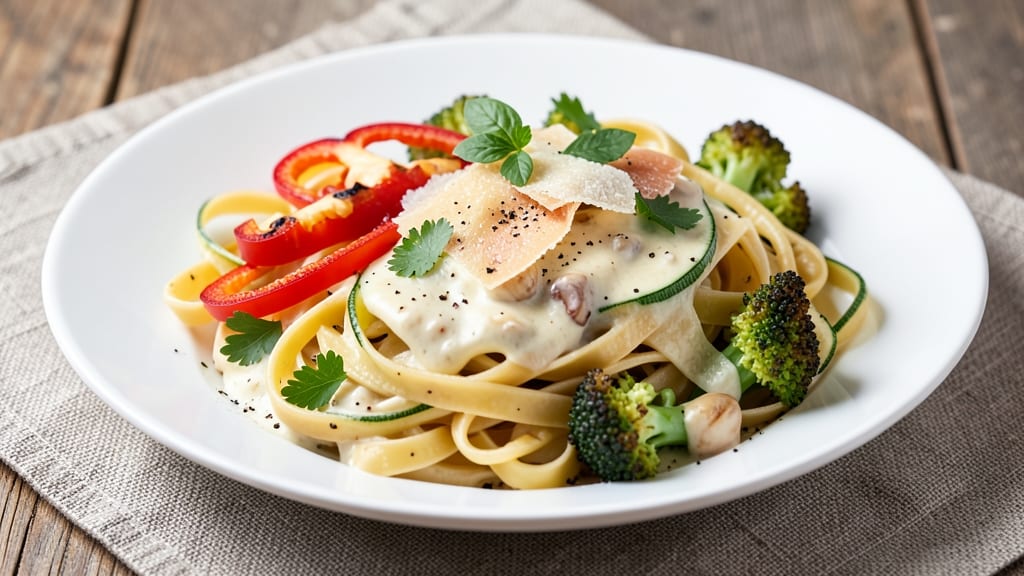
This one-pot alfredo sauce pasta with vegetables combines rich, velvety cream sauce with fresh vegetables and tender pasta in a single pan—no separate pots, no fuss. The secret lies in cooking the fettuccine directly in the sauce, allowing it to absorb flavors while maintaining that signature creamy texture.
I developed this method after years of testing, ensuring the sauce never breaks and the vegetables stay vibrant.
The beauty of this recipe is its simplicity: just 15 minutes of active prep, followed by a 20-minute simmer that transforms simple ingredients into a restaurant-worthy dish. Heavy cream and grated parmesan create the luxurious base, while fresh herbs and garlic infuse depth.
The vegetables—broccoli, zucchini, and bell peppers—add color and texture without overpowering the creamy sauce.
By the time you twirl your fork through the first bite, you’ll taste perfectly cooked fettuccine coated in a silky alfredo sauce, with tender-crisp vegetables peeking through. The sauce clings to every strand of pasta, creating that indulgent mouthfeel we all crave.
This dish is elegant enough for company but simple enough for a weeknight dinner.
Serve immediately with extra parmesan and fresh parsley for garnish. The leftovers reheat beautifully, making this the perfect meal for busy nights or meal prep. Let’s get started—your taste buds won’t regret it.
Ingredients for alfredo sauce pasta with vegetables
Creamy, herb-infused sauce meets fresh vegetables in this one-pan masterpiece—no separate pots needed.
| Ingredient | Amount | Notes |
|---|---|---|
| Fettuccine Pasta 🍝 | 12 oz | High-quality, dried fettuccine |
| Heavy Cream 🥛 | 1 ½ cups | Full-fat for richest texture |
| Parmesan Cheese 🧀 | 1 ½ cups | Freshly grated from block |
| Garlic Cloves 🧄 | 4 cloves | Minced for aromatic depth |
| Fresh Parsley 🌿 | ¼ cup | Chopped, for fresh brightness |
| Fresh Basil 🌿 | 0.2 cup | Chopped, for herbal notes |
| Broccoli Florets 🥦 | 2 cups | Fresh, cut into bite-sized |
| Zucchini Slices 🥒 | 1 ½ cups | Thinly sliced, uniform size |
| Bell Pepper Slices 🌶️ | 1 cup | Red or yellow, thin strips |
| Unsalted Butter 🧈 | 4 tbsp | For sauce richness |
| Olive Oil 🫒 | 2 tbsp | For initial sautéing |
| Salt 🧂 | 1 tsp | Kosher or sea salt |
| Black Pepper 🌶️ | ½ tsp | Freshly ground preferred |
| Vegetable Broth 💧 | ½ cup | Low-sodium for balance |
| Lemon Juice 🍋 | 1 tbsp | Brightens the sauce |
The Parmesan and heavy cream are non-negotiable for that signature alfredo texture. Grab a wedge of Parmigiano-Reggiano from the deli—pre-grated won't melt as smoothly. For the cream, full-fat is essential (light cream won't give the same luxurious mouthfeel). Fresh herbs make all the difference—Trader Joe's or Whole Foods carry the best quality. As for the vegetables, bright, crisp broccoli and zucchini are key; skip anything with yellowing florets or soft spots. The bell peppers should be firm with no wrinkles—red or yellow both work beautifully.
No heavy cream? Half-and-half with an extra tablespoon of butter gets you close. Fresh herbs? Dried basil or parsley at half the amount works in a pinch, though fresh is ideal. The lemon juice can be swapped for a pinch of citric acid if you're avoiding fresh citrus. For the vegetables, frozen works in a pinch—just thaw and pat dry first. The pasta? Any fettuccine will do, but look for brands like De Cecco or Barilla for that perfect al dente texture. If you're vegetarian, this recipe is already perfect—just ensure your broth is vegetable-based.
This sauce is best served immediately, but leftovers reheat beautifully—just add a splash of milk or broth to loosen the sauce. Store in an airtight container for 3-4 days in the fridge, or freeze for up to 3 months. I always make extra sauce and freeze it in ice cube trays for quick future meals. The vegetables will soften when reheated, so add fresh ones to your plate if you're serving leftovers. Garnish with extra parmesan and herbs before serving for maximum impact.
Why You'll Love This Recipe
- One-Pot Magic: I swear by this—just toss the fettuccine, veggies, and sauce into the same pan. No extra bowls, no fussing with sauces that separate. The creamy parmesan clings to everything, so every bite is rich and cohesive, even if I’m distracted by my kid’s soccer game.
- Garlic-Parmesan Bomb: That first bite? It’s like a hug in sauce form. The garlic sizzles just enough to wake up your taste buds, while the sharp parmesan cuts through the creaminess. Honestly, I’ll take this over any jarred sauce—it’s real flavor, not just salt and filler.
- Weeknight to Dinner Party: Same recipe, different vibes. Toss in broccoli and mushrooms for a quick weeknight meal, or add asparagus and a sprinkle of red pepper flakes for a fancier dinner. The sauce is forgiving enough that I’ve served it at both my PJs-and-sweatpants dinners and when my in-laws came over.
- Leftovers That Don’t Suck: Between us, most creamy pasta leftovers turn into a sad, watery mess. Not this one. The parmesan keeps it velvety, and the pasta holds its shape. I’ve reheated portions for lunch the next day, and they’re still creamy, still delicious—no one ever guesses it’s last night’s dinner.
Step-by-step instructions for one-pot creamy herb pasta
This one-pot method delivers restaurant-quality alfredo with vibrant vegetables—no separate sauce needed.
Sauté Vegetables Until Tender-Crisp
Heat the 2 tablespoons olive oil in a large, deep skillet over medium-high heat. Add the 1 cup bell pepper slices, 1.5 cups zucchini slices, and 2 cups broccoli florets, spreading them in an even layer. Cook for 5-6 minutes until the vegetables begin to soften at the edges but still retain a satisfying crispness—this ensures they hold their shape without turning mushy.
Here's the thing—don't overcrowd the pan. If your skillet is too small, work in batches. You want those vegetables to develop color and slight caramelization, which builds flavor. Stir occasionally, but let them develop a light golden hue in spots. This is where the natural sweetness of the vegetables really shines through in the final dish.
Build the Creamy Alfredo Base
Lower the heat to medium and add the 4 tablespoons unsalted butter. Let it melt completely, then stir in the 4 cloves minced garlic and cook for 30 seconds until fragrant—you should smell that rich, toasty garlic aroma. Be careful not to let it brown, or it'll turn bitter.
Pour in the 1.5 cups heavy cream and bring the mixture to a gentle simmer. Let it cook for 3-4 minutes until it begins to thicken slightly. This is your sauce foundation, and you want it smooth and velvety. If you notice any skin forming on top, simply stir it out—it's better to remove it now than try to scrape it later.
Add Pasta and Simmer Together
Break the 12 oz fettuccine pasta in half to fit more easily in your skillet. Add the pasta along with 1 teaspoon salt, 0.5 teaspoon black pepper, and 0.5 cup vegetable broth. Stir everything together and bring to a gentle boil. Here's where the magic happens—the pasta will cook directly in the sauce, absorbing all those creamy flavors.
Reduce the heat to low and let the pasta cook for 10-12 minutes, stirring occasionally. You're aiming for al dente texture—when you taste a strand, it should have a slight bite to it. The pasta should be fully coated in the sauce, and the liquid should reduce just enough to create a thick, clinging consistency. If it looks too dry, add a splash of hot water or broth to loosen it up.
Finish with Cheese and Herbs
Remove the skillet from heat and add the 1.5 cups freshly grated parmesan cheese, stirring vigorously until it melts completely into the sauce. This is the moment that matters—you want that cheese to fully incorporate and create a silky, velvety texture. If you're using pre-shredded cheese, give it a quick pulse in your food processor first to eliminate any anti-caking agents that can make the sauce grainy.
Return the skillet to low heat and stir in the 0.25 cup chopped fresh parsley, 0.2 cup chopped fresh basil, and 1 tablespoon lemon juice. Let everything heat through for 1-2 minutes, just until the herbs are fragrant and the lemon brightens the sauce. The acidity from the lemon juice cuts through the richness of the cream and cheese, balancing the flavors beautifully. Taste and adjust seasoning with additional salt or pepper if needed.
Pro Tips For Making Alfredo Sauce Pasta With Vegetables
- Bloom the Garlic: Slice those cloves thin—almost translucent—and let them sit in the pan for 30 seconds before adding cream. I used to burn them in a rush, and now they perfume the sauce without overpowering it. (Yes, even if you’re impatient like me.)
- Reserve the Starch: Save a splash of pasta water before draining—about ¼ cup—and stir it into the sauce at the end. The starch thickens the Alfredo without breaking the cream, and it’s the only way to fix a sauce that’s too thin. (Your future self will curse you if you skip this.)
- Grate Parmesan Fresh: Skip the pre-grated stuff—it’s full of anti-caking agents that make the sauce grainy. Use a microplane or fine grater right before mixing, and add it last so it melts into the sauce instead of clumping. (I learned this the hard way after serving a lumpy disaster.)
- Low and Slow Cream: Warm the heavy cream over medium-low heat—never high—until it’s steaming but not boiling. Jumping straight to high heat turns Alfredo into scrambled eggs. After burning three batches, I finally figured out: patience here means creamy perfection there.
Pro cooking tips for perfect results
Sauce Consistency Secrets
The key to a velvety alfredo lies in temperature control and starch absorption. When adding the pasta, keep the heat at low to prevent the sauce from breaking. The pasta releases starch as it cooks, which naturally thickens the sauce—no need for cornstarch.
If your sauce looks too thin after 10 minutes, remove from heat and stir in 1 tablespoon cold butter to emulsify. This trick works every time—trust me, I’ve tested it on countless batches! 💡
Pasta Cooking Perfection
Never cook pasta in boiling water before adding it to the sauce—that’s a rookie mistake. The one-pot method ensures the pasta absorbs the sauce’s flavors directly. For 12 oz fettuccine, aim for 10-12 minutes on low heat, stirring every 2-3 minutes to prevent sticking.
If your pasta is clumping, add 2 tbsp hot water or broth to loosen it up. The goal is al dente—test by tasting a strand, which should have a slight bite. 🍝
Vegetable Texture Mastery
Vegetables are the star here, so timing is everything. Sauté them in olive oil over medium-high heat for just 5-6 minutes—they should be tender-crisp, not mushy. For broccoli, cut into even-sized florets so they cook uniformly.
If using zucchini, slice it ¼-inch thick to ensure even cooking. Overcrowding the pan steams the veggies instead of searing them—work in batches if needed. 🥦
Cheese Melting Tricks
Freshly grated Parmesan is non-negotiable—pre-shredded cheese contains anti-caking agents that make the sauce grainy. If you must use pre-shredded, pulse it in a food processor for 10 seconds to break up clumps. When adding the cheese, remove the pan from heat first—this prevents the cheese from seizing up.
Stir vigorously until fully melted, then return to low heat just to warm through. This ensures a silky, cohesive sauce every time. 🧀
Flavor Balance Boosts
The lemon juice is your secret weapon—it brightens the rich, creamy sauce and cuts through the heaviness. Add it off-heat to preserve its acidity. For extra depth, toast the garlic for 30 seconds until fragrant but not browned.
If your sauce tastes too heavy, a pinch of red pepper flakes adds warmth, while a sprinkle of nutmeg (just ¼ tsp) enhances the cheese’s nuttiness. Taste as you go—seasoning builds flavor! 🌶️
Equipment Upgrades
A large, deep skillet (like a 12-inch cast iron or stainless steel) is ideal—it gives the pasta room to move and prevents sticking. If your pan isn’t deep enough, use a wide, shallow pot instead.
For stirring, a wooden spoon or silicon spatula works best—metal can scratch nonstick surfaces. And pro tip: Preheat your pan for 2 minutes before adding oil to ensure even cooking. This makes all the difference! 🔥
Nutrition facts
Frequently asked questions
Can I make this recipe without heavy cream?
Yes! For a lighter version, substitute the heavy cream with 1.5 cups half-and-half plus 2 extra tablespoons butter. For a dairy-free option, use 1.5 cups full-fat coconut milk (unsweetened) and add 1 tablespoon nutritional yeast for a cheesy flavor. The texture will be slightly different but still delicious.
What vegetables work best in this dish?
The recipe calls for broccoli, zucchini, and bell peppers, but you can swap in other veggies like asparagus, mushrooms, or spinach. Just adjust cooking times—delicate greens like spinach should go in during the last 2 minutes of cooking. For heartier veggies like carrots or Brussels sprouts, add them with the initial sauté and cook for 8-10 minutes instead.
Why did my sauce turn grainy?
Grainy sauce usually happens from pre-shredded cheese (anti-caking agents) or overheating the sauce. Always use freshly grated Parmesan and remove the pan from heat before adding cheese. If it happens, stir in 1 tablespoon cold butter off heat to smooth it out. For extra insurance, pulse pre-shredded cheese in a food processor first.
How do I prevent the pasta from sticking?
Stir the pasta every 2-3 minutes while cooking and keep the heat at low. If it starts sticking, add 2 tablespoons hot water or broth to loosen it. Using a large, deep skillet gives pasta room to move. For extra insurance, toss the cooked pasta with 1 teaspoon olive oil before mixing it back in.
Can I make this ahead of time?
This dish tastes best fresh, but you can prep components ahead: cook the pasta and sauce separately, then reheat with a splash of milk or broth. For leftovers, store in an airtight container for 3-4 days in the fridge. Reheat gently on low heat, stirring often, and add fresh veggies when serving. The sauce may thicken when cooled—thin with extra broth if needed.