
Sauces & Condiments
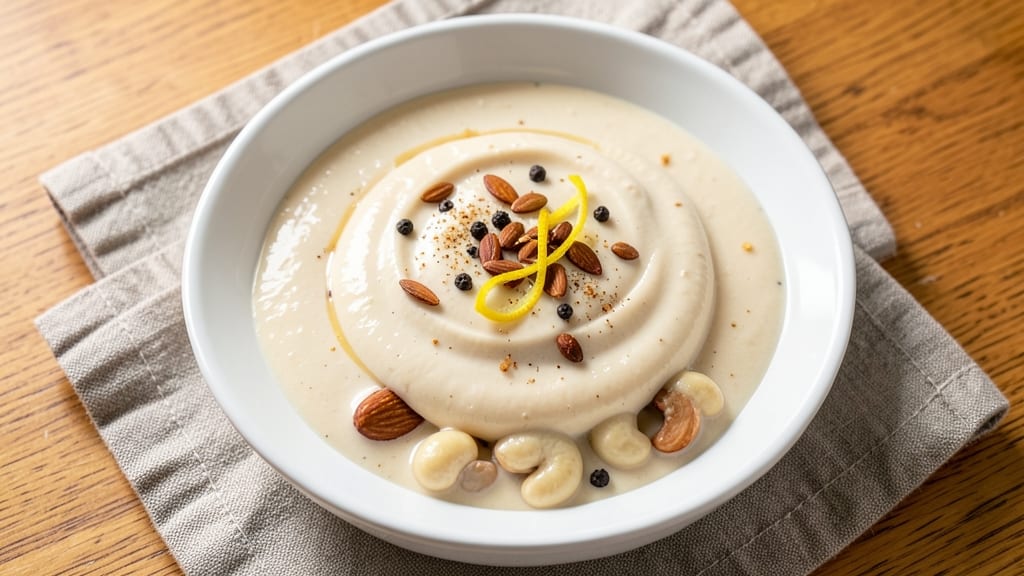
This almond milk cheese sauce recipe transforms simple pantry staples into a velvety, nut-free dip that rivals traditional cheese sauces. The secret lies in blending almond milk with cashews and nutritional yeast, creating a creamy, tangy sauce perfect for dipping or drizzling.
I developed this recipe after realizing how many vegan dishes needed a rich, cheesy element—without the dairy or nuts.
What sets this sauce apart is its versatility and smooth texture, achieved by soaking cashews to soften them and blending with warm almond milk for a silky finish. No blender? No problem—this recipe works with immersion blenders or even a food processor.
The nutritional yeast adds that signature cheesy flavor, while a touch of garlic powder and lemon juice keeps it bright and complex.
The result is a sauce so creamy and flavorful it disappears faster than you can say "vegan mac and cheese." Use it as a dip for veggie sticks, a pasta topping, or a creamy base for loaded baked potatoes.
The best part? It comes together in 10 minutes with ingredients you likely already have on hand.
This sauce also freezes beautifully, making it the perfect make-ahead condiment for meal prep. Whether you're hosting a dinner party or just craving comfort food, this almond milk cheese sauce delivers restaurant-quality richness without the guilt. Let’s get started!
Ingredients for almond milk cheese sauce
Nine simple ingredients create this velvety almond milk cheese sauce that's creamy and tangy without nuts or dairy.
| Ingredient | Amount | Notes |
|---|---|---|
| Unsweetened Almond Milk 🥛 | 1 cup | Warm for blending ease |
| Raw Cashews 🥜 | ½ cup | Soaked in hot water 15 mins |
| Nutritional Yeast 🧀 | ⅓ cup | Fortified for cheesy flavor |
| Lemon Juice 🍋 | 1 tbsp | Freshly squeezed for brightness |
| Garlic Powder 🧄 | ½ tsp | For savory depth |
| Sea Salt 🧂 | ½ tsp | Adjust to taste |
| White Miso Paste 🍶 | 1 tbsp | For umami richness |
| Tap Water 💧 | ¼ cup | For thinning consistency |
| Extra-Virgin Olive Oil 🫒 | 1 tbsp | For silky texture |
The cashews are the secret weapon here—raw and soaked for that buttery texture. Trader Joe's sells them pre-packaged, or grab the bulk bin at Whole Foods for better value. Nutritional yeast is a must; Bragg or Bob's Red Mill are my go-tos. Warm the almond milk slightly before blending—it makes everything smoother. The miso paste adds that restaurant-quality depth, so don't skip it if you can find it at the Asian market or grocery store's international aisle.
No cashews? Silken tofu or blended white beans work in a pinch (same amount), though texture won't be identical. Swap the miso for an extra 1/2 tbsp soy sauce if needed. Fresh lemon juice is ideal, but bottled works if you're in a hurry. The olive oil might seem odd, but it's what makes this sauce truly velvety—trust me on the full-fat version. For extra cheesiness, add 1/2 tsp mustard powder to the blend.
This sauce keeps for 5 days in the fridge, sealed tightly. Freeze for 3 months by portioning into ice cube trays—just thaw overnight in the fridge. I double the batch and freeze half; it's perfect for last-minute pasta nights. Add a splash of warm water if it thickens too much when reheating. The flavor actually improves after chilling, so make extra!
Why You'll Love This Recipe
- Five-Ingredient Magic: I swear, this sauce comes together with just a blender and 10 minutes of my time—no fancy techniques, no waiting for dairy to melt. Soak the cashews for 15 minutes while you make dinner, then blend with the rest. That’s it.
- Umami Bomb: The nutritional yeast gives it that unmistakable cheesy depth, but the lemon juice cuts through it just enough to keep it bright. Honestly, I’ve tasted way fancier sauces that couldn’t compete with this simple combo—crisp, tangy, and rich without a drop of dairy.
- Pasta Party Starter: Slather it over noodles for a quick weeknight meal, or drizzle it on roasted veggies for a crowd-pleasing side. Between us, it’s also my go-to for mac and cheese when I’m out of dairy—same comfort, none of the guilt.
- Budget-Friendly Leftovers: A single batch stretches across three meals: pasta, nachos, or even a creamy soup base. The cashews and almond milk cost less than half of what store-bought cheese sauce does, and it keeps for days in the fridge. My wallet thanks me every time.
Step-by-step instructions for almond milk cheese sauce
Here's how to create a rich, creamy sauce that rivals traditional cheese sauce—without any nuts or dairy.
Soak and Prepare the Cashews
Place the 0.5 cup raw cashews in a small bowl and pour enough hot water to cover them by about 1 inch. Let them soak for 15 minutes—this softens them dramatically, making blending effortless. You'll know they're ready when they look plump and slightly translucent.
Drain the cashews thoroughly using a fine-mesh strainer, shaking gently to remove excess water. The goal is to keep them moist but not dripping. If you skip soaking, your sauce will turn gritty instead of silky. Trust me, this step makes all the difference in texture.
Blend the Base Ingredients
In a high-speed blender, combine the soaked cashews, 1 cup unsweetened almond milk, 0.33 cup nutritional yeast, 1 tablespoon white miso paste, and 1 tablespoon extra-virgin olive oil. Secure the lid and blend on high for 30 seconds until completely smooth.
Here's the thing—nutritional yeast is your secret weapon. It provides that cheesy flavor without any dairy, while the miso paste adds depth that regular cheese substitutes miss. The olive oil ensures a velvety finish rather than a chalky one. If your blender struggles, add 1-2 tablespoons of the tap water to help it along.
Add Seasonings and Thin to Perfection
With the blender running on low speed, add the 1 tablespoon lemon juice, 0.5 teaspoon garlic powder, and 0.5 teaspoon sea salt. Blend for another 20 seconds until fully incorporated. The lemon juice brightens the flavor while balancing the richness.
Now, slowly drizzle in the 0.25 cup tap water while blending continuously. You want the sauce to reach a pourable consistency—think of it like heavy cream. It should coat the back of a spoon but still flow smoothly. If it's too thick, add more water 1 tablespoon at a time until you reach that ideal texture.
Simmer for Enhanced Flavor
Transfer the sauce to a small saucepan and place it over medium-low heat. Stir constantly with a silicone spatula for 3-5 minutes until it begins to thicken slightly and small bubbles form around the edges. This step develops the sauce's depth and removes any raw flavors from the cashews.
Taste and adjust the seasoning—you might want to add a pinch more salt or a splash of lemon juice if needed. The sauce should taste rich, slightly tangy, and umami-forward. If you prefer a smoother finish, strain it through a fine-mesh sieve to remove any remaining cashew particles. Serve immediately over pasta, with veggies, or as a dip!
Pro Tips For Making Almond Milk Cheese Sauce
- SOAK CASHEWS LONGER: I learned this the hard way—skipping the soak or rushing it with hot water leaves you with a gritty, unblended mess. Toss raw cashews in boiling water for 15 minutes (no need to cover) instead of just 5, then drain and rinse. Trust me, your sauce will blend silky smooth.
- BLEND IN STAGES: Dumping everything into the blender at once? That’s how you end up with a clumpy disaster. Start with the soaked cashews, almond milk, and lemon juice—blend until completely smooth. Then add nutritional yeast and garlic powder. This way, you avoid overworking the sauce and get a consistent texture.
- WATCH THE HEAT: Low and slow is your friend here. Once you’ve blended your sauce, heat it on medium-low, stirring constantly. I used to crank it up, and the sauce would split or taste bitter. Keep it under 160°F (70°C)—just warm enough to meld flavors without cooking out the lemon’s brightness.
- UPGRADE WITH A SPLASH: Your sauce is already great, but if you’re feeling fancy, add 1 teaspoon of white miso paste or a pinch of turmeric while blending. It’s not required, but it adds depth that makes this sauce taste like it’s been simmering for hours. (I know, I know—it’s a lazy cook’s shortcut.)
Essential equipment for perfect results
High-Speed Blender
A high-speed blender is non-negotiable for this recipe—it's what transforms your ingredients into that ultra-smooth, velvety texture. I use my Ninja BN600 for its powerful motor and sharp blades, but any Vitamix or Blendtec will work perfectly.
If you're working with an immersion blender, like a Magic Bullet, you'll need to blend in batches and add a bit more water to compensate for the less powerful motor. 💫
Fine-Mesh Strainer
After blending, you might want to strain the sauce for that restaurant-quality finish. A fine-mesh strainer removes any lingering cashew particles, giving you a silky-smooth result. I keep a stainless steel mesh strainer from OXO in my kitchen—it's durable and easy to clean.
If you don't have one, a cheesecloth works in a pinch, but it can be messier. This step is optional but worth it if you're serving the sauce as a dip or drizzle.
Small Saucepan
For the final simmering step, a small saucepan with a silicone spatula is essential. I prefer a stainless steel saucepan because it heats evenly and prevents scorching. A 3-4 quart pan is perfect for this recipe—just enough to hold the sauce without overcrowding.
If you don’t have one, a heavy-bottomed skillet works too, but keep the heat medium-low to avoid burning the sauce.
Measuring Spoons
Precision matters when it comes to seasoning, so invest in a set of stainless steel measuring spoons for accurate measurements. I swear by my OXO Good Grips set—they’re easy to read and durable.
For the garlic powder, sea salt, and miso paste, a 1/4 teaspoon or 1/8 teaspoon measure is crucial. A pinch can throw off the balance of flavors, so don’t eyeball it! If you’re in a hurry, a small spoon can work, but it’s less reliable for consistency.
Fine-Mesh Sieve
If you’re aiming for an ultra-smooth sauce, a fine-mesh sieve is your best friend. It catches even the tiniest cashew bits, leaving you with a flawless texture. I use a mesh sieve with a handle from Amazon Basics—it’s affordable and does the job perfectly.
If you don’t have one, a clean kitchen towel can work as a makeshift strainer, but it’s not as effective. This step is especially important if you’re serving the sauce as a dip or drizzle.
Optional: Immersion Blender
No countertop blender? No problem! An immersion blender (like a Magic Bullet or NutriBullet) can handle this recipe just fine—you’ll just need to blend in batches. I find that adding an extra 2 tablespoons of water helps the blend process go smoother.
The key is to pulse in short bursts to avoid overheating the motor. While it might take a bit longer, the result is still creamy and delicious—just give it a little extra love and attention. 💪
Nutrition facts
Frequently asked questions
Can I make this almond milk cheese sauce without cashews?
Yes! For a nut-free version, replace the cashews with 1/2 cup silken tofu or 1/2 cup cooked white beans (like cannellini). Blend these with the almond milk and other ingredients as directed. The texture will be slightly different but still creamy. For extra richness, add 1 tablespoon coconut cream to the blend.
Why does my sauce turn out too thick?
This usually happens if you skip the simmering step or don't add enough water during blending. For a smoother consistency, thin with 1 tablespoon of warm water at a time while blending. The sauce should coat the back of a spoon but still flow easily. If it's too thick after simmering, stir in 1-2 teaspoons of almond milk to loosen it up.
How can I make this sauce extra cheesy?
Boost the cheesy flavor by adding 1/4 cup vegan cheese shreds (like Daiya or Violife) to the warm sauce and stirring until melted. For a tangier kick, add 1/2 teaspoon apple cider vinegar or an extra 1/2 tablespoon lemon juice. If you love umami, increase the miso paste to 2 tablespoons—it adds depth without overpowering.
Can I use this sauce on hot dishes?
This sauce holds up well to heat, making it perfect for pasta, baked potatoes, or grilled veggies. If you're adding it to a hot dish, stir it in at the end to prevent curdling. For extra insurance, mix 1 teaspoon cornstarch with 1 tablespoon water, then whisk into the warm sauce before serving—this creates a slight thickening that helps it cling better to foods.
What's the best way to reheat leftover sauce?
Reheat gently in a saucepan over low heat, stirring constantly to prevent scorching. If the sauce thickens too much, thin it with 1-2 tablespoons of warm water or almond milk. For microwave reheating, use 20-second intervals on low power, stirring between each interval. The sauce actually tastes better after chilling, so let it sit for 10 minutes before serving if it's been refrigerated.