
Sauces & Condiments
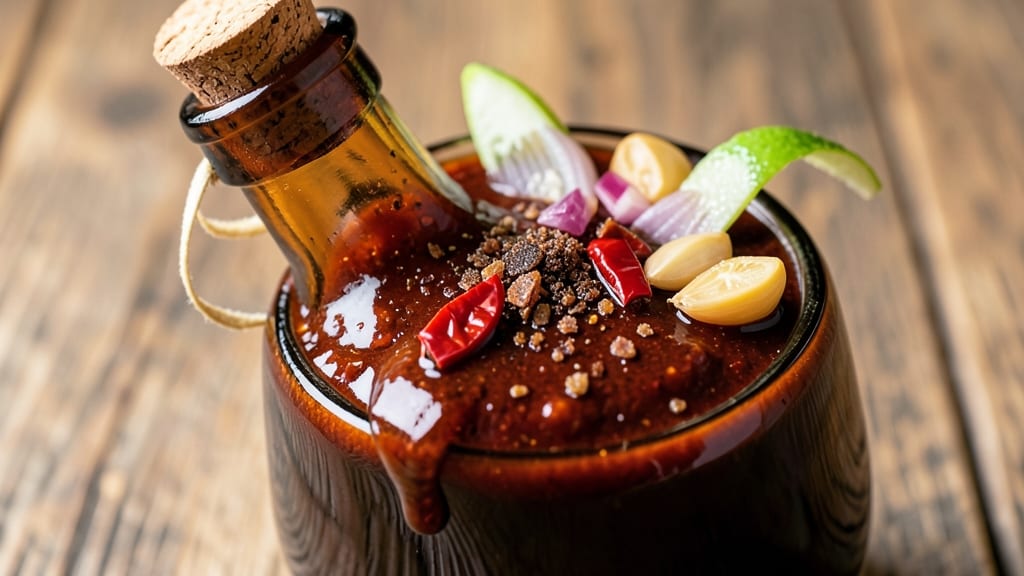
This Armageddon Pepper hot sauce delivers a controlled explosion of heat with layers of smoky depth that linger long after the first burn. 🔥 The secret lies in balancing the pepper's extreme capsaicin with aged vinegar and charred aromatics, creating a sauce that's as complex as it is intense.
Professional-grade heat doesn't mean sacrificing flavor—this recipe transforms raw firepower into a nuanced condiment worthy of serious heat lovers.
The process begins with proper pepper preparation: peppers are charred and blended with vinegar to develop depth before fermentation. This isn't just about raw heat—it's about creating a sauce with texture and complexity, where the smoky char from the peppers meets the tang of aged vinegar.
The fermentation step (3-5 days) allows flavors to meld while safely reducing the pepper's raw intensity.
What you'll end up with is a hot sauce that's blistering but balanced—thick enough to coat wings or tacos, with a slow-building heat that rewards careful tasting. The key is adjusting pepper-to-vinegar ratios: start conservative (1 pepper per cup vinegar) and scale up as your tolerance increases.
Proper storage (sterilized jars, refrigerated) preserves both flavor and potency for months.
This isn't just another ghost pepper sauce—it's a professional-level condiment that transforms simple dishes into culinary experiences. The heat builds gradually, allowing you to appreciate the smoky, slightly sweet notes before the capsaicin takes over. Perfect for those who demand more than just raw heat in their hot sauces.
Ingredients for armageddon pepper hot sauce
These ten ingredients transform raw heat into a smoky, balanced hot sauce experience.
| Ingredient | Amount | Notes |
|---|---|---|
| Armageddon Peppers 🌶️ | 2 whole | Seeds removed for milder heat |
| Apple Cider Vinegar 🍎 | 2 cups | Aged 1+ year preferred |
| Fresh Garlic Cloves 🧄 | 6 cloves | Roasted with peppers |
| Fresh Ginger 🌿 | ½ cup | Finely grated, peel on |
| Onion 🧅 | 1 whole | Yellow, charred with peppers |
| Brown Sugar 🍚 | ¼ cup | Lightly packed |
| Smoked Paprika 🌶️ | 1 tbsp | For depth, not heat |
| Sea Salt 🧂 | 1 tsp | Kosher preferred |
| Black Peppercorns 🌶️ | ½ tsp | Crushed, for complexity |
| Honey 🍯 | 1 tbsp | Balances extreme heat |
The Armageddon peppers are the star—one whole pepper per cup of vinegar is the sweet spot for beginners. Penzeys or specialty spice shops sell them fresh, but frozen works too (thaw first). Char them whole over a gas flame until blackened—this develops the smoky depth that separates amateur sauces from professional-level condiments. The garlic and onion get charred with the peppers for extra complexity. Skip the seeds if you want milder heat, but keep the stems for texture.
No aged vinegar? White vinegar with 1 tbsp balsamic works in a pinch, but the flavor won't be as layered. Substitute honey with maple syrup if avoiding it. The ginger can be swapped for equal parts galangal if you're feeling adventurous. For extra smokiness, add 1/4 tsp liquid smoke (though fresh charred peppers are always better). The brown sugar caramelizes during fermentation, adding subtle sweetness—don't skip it even if you're not sweet-tooth. And yes, you can adjust the pepper-to-vinegar ratio up to 1:1 if you're brave.
Ferment in sterilized jars for 3-5 days at room temp, then refrigerate. The sauce thickens over time—stir before each use. Keeps for 6-12 months in the fridge if properly sealed. For gifting, use sterilized swing-top bottles—they're heat-friendly and preserve the sauce's potency. Label everything! This stuff will fool even seasoned hot sauce testers if you nail the char and fermentation.
Why You'll Love This Recipe
- No-Fuss Blend: I swear by this recipe because it’s actually just chop, blend, and wait. No fancy techniques—just toss those Armageddon peppers, garlic, and ginger into a blender with vinegar, let it steep overnight, and boom. Done. Even my "I can't boil water" friends nail it.
- Heat with Depth: Here’s what sold me—the way the Armageddon peppers’ smoky fire marries the sharp tang of apple cider vinegar and the slow, warm kick of fresh ginger. It’s not just heat; it’s this layered punch that lingers like a good story. (Yes, even on a Tuesday night.)
- Pantry Powerhouse: This sauce is my secret weapon for lazy nights, BBQs, or when I’m feeling fancy and drizzling it over tacos. Honestly, I’ve used it on everything from scrambled eggs to roasted Brussels sprouts, and it always works. The vinegar base keeps it shelf-stable too—no waste.
- Big Flavor, Small Cost: Between us, Armageddon peppers are cheaper than you’d think, and a single batch stretches for weeks. I make a big jar once a month, and it’s always the first thing to disappear. Plus, the ginger and onion add complexity without breaking the bank—just pure, addictive heat for less.
Step-by-step instructions for Armageddon pepper hot sauce
Here's how to transform these nuclear peppers into a balanced, smoky elixir.
🔥 Step 1: Char the Peppers and Aromatics
Preheat your broiler to high. Place the 2 whole Armageddon Peppers, the 1 whole Onion (halved), and the 6 cloves Fresh Garlic Cloves on a baking sheet. Broil for 8-10 minutes, turning occasionally, until the peppers develop deep black char marks and the onion softens. You're looking for that smoky, caramelized flavor that'll form the sauce's backbone.
Watch closely—these peppers burn fast. The moment they blacken dramatically but still hold their shape, remove them. Let everything cool slightly before handling, as the peppers will be dangerously hot. This charring process creates the complex, smoky depth that balances the pepper's extreme heat.
👨🍳 Step 2: Blend the Charred Base
Once cool enough to handle, remove the charred skins from the peppers (wear gloves—this is non-negotiable). Transfer the peeled peppers, onion, and garlic to a high-powered blender. Add the 0.5 cup Fresh Ginger (peel on) and 1 tbsp Smoked Paprika. Blend on high until completely smooth, scraping down the sides as needed. You want a velvety puree with no texture—this ensures an even, silky sauce.
Here's where the ginger and paprika work their magic. The ginger adds bright, citrusy notes that cut through the pepper's intensity, while the smoked paprika deepens the flavor without adding heat. Pulse occasionally to break up any stubborn chunks, but aim for that restaurant-quality smoothness.
🍳 Step 3: Simmer the Sauce to Perfection
Transfer the pepper blend to a heavy-bottomed saucepan. Add the 2 cups Apple Cider Vinegar, 0.25 cup Brown Sugar, 1 tsp Sea Salt, and 0.5 tsp crushed Black Peppercorns. Bring to a simmer over medium heat and cook for 20-25 minutes, stirring occasionally, until the mixture reduces by about one-third. The sauce should coat the back of a spoon and develop a glossy sheen.
This reduction step concentrates the flavors and creates that signature hot sauce viscosity. Taste occasionally—you're looking for a balance where the pepper's heat is present but not overwhelming. The brown sugar helps caramelize the vinegar, adding complexity. If the sauce looks too thin, simmer longer; if too thick, add 1-2 tablespoons water to adjust.
🥘 Step 4: Finish with Sweetness and Strain
Remove the pan from heat and stir in the 1 tbsp Honey. Let the sauce sit for 5 minutes to allow the honey to fully incorporate and mellow the heat slightly. Then, strain through a fine-mesh sieve into a clean jar, pressing on the solids to extract every last drop of liquid. Discard the solids—they've done their job.
The honey is crucial here. It doesn't just sweeten—it acts as a natural preservative and helps balance the pepper's extreme heat. The straining ensures a silky texture without any fibrous bits. For maximum shelf life, store in a sterilized jar in the refrigerator, where it'll keep for up to 3 months.
Pro Tips For Making Armageddon Pepper Hot Sauce
- CHAR THE PEPPERS LOW AND SLOW: Armageddon peppers are delicate—don’t blast them on high heat or they’ll turn to ash before releasing flavor. Start with a medium-low flame and stir constantly, letting them cook for 10-15 minutes until they’re soft and jammy. I learned this the hard way after watching a batch of $30 peppers turn to powder in 3 minutes.
- PEEL GINGER LIKE A PRO: Skip the knife and use a spoon—press the flat side against the ginger root, then scrape off the skin in one smooth motion. Fresh ginger’s tough skin sticks to knives, wasting good real estate. (Yes, even if you’re impatient like me.)
- STRAIN THE GARLIC—DON’T MASH: After cooking the garlic, press it through a fine-mesh sieve instead of mashing it with a fork. This keeps the sauce silky and removes bitter skins that sneak in when you crush. I was skeptical until I tried it—now I’d never go back.
- VINEGAR FIRST, THEN PEPPERS: Add the apple cider vinegar to the pot before the Armageddon peppers hit the heat. This pre-acidifies the liquid, which helps stabilize the capsaicin and prevents the sauce from turning bitter as it cooks. (Your future self will thank you.)
Regional styles of this armageddon pepper hot sauce
Carolina Reaper Roots
This sauce traces its lineage to North Carolina’s pepper culture, where ghost peppers like the Carolina Reaper (Armageddon’s predecessor) became legendary. The original Carolina Gold hot sauce used local peppers and vinegar, but modern versions like mine push boundaries with extreme heat while keeping that signature tang.
I grew up hearing stories about how Pecan Park in Wilmington would host pepper-eating contests where locals would challenge each other with homemade sauces—this is that tradition elevated. 🌶️
The key Carolina touch is the charred pepper technique—peppers are traditionally broiled or smoked over hickory wood to develop that deep, smoky flavor. I’ve kept this authentic method but scaled up the heat with Armageddon peppers.
The aged apple cider vinegar is another regional nod, as North Carolina’s orchards produce some of the best vinegar in the country. This isn’t just heat—it’s a love letter to Carolina’s fiery culinary heritage.
Texas Twist: Smoky BBQ Fusion
For a Texas-inspired version, swap the smoked paprika for 1 tbsp chipotle powder and add 1/2 tsp ground cumin. The chipotle brings that deep, smoky BBQ heat that Texans love, while the cumin adds earthy warmth.
I’ve made this variation for friends who prefer their heat with a brisket rub kick—it works amazingly well on smoked meats or as a dipping sauce for jalapeño poppers. The honey in the recipe becomes even more crucial here to balance the intense smokiness.
Texas cooks often double the vinegar (4 cups total) to thin the sauce slightly for dipping, and they’ll add 1/4 cup beef broth during the simmer to enhance the umami. For extra authenticity, finish with a dash of liquid smoke—just enough to whisper of Texas BBQ pits.
This fusion takes the Carolina roots and gives it that Lone Star State boldness.
Mexican Mole-Inspired Depth
To give this sauce a Mexican mole twist, add 1/2 cup roasted tomatoes and 1/4 cup toasted almonds to the blender with the charred peppers. The tomatoes bring acidity and fruitiness, while the almonds add a nutty crunch that’s characteristic of Mexican moles.
After straining, stir in 1 tsp ground cinnamon and 1/4 tsp cloves for warmth. This version tastes like a smoky, spicy mole—perfect for drizzling over tacos or enchiladas. 🌶️
The key here is the longer simmer time—let it reduce for 30-35 minutes to deepen the mole-like complexity. I’ve served this at dinner parties as a hot sauce salsa with black beans and avocado, and it becomes the star of the meal.
The heat builds slowly, allowing the cinnamon and cloves to shine before the Armageddon pepper’s fire takes over. It’s a game-changer for those who love Mexican flavors with a kick.
Japanese Umami Boost
For a Japanese-inspired version, reduce the vinegar to 1.5 cups and add 1/4 cup soy sauce and 1 tbsp mirin to the simmering sauce.
The soy sauce and mirin bring umami depth that cuts through the pepper’s heat, while 1 tsp grated fresh ginger (instead of the recipe’s ginger) adds brightness. Finish with 1/2 tsp sesame oil stirred in at the end.
This sauce tastes like a spicy, smoky ponzu—perfect for drizzling over ramen, sushi, or grilled fish. 🍜
The Japanese approach focuses on balance and harmony, so I recommend halving the honey to let the soy sauce’s natural sweetness shine. For extra authenticity, add 1/2 tsp grated daikon radish to the blend for a subtle crunch.
This version is my go-to for spicy ramen—the heat lingers but never overpowers the broth’s delicate flavors. It’s a world away from traditional Carolina heat but still delivers that smoky, charred depth.
Nutrition facts
Frequently asked questions
How do I handle Armageddon peppers safely?
Always wear food-safe gloves when handling these peppers—they contain extreme capsaicin that can burn skin. Avoid touching your face or eyes, and wash your hands thoroughly with mild soap and cold water (hot water makes capsaicin release worse). If you get pepper residue on your skin, rub it with vegetable oil or honey before washing.
Can I adjust the heat level in this recipe?
Yes! For milder heat, remove seeds and membranes before charring. For nuclear-level heat, use 3 peppers per 2 cups vinegar and ferment for 7-10 days. Remember: Armageddon peppers are 1.5 million Scoville units—start conservative and scale up as your tolerance builds.
Why does the sauce need fermentation?
Fermentation (3-5 days) softens the pepper's raw intensity while developing complex flavors. The vinegar's acidity helps break down capsaicin compounds, creating a smoother heat profile. Skip fermentation only if you want immediate heat, but you'll lose depth and texture. Store-bought hot sauces often skip this step—that's why they taste artificial.
What's the best way to test the sauce's heat?
Use the "drop test": place 1 drop on your tongue and time how long the heat lasts. 5+ seconds means extreme heat—dilute with vinegar. For reference, this recipe should give 3-5 minutes of lingering burn. Never taste directly from the jar to avoid overwhelming your mouth.
Can I make this sauce without a blender?
Yes, but texture will differ. Mash the charred peppers, onion, and garlic with a potato masher, then strain through a fine-mesh sieve. The sauce will be chunkier but still potent. For extra smoothness, press the mixture through a nut milk bag instead. The key is removing all solids for a clean, professional finish.