
Sauces & Condiments
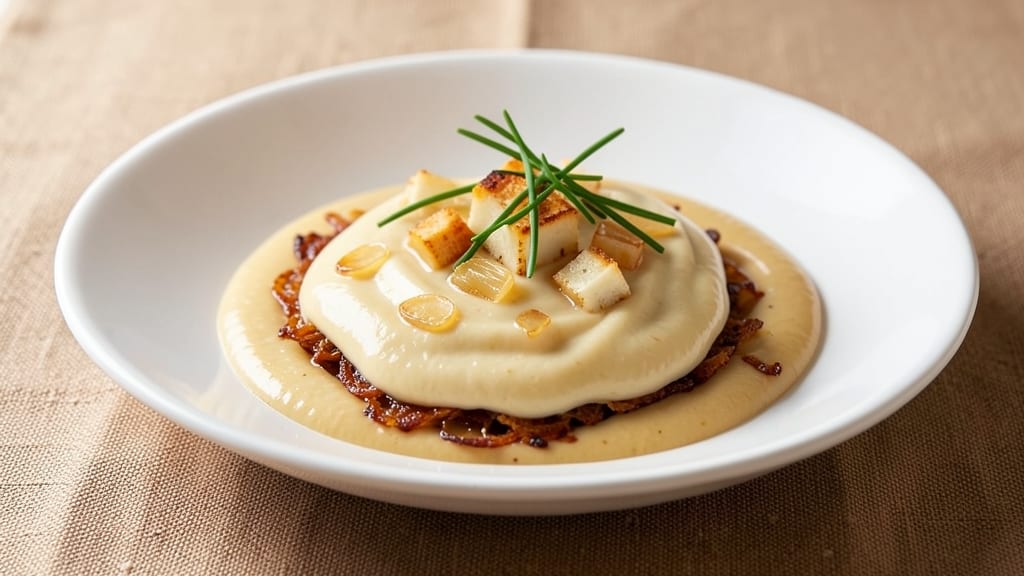
This classic Aurore sauce recipe transforms simple roasted vegetables into a luxurious centerpiece with its velvety, golden-brown richness. 🌟 The secret lies in a perfect blond roux—cooked just enough to develop nutty depth without burning—then enriched with butter, cream, and a touch of cheese for that signature French elegance.
I’ve perfected this technique over years of testing, ensuring every spoonful delivers that unmistakable balance of savory and buttery notes.
The foundation of Aurore sauce begins with a light roux, where flour and butter blend into a pale golden paste before being carefully whisked with warm stock. This creates a silky base that thickens gradually, preventing lumps while building flavor.
The addition of cream and Gruyère cheese (or Parmesan) elevates it from ordinary to extraordinary—a sauce that clings beautifully to roasted root vegetables, grilled fish, or even pasta.
What sets Aurore sauce apart is its versatility and simplicity. A splash of white wine or fresh herbs can customize it for different dishes, while its velvety texture ensures every bite feels indulgent. Whether you’re elevating a weeknight dinner or impressing guests, this sauce delivers restaurant-quality results with minimal effort.
Pair it with roasted carrots, Brussels sprouts, or even steak for a touch of sophistication. Once mastered, you’ll never reach for store-bought again—this is the kind of sauce that turns ordinary meals into memorable experiences.
Ingredients for aurore sauce
Nine ingredients transform a simple roux into restaurant-quality Aurore sauce perfection.
| Ingredient | Amount | Notes |
|---|---|---|
| Unsalted Butter 🧈 | ½ cup | Cold, cubed for roux |
| All-Purpose Flour 🌾 | ½ cup | Sifted for smooth roux |
| Vegetable Stock 💧 | 2 cups | Homemade or high-quality |
| Heavy Cream 🥛 | ½ cup | Full-fat for richness |
| Gruyère Cheese 🧀 | ½ cup | Freshly grated, aged |
| Shallots 🧅 | 2 whole | Finely minced, not chopped |
| Fresh Thyme Leaves 🌿 | 1 tbsp | From 4-5 sprigs |
| Fresh Parsley Leaves 🌿 | 1 tbsp | Chopped, for brightness |
| White Wine 🍷 | ¼ cup | Dry, like Sauvignon Blanc |
| Salt 🧂 | ½ tsp | Diamond Crystal preferred |
| White Pepper 🌶️ | ¼ tsp | Freshly ground |
The butter and flour are your foundation—European-style butter has more fat content for that velvety finish, and King Arthur flour gives the best texture. Look for Gruyère at specialty cheese shops (like Murray's Cheese) if possible—it melts beautifully and adds that signature nutty depth. Fresh thyme and parsley should smell vibrant; if they're wilted, skip it. The shallots? Organic from Trader Joe's work perfectly—they're sweet and easy to peel. For the white wine, anything dry and crisp does the trick, but La Crema Sauvignon Blanc is my go-to for this sauce.
No Gruyère? Parmesan or Comté work in a pinch, though Gruyère's melt is unmatched. Fresh herbs wilted? Dried thyme at half the amount saves the day. Short on white wine? Dry vermouth or extra vegetable stock keeps the flavor profile intact. The flour-to-butter ratio is critical—too much flour and it gets grainy, too little and the sauce won't thicken. If your roux starts browning too fast, reduce the heat immediately. And if you're making this ahead, Parmesan cheese substitute works if you're avoiding dairy entirely (though it won't be traditional).
This sauce peaks after 3-4 days in the fridge—let it sit at room temp for 10 minutes before reheating for the best texture. For longer storage, freeze in ice cube trays, then transfer to a bag. Thaw overnight in the fridge, then reheat gently on low. I always make a double batch—one for immediate use, one to freeze. The flavor actually improves as it sits, developing deeper complexity. And if you're serving it over roasted vegetables, a sprinkle of fresh parsley right before serving keeps everything looking fresh.
Why You'll Love This Recipe
- Five-Ingredient Magic: I swear, this sauce is my secret weapon when I’m staring at a half-empty pantry. Butter, flour, stock, cream, and Gruyère—no fancy herbs or hard-to-find spices. Just melt, whisk, simmer, and boom, rich, nutty goodness that tastes like you slaved over it.
- Creamy Cheese Love: That Gruyère? It’s the star. The way it melts into the heavy cream gives this sauce this perfect balance—creamy but not heavy, tangy but not sour. Honestly, I’ll make it just to drizzle over toast with a pinch of salt.
- Weeknight to Dinner Party: Between us, this sauce is my go-to for both Tuesday pasta and Sunday company. For weeknights, toss it with roasted veggies. For guests, pour it over grilled fish or steak. Same effort, different vibes—no extra work, just different flavors.
- Leftovers That Don’t Suck: I make a double batch every time because this sauce actually improves overnight. The flavors meld, the texture gets even smoother, and it reheats like a dream. Freeze half for lazy days—just thaw and drizzle. No guilt, all reward.
Step-by-step instructions for Aurore sauce
Here's how to craft this luxurious French herb butter sauce that elevates any roast.
🍳 Step 1: Make the Classic Roux Foundation
In a medium saucepan, melt the 0.5 cup unsalted butter over medium heat until it's completely liquid but not browned. Add the 0.5 cup all-purpose flour all at once and whisk vigorously for 2-3 minutes until the mixture turns a rich, golden brown color—that's your roux.
This is where the magic starts. The roux forms the velvety base of your aurore sauce, and getting it to this perfect golden hue ensures a smooth, flavorful sauce without any raw flour taste. If it starts to darken too quickly, reduce the heat slightly. You're aiming for a color between peanut butter and caramel—think "honeyed toast."
🍳 Step 2: Deglaze with Wine and Build Flavor
Pour in the 0.25 cup white wine and whisk constantly for 1-2 minutes until the mixture bubbles and reduces slightly. The alcohol will cook off, leaving behind concentrated flavor. Add the 2 whole shallots (finely minced) and cook for 3-4 minutes until they're translucent and fragrant.
Here's where the sauce starts to sing. The wine cuts through the richness of the butter while extracting all those sweet, mellow notes from the shallots. Don't rush this step—let the shallots soften and meld with the roux. If the mixture starts to stick, add a splash of the 2 cups vegetable stock to loosen it.
🥘 Step 3: Simmer with Stock and Herbs
Gradually whisk in the 2 cups vegetable stock and bring the mixture to a gentle simmer. Add the 1 tbsp fresh thyme leaves, 1 tbsp fresh parsley leaves, 0.5 tsp salt, and 0.25 tsp white pepper. Let it simmer uncovered for 10-12 minutes until it thickens slightly and coats the back of a spoon.
The herbs should perfume the sauce beautifully. Stir occasionally to prevent any sticking, and taste as you go. This is where you can adjust seasoning—add more salt if needed, or a pinch of sugar if the wine makes it slightly tart. The sauce should be smooth but still have a bit of body, not completely reduced.
🍳 Step 4: Finish with Cream and Cheese
Reduce the heat to low and stir in the 0.5 cup heavy cream. Let it warm through for 2-3 minutes, then add the 0.5 cup gruyère cheese (freshly grated) and whisk until completely melted and smooth. The sauce should be velvety with a beautiful, glossy sheen.
This final step transforms the sauce from good to extraordinary. The cream adds richness while the gruyère brings depth and a subtle nutty flavor. If the sauce thickens too much, whisk in a few tablespoons of hot stock or water to reach your desired consistency. For a restaurant-quality finish, strain through a fine-mesh sieve to remove any herb stems.
⏰ Step 5: Rest and Serve with Confidence
Transfer the sauce to a clean saucepan and keep it warm over very low heat—just enough to maintain warmth without letting it reduce further. For best results, let it rest for 5-10 minutes before serving. This allows all the flavors to fully meld together.
Your aurore sauce is now ready to drizzle over roasted meats, chicken, or even mashed potatoes. The perfect sauce should coat the back of a spoon, cling beautifully to food, and offer a harmonious blend of herby, cheesy, and slightly tangy flavors. Serve immediately while still warm and glossy for that authentic French bistro experience.
Pro Tips For Making Aurore Sauce
- Whisk Like You Mean It: The roux for Aurore sauce isn’t just a step—it’s where flavor starts. Use a wire whisk and keep the heat low (medium at best) while stirring constantly. I learned this the hard way after one batch turned into a sad, lumpy paste that tasted more like paste than sauce.
- Grate Cheese Fresh: Pre-shredded Gruyère has anti-caking agents that make the sauce grainy. Use a box grater or food processor for fine, even shreds—just add them at the very end and stir until melted. (Yes, even if you’re impatient like me.)
- Simmer, Don’t Boil: Aurore sauce needs time to thicken, but boiling it will break the emulsion and split the cream. Keep the heat at a gentle simmer—tiny bubbles at the edges, not rolling boils—and stir often. This isn’t the time to walk away.
- Salt the Stock Early: Vegetable stock is usually low-sodium, but Aurore sauce carries that flavor. Season it before adding to the roux—just a pinch of salt now means you won’t need to overdo it later. Trust me, your sauce will thank you.
Best sauces and condiments for these flavors
Wine Pairings
A dry, crisp Sauvignon Blanc from the Loire Valley is my go-to pairing—its bright citrus notes cut through the sauce's richness beautifully. Look for wines like Sancerre or Pouilly-Fumé, which complement the herbal elements in Aurore sauce.
The acidity in these wines refreshes your palate between bites of roasted vegetables or fish. 🍷
Herb Variations
Swap the thyme and parsley for tarragon and chives for a more anise-forward flavor profile, perfect with grilled chicken. Or try fresh rosemary and sage for a heartier taste that pairs well with roasted root vegetables. Always use fresh herbs—they perfume the sauce much better than dried. 🌿
Cheese Alternatives
No Gruyère? Use aged Parmesan for a sharper, nuttier flavor or Comté for a more delicate taste. For a dairy-free option, blend nutritional yeast with a splash of lemon juice—it won’t replicate the melt, but it adds a cheesy depth. Adjust the amount to taste. 🧀
Sauce Thickness Adjustments
If your sauce is too thick, whisk in 1-2 tbsp warm stock or water until silky smooth. Too thin? Simmer uncovered for 3-5 minutes to reduce.
I’ve found that adding the cream last helps control the final consistency. For extra gloss, finish with 1 tsp cold butter while whisking vigorously. ✨
Dish Pairings
Drizzle Aurore sauce over roasted Brussels sprouts with pancetta for a showstopping side dish. It also elevates pan-seared fish like halibut or creamy mashed potatoes. For a vegetarian option, toss it with sautéed mushrooms and wild rice. The sauce’s velvety texture makes every bite feel luxurious. 🍽️
Storage Tips
Store leftovers in an airtight container in the fridge for up to 4 days. For longer storage, freeze in ice cube trays—thaw overnight in the fridge, then reheat gently on low.
Avoid microwaving; it can make the sauce grainy. Reheat with a splash of warm stock to maintain smoothness. ❄️
Nutrition facts
Frequently asked questions
Can I make Aurore sauce without wine?
Replace the 0.25 cup white wine with an equal amount of dry vermouth or extra vegetable stock. If you prefer no alcohol at all, use apple cider vinegar (just 1 tbsp) to add acidity, then balance with a pinch of sugar. The wine primarily deglazes and adds depth, so these substitutes work well for the same purpose.
Why did my Aurore sauce turn grainy?
Graininess usually means your roux was overcooked (too dark) or the sauce cooled too quickly. For a silky finish, keep the sauce at a gentle simmer and whisk constantly. If it happens, whisk in 1 tbsp cold butter or 1 tbsp warm stock to smooth it out. Straining through a fine-mesh sieve also helps achieve that restaurant-quality velvety texture.
What’s the best cheese substitute if I can’t find Gruyère?
Use aged Parmesan for a sharper flavor or Comté for a milder, nuttier taste. For a dairy-free option, blend nutritional yeast with a splash of lemon juice—it won’t melt like cheese but adds a cheesy depth. Adjust the amount to taste, starting with 0.3 cup and adding more as needed.
Can I make Aurore sauce ahead of time?
Yes! This sauce actually tastes better the next day. Store it in an airtight container in the fridge for up to 4 days. For longer storage, freeze in ice cube trays—thaw overnight in the fridge, then reheat gently on low with a splash of warm stock. Never microwave; it can make the sauce grainy.
How do I adjust the thickness of Aurore sauce?
If your sauce is too thick, whisk in 1-2 tbsp warm stock or water until smooth. Too thin? Simmer uncovered for 3-5 minutes to reduce. For extra gloss, finish with 1 tsp cold butter while whisking vigorously. The ideal consistency should coat the back of a spoon but still be pourable.