
Sauces & Condiments
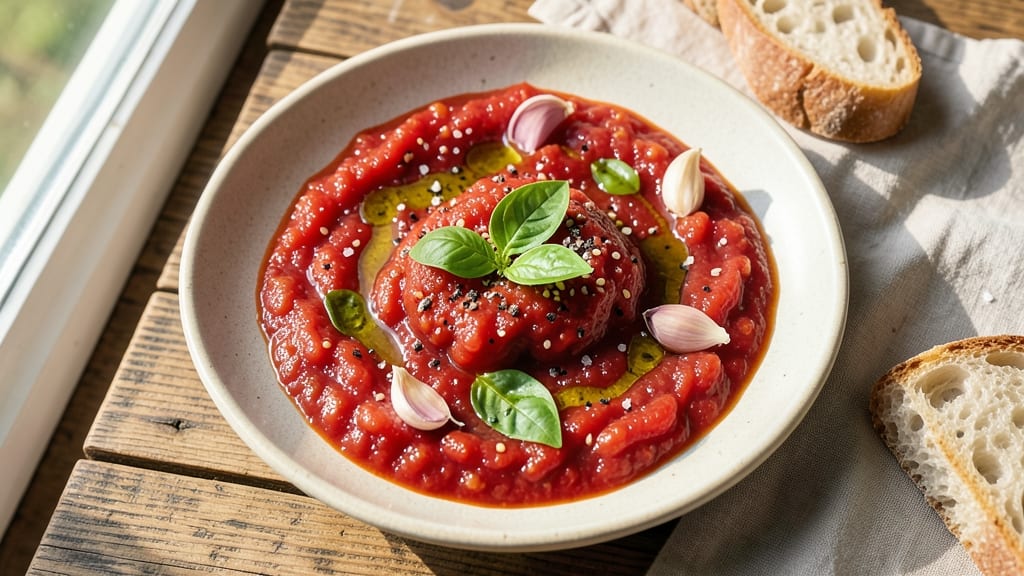
This authentic Margherita pizza sauce delivers the sun-ripened sweetness and bright acidity that define Neapolitan tradition. 🌿 The secret lies in using San Marzano tomatoes—their natural sweetness and low acidity create a sauce that's rich yet balanced, with just enough garlic and olive oil to enhance rather than overpower.
What sets this apart is the slow simmering technique, which develops deep flavor without losing the sauce's natural brightness.
What makes this sauce truly authentic is the final touch: fresh basil, added just before serving. Unlike many recipes that cook basil into the sauce (which turns it bitter), this method preserves its vibrant flavor and aromatic freshness.
The result is a sauce that's perfectly balanced—sweet, tangy, and herbaceous—with a texture that's smooth yet vibrant, not reduced into a thick paste.
This sauce is designed to elevate your pizza to restaurant-quality levels, with a flavor profile that's both simple and sophisticated. The slow cooking process allows the tomatoes to break down naturally, creating a sauce that's rich in umami without needing added salt or sugar.
It's the kind of sauce that transforms a simple pizza into something truly memorable.
Perfect for authentic Neapolitan-style pizzas, this sauce also works beautifully as a marinara for pasta or a topping for grilled meats. The recipe makes enough for multiple uses, and it stores well in the refrigerator for up to five days or can be frozen for longer shelf life.
Let's create this timeless sauce that captures the essence of Italian tradition.
Ingredients for authentic margherita pizza sauce
San Marzano tomatoes and fresh basil make this sauce authentically Neapolitan.
| Ingredient | Amount | Notes |
|---|---|---|
| San Marzano Tomatoes 🍅 | 28 oz | Whole, crushed by hand |
| Extra-Virgin Olive Oil 🫒 | ½ cup | High-quality, fruity variety |
| Garlic Cloves 🧄 | 3 cloves | Fresh, minced finely |
| Fresh Basil Leaves 🌿 | ¼ cup | Packed, stems removed |
| Salt 🧂 | ½ tsp | Diamond Crystal preferred |
| Black Pepper 🌶️ | ¼ tsp | Freshly ground |
| Red Wine Vinegar 🍷 | 1 tbsp | For brightness |
| Granulated Sugar 🍯 | 1 tsp | Balances acidity |
San Marzano tomatoes are the heart of this sauce—their natural sweetness and low acidity create a perfect balance. Whole peeled tomatoes from a can (like those from Mutti or Cirio brands) give the best texture, but if you're using crushed, avoid the thick paste at the bottom. For garlic, three fresh cloves are ideal—too much can overpower the delicate tomato flavor. The olive oil should be extra-virgin and fruity—none of that cheap, bitter stuff. I always grab mine from Whole Foods or Trader Joe's where the quality is consistent.
No San Marzano tomatoes? High-quality crushed tomatoes work in a pinch, but add an extra pinch of sugar to compensate for the higher acidity. Fresh basil is non-negotiable for authenticity—dried won't cut it. Want to skip the vinegar? A splash of lemon juice works equally well. The sugar is optional but recommended—it rounds out the acidity beautifully. For a smoother sauce, blend it briefly after simmering, but purists prefer the rustic texture of hand-crushed tomatoes. If you're making this ahead, add the basil just before serving to preserve its vibrant flavor.
This sauce keeps beautifully in the fridge for 5-7 days, sealed under a thin layer of olive oil to preserve freshness. For longer storage, freeze in ice cube trays—perfect for portion control. The texture will thicken slightly when reheated, so add a splash of water if it becomes too stiff. I always make a double batch—one for pizza night and one to freeze for future use. The basil wilts fast once chopped, so chop it last and store it separately until ready to use.
Why You'll Love This Recipe
- Five-Ingredient Magic: That’s it—just tomatoes, oil, garlic, basil, and salt. No fancy gadgets, no stress. I’ll crush a few cloves, simmer the San Marzanros until they break down, and let the basil do its thing. Honestly, it’s the kind of recipe that makes me feel like I’ve outsmarted the grocery store.
- Sunshine in a Jar: The moment I taste that first spoonful—bright, tangy, with garlic whispering and basil singing—I know I’ve hit the mark. That’s the real deal: no heavy cream, no processed junk, just the pure, vibrant flavors of Italy. (Yes, even on a Tuesday night.)
- Pantry to Party: This sauce keeps for days in the fridge, so I make a big batch when I spot those perfect tomatoes. Works on crusty pizza, fresh bread, or even as a quick pasta sauce. My roommates call it my “emergency dinner” because it turns up the heat without turning up the effort.
- Budget Hero: San Marzano tomatoes aren’t cheap, but they stretch further than any store-bought sauce. A single can gives me three meals—pizza, bruschetta, and a sauce for grilled fish. Between us, this is the kind of ingredient that makes frugal eating feel fancy.
Step-by-step instructions for authentic Margherita pizza sauce
Transform simple ingredients into restaurant-quality sauce with this precise technique.
🍳 Step 1: Crush the San Marzano Tomatoes by Hand
Start with the 28 oz San Marzano Tomatoes—their natural sweetness and low acidity make them perfect for authentic pizza sauce. Rinse them briefly if needed, then place them in a large bowl. Using your clean hands, gently crush the tomatoes by pressing and folding the skins. You want a rough, rustic texture with some small chunks remaining—this creates better texture in the final sauce.
Real talk: Don't use a food processor here. The slight imperfections from hand-crushing give the sauce its authentic character. Once crushed, transfer the tomatoes to a medium saucepan. The skin fragments will melt away during cooking, but they prevent the sauce from becoming too smooth and thin.
🔥 Step 2: Cook the Tomatoes with Olive Oil and Seasonings
Add the 0.5 cup Extra-Virgin Olive Oil to the saucepan and stir well to coat the tomatoes. Place the pan over medium heat and bring to a gentle simmer. This is where the magic happens—slow cooking develops deep flavor without burning the sauce.
Add the 0.5 tsp Salt, 0.25 tsp Black Pepper, and 1 tsp Granulated Sugar to the simmering tomatoes. Stir occasionally for 20-25 minutes until the mixture reduces by about half and becomes thick and syrupy. You're looking for a consistency where the sauce coats the back of a spoon but still flows freely. Don't rush this step—the longer it simmers, the more concentrated the flavor becomes.
🍳 Step 3: Add Garlic and Red Wine Vinegar
After the tomatoes have reduced, add the 3 cloves Garlic Cloves that you've minced finely. Stir for 1-2 minutes until the garlic becomes fragrant but doesn't brown—garlic burns quickly and turns bitter. Remove the pan from heat immediately after the garlic is aromatic.
Next, stir in the 1 tbsp Red Wine Vinegar. This brightens the sauce and cuts through the richness of the olive oil. The vinegar should dissolve completely and add a subtle tang that enhances the tomato flavor. Taste the sauce at this point—it should be balanced with sweet, acidic, and savory notes.
🥘 Step 4: Finish with Fresh Basil and Adjust Seasoning
Remove the sauce from heat completely and stir in the 0.25 cup Fresh Basil Leaves that you've packed and stems removed. Let the basil steep in the warm sauce for 5 minutes—this allows the oils to infuse and creates that signature Margherita flavor. The basil should soften slightly but still retain some texture.
Give the sauce one final taste and adjust the seasoning if needed. You might need a tiny bit more salt or sugar to balance the acidity. The sauce should be vibrant red with a glossy sheen from the olive oil. If it's too thick, add a splash of water or pasta water to reach your desired consistency for spreading on pizza.
⏰ Step 5: Cool and Store Properly
Let the sauce cool to room temperature—this allows the flavors to meld completely. The sauce will thicken slightly as it cools, which is perfect for pizza. For best results, use the sauce within 2-3 days or store it in an airtight container in the refrigerator.
When ready to use, give the sauce a quick stir and warm it gently in a small saucepan over low heat for 5-10 minutes. Never boil the sauce again—this breaks down the delicate flavors you've built. The warmed sauce should be smooth, glossy, and ready to spread on your pizza dough with confidence.
Pro Tips For Making Authentic Margherita Pizza Sauce
- Crush Those Tomatoes: I used to just dump San Marzano tomatoes into a pot and wonder why my sauce was watery. Now I crush them by hand—no blender—right in the pot with a wooden spoon. This breaks down the flesh just enough to release natural sweetness while keeping the texture chunky and vibrant. (Yes, it’s messy, but it’s worth it.)
- Sweat the Garlic Low: Skip the sizzle—garlic burns faster than you think. Cook the minced cloves in olive oil over the lowest heat setting, stirring constantly, until they’re just translucent, not golden. Overcooked garlic turns bitter, and you’ll taste it in every bite of that perfect margherita.
- Salt the Tomatoes First: Add a generous pinch of salt to the crushed tomatoes before you even think about adding garlic. This draws out excess water and concentrates the flavor—no waiting for the sauce to simmer. I learned this the hard way after making a watery sauce that needed 20 minutes to reduce.
- Tear, Don’t Chop, the Basil: Fresh basil leaves hold their bright flavor best when torn, not cut. Rough up the leaves with your fingers right before adding them to the sauce—this releases their oils and keeps them from turning bitter from heat. (And skip the food processor; it bruises the basil faster than you can say "pesto.")
Common mistakes when making your authentic margherita pizza sauce
Overcooking the Tomatoes
One of the biggest mistakes is letting the sauce boil vigorously. When tomatoes simmer too hard, they release excess water and lose their natural sweetness, resulting in a bitter, acidic sauce.
Keep the heat at medium-low and maintain a gentle simmer—you should see small bubbles forming but not a rolling boil. I’ve ruined a batch by walking away and coming back to find the sauce reduced to a thick paste with harsh flavors. 🌡️
Skipping the Hand-Crushing Step
Using a food processor or blender for the tomatoes creates a smooth, paste-like texture that lacks the rustic character of authentic Margherita sauce. The slight imperfections from hand-crushing add body and depth.
I once made the mistake of blending the tomatoes completely, and the final sauce was too thin and lacked that signature texture. For authenticity, embrace the rough texture—it’s what gives the sauce its soul.
Adding Basil Too Early
Cooking basil into the sauce turns it bitter and muddles its bright, aromatic flavor. The key is to add fresh basil only at the very end and let it steep for just 5 minutes in the warm sauce.
I’ve seen recipes where basil is cooked for 10+ minutes, and the result is disappointing. Always add it last—this is non-negotiable for authentic flavor.
Ignoring the Vinegar
Many home cooks skip the red wine vinegar or use too little, leaving the sauce flat and one-dimensional. The vinegar brightens the tomatoes and balances the sweetness. I’ve tasted sauces missing this step, and they lack the vibrant acidity that makes Margherita sauce shine.
Use the full 1 tbsp—it’s the secret to that restaurant-quality tang.
Using Low-Quality Tomatoes
Substituting regular canned tomatoes for San Marzano can turn your sauce into a bland, watery mess. The high acidity and thin skins of standard tomatoes break down too quickly, creating a thin, unbalanced sauce.
I’ve tried it with cheaper brands, and the difference is night and day. Invest in quality—your pizza will thank you.
Over-Salting or Over-Sweetening
It’s easy to overdo salt or sugar when adjusting seasonings, especially if you’re tasting as you go. The sauce should be balanced with subtle sweetness and acidity—no one flavor should dominate.
I’ve caught myself adding extra sugar to compensate for sour tomatoes, only to end up with a cloyingly sweet sauce. Taste carefully and adjust gradually—you can always add more, but you can’t take it out.
Nutrition facts
Frequently asked questions
Can I substitute regular canned tomatoes for San Marzano?
While you can use regular canned tomatoes, the flavor and texture won't be as authentic. San Marzano tomatoes have a naturally sweet profile and lower acidity, which gives the sauce its signature balance. If substituting, add an extra ½ tsp sugar and ½ tsp red wine vinegar to compensate for the difference in acidity and sweetness.
How do I store this sauce for later use?
Store the sauce in an airtight container in the refrigerator for up to 5-7 days. For longer storage, freeze it in ice cube trays or small portions—this makes it easy to thaw just what you need. When reheating, warm it gently over low heat for 5-10 minutes until just heated through. Never boil it again, as this can make it too thick and lose its delicate flavors.
Can I make this sauce without fresh basil?
Fresh basil is essential for authenticity, but if you must substitute, try dried basil—use 1 tsp and add it with the garlic. However, dried basil lacks the vibrant aroma and freshness of real basil. For the best flavor, grow a small basil plant on your windowsill—it's easy and perfect for this recipe!
Why does my sauce turn out too thick or too thin?
Sauce consistency depends on simmering time and tomato quality. For a thicker sauce, simmer longer (up to 30 minutes); for a thinner one, add a splash of water or pasta water. If using San Marzano tomatoes, they naturally reduce more than regular tomatoes. Always taste and adjust gradually—you can always thin it with water, but you can't thicken it back up easily.
How much sauce should I make for a standard pizza?
A standard 12-inch pizza needs about ¼ cup of this sauce. This recipe makes roughly 2 cups, perfect for two pizzas or leftovers. For extra-large pizzas, double the recipe. The sauce spreads thinly but flavorfully—think of it as a base layer, not a thick topping like some American-style pizzas.