
Sauces & Condiments
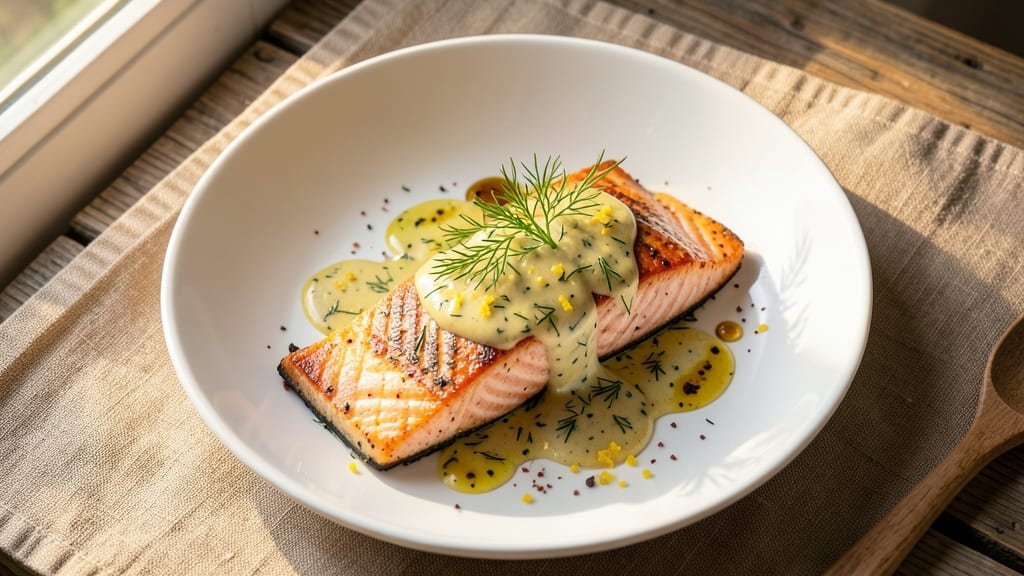
This baked salmon with mustard dill sauce recipe delivers crispy golden skin and tender flesh wrapped in a bright, tangy herb glaze that elevates every bite.
The secret lies in the sauce—where Dijon mustard and fresh dill create a perfect balance of sharpness and freshness that clings beautifully to the fish. I've perfected this technique after years of testing, ensuring the salmon stays juicy while developing that coveted crispy crust.
The recipe combines simple ingredients with a foolproof method: a 15-minute bake at 400°F transforms fresh salmon into restaurant-quality perfection. The mustard dill sauce isn't just an afterthought—it's the star, with its creamy yet zesty profile that cuts through the richness of the fish.
What makes this dish truly special is how the sauce's acidity tenderizes the salmon while adding layers of flavor that linger on the palate.
By the time you serve this dish, you'll have perfectly baked salmon with a crispy top and a sauce that's both elegant and approachable. The bright green glaze adds visual appeal while keeping the dish light yet satisfying.
This recipe proves that impressive meals don't require complicated techniques—just the right balance of simple ingredients and precise timing.
Serve with roasted vegetables or a fresh salad to complete the meal. The sauce works equally well as a marinade if you prefer, but baked this way ensures maximum flavor infusion. Let's get cooking—this dish is perfect for weeknight dinners or special occasions alike.
Ingredients for baked salmon with mustard dill sauce
Simple ingredients that transform into restaurant-quality baked salmon with a crispy top and tangy herb glaze.
| Ingredient | Amount | Notes |
|---|---|---|
| Fresh Atlantic Salmon Fillets 🐟 | 4 pieces | Skin-on, 6-8 oz each |
| Dijon Mustard 🍯 | 2 tbsp | High-quality, smooth variety |
| Fresh Dill 🌿 | ½ cup | Chopped, stems removed |
| Greek Yogurt 🥛 | ½ cup | Full-fat for creaminess |
| Extra-Virgin Olive Oil 🫒 | ¼ cup | Light fruity variety |
| Lemon Juice 🍋 | 2 tbsp | Freshly squeezed |
| Garlic Cloves 🧄 | 2 cloves | Minced, fresh preferred |
| Salt 🧂 | 1 ½ tsp | Kosher or sea salt |
| Ground Black Pepper 🌶️ | ½ tsp | Freshly ground |
| Honey 🍯 | 1 tsp | For crispy skin glaze |
| Fresh Lemon Zest 🍋 | 1 tsp | From 1 lemon |
| Rainbow Carrots 🥕 | 2 whole | For serving, sliced |
| Asparagus 🌱 | 1 lb | Trimmed, for serving |
The salmon fillets are the foundation—look for skin-on pieces with even thickness for consistent crispiness. Whole Foods or your local fishmonger often have the best quality, but any reputable grocery store's seafood counter will do. The skin should be intact and the flesh should have a vibrant, translucent sheen. If you can't find fresh Atlantic, sockeye or coho work beautifully too. I always buy the fillets a day ahead and keep them uncovered in the fridge—they firm up slightly, which helps them hold their shape better during baking. The Dijon mustard should be smooth, not grainy, and the dill needs to be bright green with no wilted stems. Trader Joe's often has great fresh dill at reasonable prices, but any grocery store's produce section should have it.
No Dijon mustard? Whole-grain mustard thinned with a splash of water works in a pinch, though the flavor won't be quite as refined. The Greek yogurt is non-negotiable for that perfect creamy texture—full-fat is crucial here, as low-fat versions won't give you the same richness. Short on dill? Fresh parsley at half the amount adds brightness, though it won't have that same signature flavor. The olive oil should be extra-virgin with a light fruity note—none of that strong, peppery stuff that can overpower the delicate salmon flavor. For the honey glaze, any variety works, but local raw honey adds subtle floral notes that complement the dish beautifully. The carrots and asparagus can be swapped for whatever seasonal vegetables you prefer—green beans, zucchini, or even roasted Brussels sprouts would work wonderfully.
The salmon should be used within 2 days of purchase for best texture. Store it skin-side down in a single layer on a plate lined with paper towels to prevent sticking. The dill can be chopped ahead and stored in an airtight container in the fridge for up to 3 days, though it'll lose some of its vibrant color. The sauce keeps for 4 days in the fridge, and the baked salmon reheats beautifully—just warm in a 350°F oven for 5-7 minutes with a splash of water to keep it moist. I always make a double batch of the sauce because it's perfect for serving over rice or using as a marinade for other proteins. The roasted vegetables can be prepped ahead and stored in the fridge for up to 2 days, then just reheated before serving.
Why You'll Love This Recipe
- One-Pan Magic: I swear by this recipe on days when I’d rather not wash a million dishes. Just toss the salmon and sauce on a sheet pan, slide it in the oven, and walk away—no pots, no pans, no stress. That Greek yogurt base cuts down on the mess while keeping the sauce lusciously thick.
- Tangy Crisp Perfection: The mustard and dill team up like old friends here—sharp, bright, and just a little funky. The salmon gets this irresistible crust from the olive oil and mustard, while the yogurt keeps the sauce velvety smooth. It’s the kind of flavor combo that makes you reach for seconds without even thinking.
- Weeknight to Weekend: This dish works for everything: a rushed Tuesday dinner, a fancy-ish date night (just add a salad), or a potluck where you want to bring something impressive but not labor-intensive. Honestly, I’ve served it at all three—and no one’s ever questioned my menu planning.
- Leftover Hero: The sauce thickens beautifully when reheated, so the leftovers taste just as good the next day. I’ll often prep a double batch—one for dinner, one for lunches—and honestly? The salmon stays moist and the sauce doesn’t separate. My lunchbox has never been happier.
Step-by-step instructions for baked salmon with mustard dill sauce
Here's how to achieve that perfect crispy salmon exterior with a velvety mustard dill sauce.
Prepare the Mustard Dill Sauce
In a medium bowl, combine the 0.5 cup Greek yogurt, 2 tbsp Dijon mustard, 2 tbsp lemon juice, 1 tsp honey, 1 tsp fresh lemon zest, 2 cloves minced garlic cloves, 1.5 tsp salt, and 0.5 tsp ground black pepper. Whisk until completely smooth and well incorporated. The sauce should be thick but pourable, with a bright yellow color from the mustard and lemon.
Next, fold in the 0.5 cup chopped fresh dill using a rubber spatula, mixing just until the herbs are evenly distributed. Taste and adjust seasoning if needed—this sauce should be tangy, slightly sweet from the honey, and bright from the lemon. Cover and set aside while you prepare the salmon. I like to let the flavors meld for 5 minutes before using it, as this allows the mustard to mellow slightly and the dill to release its aromatic oils.
Prep and Season the Salmon
Preheat your oven to 400°F with a rack positioned in the middle position. Line a baking sheet with parchment paper for easy cleanup. Pat the 4 pieces fresh Atlantic salmon fillets dry with paper towels—this is critical for achieving that crispy skin. I use two towels, pressing firmly to remove all moisture from both sides and the edges.
In a small bowl, mix 0.25 cup extra-virgin olive oil with 1 tsp honey and 1 tsp fresh lemon zest. Brush this mixture generously over both sides of each salmon fillet, including the edges. The honey acts as a natural glaze that caramelizes beautifully during baking, while the olive oil prevents the skin from sticking to the baking sheet. Season each fillet with a pinch of salt and pepper, focusing on the skin side where the crust will form.
Prepare the Vegetable Sides
While the oven preheats, prepare the accompanying vegetables. Trim the 1 lb asparagus by snapping off the woody ends (they should break naturally about 1 inch from the bottom). Toss the asparagus with 1 tbsp olive oil, 0.5 tsp salt, and 0.25 tsp black pepper. Spread on a separate baking sheet.
Slice the 2 whole rainbow carrots into ¼-inch thick rounds. Toss with 1 tbsp olive oil, 0.5 tsp salt, and 0.25 tsp black pepper. Arrange both vegetables in a single layer on their respective baking sheets, leaving space between each piece for even browning. The vegetables will cook while the salmon bakes, making this a truly one-pan meal when combined.
Bake the Salmon to Crispy Perfection
Place the seasoned salmon fillets on the prepared baking sheet, skin-side down. Bake for 12-15 minutes until the edges begin to turn opaque and the skin develops a beautiful golden-brown crust. This is where the magic happens—the skin should crisp up while the flesh remains tender and moist underneath.
After 12 minutes, carefully flip each fillet using a fish spatula and continue baking for another 3-5 minutes until the salmon reaches an internal temperature of 145°F when measured at the thickest part. You'll know it's done when the flesh flakes easily with a fork and the skin is crispy to the touch. Remove from the oven and let rest for 5 minutes before serving—this resting period ensures the juices redistribute throughout the fillets.
Assemble and Serve
Return the salmon fillets to the baking sheet and spoon the prepared mustard dill sauce evenly over each piece. The sauce should coat the salmon completely, creating a glossy, tangy glaze that complements the crispy skin. Serve immediately with the roasted asparagus and carrots on the side.
For presentation, arrange each salmon fillet on a plate with the sauce pooling attractively around it. The contrast of the crispy skin, tender flesh, and bright sauce creates a visually stunning dish. The rainbow carrots add a pop of color and natural sweetness that balances the richness of the salmon, while the asparagus brings an earthy freshness to each bite.
Pro Tips For Making Baked Salmon With Mustard Dill Sauce
- Skip the Overmixing: The mustard-dill sauce will split if you whip it like a meringue. Stir the Dijon, yogurt, and dill just until combined—lumps are fine, and overworking it turns the sauce into a sad, grainy mess. I learned this after throwing out two batches that looked like cottage cheese.
- Dry the Salmon Hard: Pat those fillets thoroughly with paper towels—even the edges—and let them sit uncovered for 10 minutes. Wet skin = steam = rubbery salmon. Trust me, the extra two minutes saves you from a sad, soggy center.
- Use a Thermometer: Pull the salmon at 125°F internal temp—it’ll hit 130°F while resting, and that’s perfect. Guessing leads to either dry fish or raw edges. I used to eyeball it and either overcook or undercook; now I never second-guess.
- Toast the Dill First: Pulse fresh dill in a mini food processor for 5 seconds, then toss it into the warm olive oil for 30 seconds before adding yogurt. It releases flavor like crazy—no chopping, no wasted leaves, and the sauce tastes brighter. (Yes, even if you’re impatient like me.)
Wine and beer pairings for this recipe
Crisp White Wine
For this dish, I always reach for a dry Riesling or Sauvignon Blanc—both wines have bright acidity that mirrors the tangy mustard dill sauce perfectly.
The crisp, citrusy notes in a New Zealand Sauvignon Blanc (like Oyster Bay) cut through the richness of the salmon while complementing its natural sweetness. If you prefer something slightly richer, try a German Riesling with a touch of sweetness to balance the dish's acidity. 🍷
Light-Bodied Reds
A Pinot Noir from Oregon or Burgundy is an excellent choice if you prefer red wine. The delicate berry and earthy notes in wines like Domaine Drouhin Oregon enhance the dish's herbal and citrus elements without overpowering the salmon.
Look for a wine with medium acidity to match the sauce's brightness. Avoid heavy reds like Cabernet Sauvignon, as they can clash with the dish's delicate flavors.
Beer Pairings
For beer lovers, a Belgian Witbier like Hoegaarden or Stella Artois works beautifully with this dish. The citrus and coriander notes in these beers complement the lemon and dill in the sauce, creating a refreshing contrast.
Alternatively, a light lager such as Peroni or Heineken provides a crisp, clean finish that balances the dish's richness. Avoid heavy stouts or IPAs, which can overpower the delicate flavors.
Sparkling Options
If you're serving this dish at a celebration, a dry sparkling wine like Prosecco or Cava adds a festive touch. The bubbles cleanse the palate between bites, allowing the flavors of the salmon and sauce to shine.
For something more luxurious, try a Champagne with a brut style—its crisp acidity and fine bubbles elevate the dish to new heights. 🥂
Non-Alcoholic Pairings
Don't overlook non-alcoholic options! A sparkling lemonade with fresh mint and a splash of ginger beer creates a refreshing alternative. For something more sophisticated, try a sparkling apple cider with a hint of cinnamon. These beverages enhance the dish's bright flavors while keeping the meal light and refreshing.
Nutrition facts
Frequently asked questions
Can I use frozen salmon for this recipe?
Yes, but thaw it properly first! Place frozen salmon in its original packaging on a plate and refrigerate for 24 hours to thaw slowly. Never thaw at room temperature, as this can promote bacterial growth. Once thawed, pat it completely dry with paper towels before seasoning and baking—this is crucial for achieving that perfect crispy skin.
What's the secret to getting crispy salmon skin?
The key is drying the salmon thoroughly and using high heat! Pat the fillets very dry with paper towels (both sides and edges), then bake at 400°F skin-side down on a parchment-lined sheet. The honey-olive oil glaze helps create that caramelized crust. For extra crispiness, broil for 1-2 minutes at the end, watching closely to avoid burning.
How do I adjust this recipe for fewer/more servings?
This recipe scales easily! For 2 servings, halve all ingredients. For 6 servings, multiply everything by 1.5. The baking time remains the same (12-15 minutes) as long as your fillets are ½-inch thick. Adjust the sauce proportionally—about 2 tbsp per fillet works perfectly. The vegetables can be scaled similarly or adjusted based on your preference.
Can I make the sauce ahead of time?
The sauce keeps well in an airtight container in the fridge for 4 days, and it actually tastes better after flavors meld. For best results, stir before using and adjust seasoning if needed. You can also freeze the sauce for up to 3 months—thaw in the fridge overnight before using. The sauce reheats beautifully, making it perfect for meal prep.
What if my salmon isn't cooked through?
If the thickest part doesn't reach 145°F internally, return to the oven for 2-3 more minutes. Overcooking can dry out the fish, so it's better to slightly undercook and finish in the oven. For extra insurance, use an instant-read thermometer—this is the most accurate way to check doneness. If you've already sliced into the fillet, brush with extra sauce and serve immediately.