
Sauces & Condiments
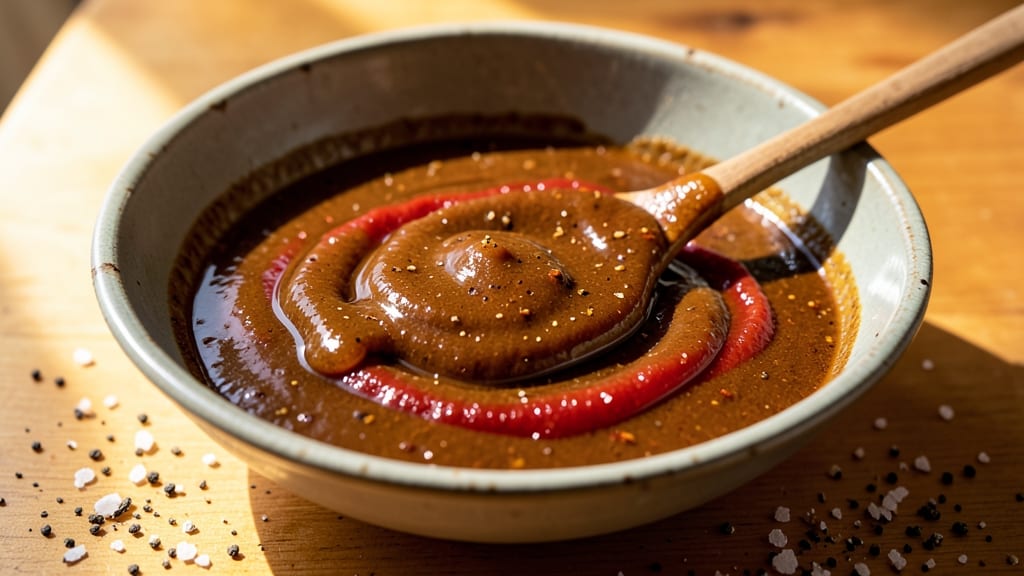
This barbecue sauce recipe no ketchup delivers deep smoky flavor with just five simple ingredients—no sweet ketchup in sight. The secret lies in balancing tomato paste, molasses, and chipotle for a rich, tangy-sweet profile that clings beautifully to grilled meats. I developed this version after craving a sauce with real depth, and it’s become my go-to for everything from pulled pork to baked beans.
The sauce builds flavor through slow simmering, allowing spices to meld and create a velvety texture without overpowering the natural smokiness. No artificial colors or preservatives here—just real ingredients that transform ordinary dishes into something extraordinary.
The molasses adds caramel notes while vinegar keeps it bright, and a touch of Worcestershire sauce elevates the umami.
What you’ll end up with is a glossy, aromatic sauce that’s perfect for glazing, dipping, or basting. It thickens just enough to coat without being cloying, and the chipotle heat lingers without dominating. This recipe is designed for versatility—use it on ribs, chicken, or even as a marinade for vegetables.
The best part? It keeps well in the fridge for up to two weeks, so you can make a big batch and enjoy it all season.
Ready to transform your barbecue game? This sauce proves you don’t need ketchup to create something unforgettable. Let’s get started with a recipe that’s as simple as it is flavorful.
Ingredients for barbeque sauce recipe no ketchup
Five ingredients transform into smoky, tangy barbecue sauce without ketchup in sight.
| Ingredient | Amount | Notes |
|---|---|---|
| Tomato Paste 🍅 | ½ cup | San Marzano preferred for sweetness |
| Molasses 🍯 | ¼ cup | Unsulphured for best flavor |
| Apple Cider Vinegar 🍏 | ¼ cup | For tangy brightness |
| Chipotle Powder 🌶️ | 2 tbsp | Smoked, not adobo sauce |
| Worcestershire Sauce 🍶 | 1 tbsp | Anchovy-free version if needed |
| Garlic Powder 🧄 | 1 tsp | Freshly ground preferred |
| Onion Powder 🧅 | 1 tsp | For depth without raw onion |
| Black Pepper 🌶️ | ½ tsp | Freshly cracked for heat |
| Salt 🧂 | 1 tsp | Diamond Crystal preferred |
| Water 💧 | ½ cup | For thinning if needed |
The tomato paste is your flavor anchor—San Marzano has the sweetest, most consistent flavor, but any quality paste works. Trader Joe's or Whole Foods usually carry the best brands, but check the label for no added sugar. Molasses can vary wildly in quality, so grab the unsulphured kind—it’s worth the extra few bucks. Chipotle powder is non-negotiable for that smoky depth; Penzeys sells it in bulk if you’re making this often. The Worcestershire sauce adds umami, but if you’re avoiding anchovies, Lee & Perrins makes a vegan version that works perfectly.
No chipotle powder? Smoked paprika at half the amount gets you close, though it won’t be as smoky. Fresh chipotle peppers in adobo sauce can be blended into the sauce, but adjust the heat to taste. Short on molasses? Maple syrup works in a pinch, but it’ll taste sweeter. The vinegar can be swapped for red wine vinegar if that’s what you’ve got—just add a pinch more salt to balance. For extra depth, a small pinch of cinnamon (¼ tsp) adds warmth without overpowering.
This sauce thickens as it cools, so start with the full water measurement if you like it runnier. Store in a glass jar in the fridge for up to 2 weeks, or freeze for 6 months in ice cube trays for single-use portions. The flavor actually improves after a day or two as everything melds—make extra if you can. It’s perfect for drizzling, dipping, or basting, and the smoky notes pair beautifully with grilled chicken, pulled pork, or even roasted vegetables.
Why You'll Love This Recipe
- Pantry Magic: I swear by this sauce because it uses what’s already lurking in my cupboards—no last-minute grocery runs. That molasses and apple cider vinegar combo? Deep, caramelized richness without a single fresh ingredient.
- Smoky Secret Weapon: The chipotle powder and Worcestershire sauce give it this smoldering depth—like a campfire in a jar. Honestly, it’s the kind of flavor that makes store-bought sauce taste like a sad afterthought.
- Weeknight Flex: Slather it on grilled chicken for Tuesday, toss it with baked beans for Wednesday, or drizzle it over roasted sweet potatoes for Thursday. It’s the ultimate flavor multiplier that doesn’t demand a holiday table.
- Budget-Friendly Powerhouse: A single batch costs me pennies but stretches across three meals—no waste, no guilt. And because it keeps for weeks, I’m always stocked for whatever’s on the grill or in the slow cooker.
Step-by-step instructions for smoky chipotle-tomato barbeque sauce
This sauce builds layer by layer—deep smokiness from the chipotle, sweet molasses, and bright vinegar.
Bloom the Spices in Tomato Paste
Heat a medium saucepan over medium-low heat and add the 0.5 cup tomato paste. Stir constantly with a wooden spoon for 3-4 minutes until it darkens slightly and becomes fragrant. This step develops the sauce's foundation—don't rush it or the flavors won't meld properly.
The paste should smell rich and earthy, with no burnt aroma. If it starts to stick, add 1 tablespoon of water to loosen it. Keep the heat gentle to prevent scorching, which will make the sauce bitter. This is where the smoky depth begins to form.
Add Molasses, Vinegar, and Seasonings
Pour in the 0.25 cup molasses and 0.25 cup apple cider vinegar, stirring to combine. Add the 2 tablespoons chipotle powder, 1 tablespoon Worcestershire sauce, 1 teaspoon garlic powder, 1 teaspoon onion powder, 0.5 teaspoon black pepper, and 1 teaspoon salt. Mix well until everything dissolves completely.
The sauce will bubble gently—let it simmer for 5 minutes while you stir occasionally. You'll notice the molasses mellows out the vinegar's sharpness, and the spices begin to bloom. If the mixture looks too thick, add 2 tablespoons of water now to help with thinning later.
Simmer and Thicken the Sauce
Increase heat to medium and bring the sauce to a gentle boil. Reduce to low heat and let it simmer uncovered for 15-20 minutes, stirring every 3-4 minutes. This slow reduction concentrates the flavors and creates that signature velvety texture.
You're looking for a sauce that coats the back of a spoon smoothly. If it's still too thick after 20 minutes, add the remaining 0.3 cup water (if needed) and simmer another 5 minutes. The sauce should be thick enough to cling but still pourable—not gluey.
Finish and Adjust Seasoning
Remove the pan from heat and let the sauce rest for 5 minutes. Taste and adjust seasoning—add more salt if needed (the molasses can mask saltiness), or a splash more apple cider vinegar for brightness. The sauce should balance sweet, smoky, and tangy flavors.
For a smoother texture, strain through a fine-mesh sieve to remove any undissolved chipotle particles. Let it cool to room temperature before using—this allows the flavors to fully develop. The sauce will thicken further as it cools, so don't worry if it looks perfect now.
Pro Tips For Making Barbeque Sauce Recipe No Ketchup
- Bloom the Tomato Paste: Dump that paste into a cold pan first—no oil needed—and let it sit for 2 full minutes before stirring. I learned this the hard way after burning three batches; the starch in the paste needs time to hydrate before it releases its flavor. Trust me, your sauce won’t clump or scorch if you give it this breathing room.
- Deglaze with Vinegar First: Pour in the apple cider vinegar before the Worcestershire and let it bubble for 30 seconds. This cuts through the bitterness of the molasses and mellows the chipotle’s heat right from the start. Skip this, and your sauce might taste sharp or one-note by the end.
- Simmer Low and Slow: Reduce heat to a gentle simmer once everything’s combined—you’re not making soup here. A rolling boil will cook off the vinegar’s acidity and make the molasses taste flat. I aim for tiny bubbles at the edges, not a full-on party in the pot.
- Toast the Chipotle: Lightly toast the chipotle powder in a dry pan for 30 seconds until it smells toasted, not burnt. This deepens its smoky flavor without overpowering the sauce. I was skeptical until I tried it—now it’s non-negotiable for me.
Make-ahead tips for this recipe
Batch Prep Basics
Make this sauce in double batches—it’s perfect for meal prep! Simply multiply all ingredients by 2 and use a large stockpot (I recommend 6-quart) to accommodate the volume.
The extra sauce keeps beautifully in the fridge for 2 weeks or freezes for 6 months, so you’ll always have it on hand for quick glazes or dipping. 💫
Freezer-Friendly Tips
For long-term storage, pour cooled sauce into ice cube trays—each cube equals 1 tablespoon, perfect for single-use portions. Once frozen, transfer cubes to a ziplock bag and label with the date.
Thaw overnight in the fridge before using, or toss a cube directly into saucepans while cooking. This method prevents freezer burn and keeps the sauce vibrant.
Fridge Storage Hacks
Store sauce in glass jars (like Ball mason jars) to preserve flavor—plastic containers can absorb odors over time. Leave ½-inch headspace to allow for expansion as it cools.
When reheating, add 1 tablespoon water per ½ cup sauce to prevent thickening. The sauce tastes even better after 2-3 days in the fridge as flavors meld! ❄️
Sauce Versatility
Use this versatile sauce in 3 ways: as a glaze for grilled meats, a dip for fries or veggies, or a marinade for 4-6 hours before cooking. For extra richness, brush it on corn on the cob or drizzle over baked beans during the last 10 minutes of cooking.
The smoky depth enhances everything it touches!
Travel-Friendly Packing
Pack sauce in small, leak-proof containers (like OXO Good Grips) for picnics or tailgates. Keep it cool with ice packs in a thermos—this sauce stays stable at room temperature for up to 4 hours, but chilled is always best.
Label containers clearly to avoid mix-ups with other condiments. Pro tip: Freeze a jar solid, then it stays cold for hours in a cooler! 🚗
Flavor Boost After Storage
If your sauce tastes flat after refrigeration, revive it by simmering for 5 minutes with 1 teaspoon apple cider vinegar and a pinch of salt. For extra depth, stir in ½ teaspoon smoked paprika just before serving.
The sauce’s natural thickness means it reheats beautifully—no lumps or separation! This trick works like magic for leftovers. 💡
Nutrition facts
Frequently asked questions
Can I substitute molasses with something else?
Yes! For a 1:1 substitution, use maple syrup (expect a slightly sweeter taste) or brown sugar dissolved in 2 tablespoons water. If you need less sweetness, try ½ cup honey + 1 teaspoon vinegar to balance the flavors. Molasses gives the sauce its signature depth, so these swaps work best when you want a more pronounced sweetness.
How do I adjust the heat level in this sauce?
Start with 1 tablespoon chipotle powder for mild heat, or 3 tablespoons for a smoky kick. For extra spice, add ½ teaspoon cayenne pepper or finely chopped fresh jalapeño. Always taste as you go—the sauce can be adjusted even after simmering by adding more chipotle powder or a pinch of cayenne.
Why did my sauce turn out too thick/thin?
If too thick, thin with 1 tablespoon water per ½ cup sauce and simmer another 5 minutes. For thinning during cooking, add water gradually while stirring. If too thin, simmer uncovered for 5-10 more minutes to reduce. The sauce thickens as it cools, so don't worry if it looks perfect while warm—it'll settle into the right consistency.
Can I use this sauce on vegetables or as a marinade?
Brush it on grilled or roasted vegetables like eggplant, zucchini, or bell peppers for 10-15 minutes of cooking time. For marinades, combine equal parts sauce and olive oil, then marinate proteins for 4-6 hours (chicken, pork, or tofu work great). The acidity in the vinegar helps tenderize meats while adding flavor.
What’s the best way to store leftovers?
Store in an airtight glass jar in the fridge for up to 2 weeks. For longer storage, freeze in ice cube trays (1 cube = 1 tbsp) or small portions in freezer bags. Thaw overnight in the fridge or reheat directly from frozen by simmering with 1 tablespoon water per ½ cup sauce to restore thickness. The sauce actually tastes better after a few days!