
Sauces & Condiments
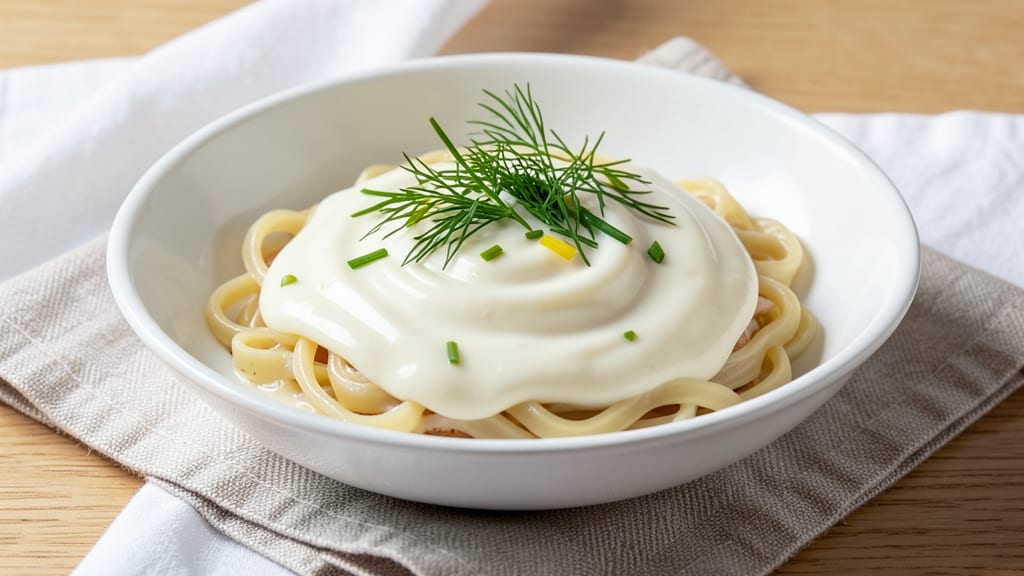
This Mikuni white sauce recipe transforms ordinary dishes into restaurant-quality meals with its velvety texture and rich, herby flavor. The secret lies in the perfect balance of butter, flour, and cream, creating a sauce so smooth it clings to every strand of pasta or bite of seafood.
I've refined this version over countless meals, ensuring it delivers that signature Mikuni elegance without the fuss of professional techniques.
The foundation starts with a classic roux—equal parts butter and flour cooked until golden—but where this sauce shines is in the finishing touches. Cream cheese adds depth, while fresh herbs and a touch of garlic powder elevate it beyond basic béchamel.
The crowning glory? Crispy celery crowns that provide a delightful textural contrast, turning every spoonful into an experience.
What sets this sauce apart is its versatility. Whether drizzled over fettuccine, paired with grilled fish, or spooned onto roasted vegetables, it transforms simple ingredients into something extraordinary. The sauce is rich yet balanced, with just the right amount of tang and creaminess to complement a wide range of dishes.
It's the kind of sauce that makes you feel like you've just stepped into a high-end kitchen.
Ready in just 30 minutes, this recipe delivers restaurant-quality results without requiring advanced skills. The key is patience—letting the sauce simmer gently to develop its velvety texture and allowing the celery crowns to crisp to perfection. Once mastered, you'll never reach for store-bought sauce again. Let's get started!
Ingredients for mikuni white sauce
Restaurant-quality sauce starts with these 11 simple, quality ingredients you'll love using.
| Ingredient | Amount | Notes |
|---|---|---|
| Unsalted Butter 🧈 | ½ cup | Cold, cubed for roux |
| All-Purpose Flour 🌾 | ½ cup | Sifted for smooth sauce |
| Heavy Cream 🥛 | 1 ½ cups | Full-fat for richness |
| Cream Cheese 🧀 | 8 oz | Softened for blending |
| Fresh Chives 🌿 | ¼ cup | Finely chopped for herby note |
| Fresh Dill 🌿 | ¼ cup | Finely chopped for freshness |
| Garlic Powder 🧄 | 1 tsp | For subtle depth |
| Salt 🧂 | ½ tsp | Diamond Crystal preferred |
| Black Pepper 🌶️ | ¼ tsp | Freshly cracked |
| Celery Stalks 🧅 | 2 whole | Thinly sliced for crowns |
| Olive Oil 🫒 | 1 tbsp | For crisping celery |
The butter and flour are your foundation—don't skimp here. European-style butter like Plugrá or Land O'Lakes makes all the difference. For the flour, King Arthur or Bob's Red Mill work perfectly. The cream cheese? Philadelphia brand is the gold standard—it blends smooth without lumps. Fresh herbs are non-negotiable for that Mikuni brightness. I always grab chives and dill from Whole Foods when they're on sale, but the grocery store stuff works too. The celery? Look for crisp, pale green stalks—avoid anything rubbery or yellowing at the base.
No cream cheese? Substitute sour cream at half the amount—it's tangier but works in a pinch. Running low on fresh herbs? Dried chives or dill at one-third the quantity gets you close, though nothing beats the fresh stuff. The celery crowns can be swapped for thinly sliced shallots or leeks if you're out. For the roux, if you burn it, start over—there's no fixing that. And if your sauce gets too thick, just whisk in a splash of warm milk or cream. The garlic powder can be replaced with fresh minced garlic if you prefer that stronger flavor.
This sauce keeps beautifully—5 days in the fridge sealed tightly, or 3 months frozen in airtight containers. The celery crowns crisp best when fried fresh, but you can make them ahead and reheat in the oven at 375°F for 5 minutes. I always double the batch because it disappears faster than you'd think. Store it in small jars so you can grab just what you need. When reheating, warm gently on low heat—never boil or it'll break. Perfect for drizzling, dipping, or spooning over anything that needs that creamy, herby touch.
Why You'll Love This Recipe
- Here’s what sold me: that first spoonful of velvety richness with a whisper of tang from the cream cheese. It’s the kind of sauce that makes plain pasta feel like a restaurant dish—no heavy cream aftertaste, just pure, balanced comfort.
- Five-Ingredient Magic: I swear by this—just butter, flour, cream, cream cheese, and chives. That’s it. No weird substitutions, no hunting for obscure spices. The roux builds flavor while you stir, and the cream cheese melts into something silky without extra fuss.
- Creamy Luxury: Here’s what sold me: that first spoonful of velvety richness with a whisper of tang from the cream cheese. It’s the kind of sauce that makes plain pasta feel like a restaurant dish—no heavy cream aftertaste, just pure, balanced comfort.
- Weeknight Swiss Army Knife: Between us, this sauce is my secret weapon for lazy nights. Dump it over grilled chicken, toss it with roasted veggies, or slather it on garlic bread. Even my picky teenager asks for seconds when it’s on the table.
Step-by-step instructions for Mikuni white sauce
Here's how to make this velvety herb cream cheese sauce with crispy celery crowns.
Create a Smooth Roux with Butter and Flour
In a medium saucepan over medium-low heat, melt the 0.5 cup unsalted butter until completely liquid but not browned. Whisk in the 0.5 cup all-purpose flour all at once, stirring constantly for 2-3 minutes until the mixture forms a smooth, pale roux with no raw flour taste.
This is where the magic happens—the roux forms the foundation of your sauce. If it starts to darken, immediately reduce the heat. You're looking for a color between pale cream and light tan. Keep whisking vigorously to prevent lumps from forming, as they'll create graininess in your finished sauce.
Gradually Add Heavy Cream for Velvety Texture
Slowly pour in the 1.5 cups heavy cream while whisking continuously to prevent lumps. Once all the cream is incorporated, increase heat to medium-low and simmer for 5-7 minutes, stirring frequently, until the sauce thickens enough to coat the back of a spoon.
The sauce should look glossy and smooth, not stringy. If it thickens too quickly, whisk in 1-2 tablespoons of water to adjust the consistency. This gradual addition prevents curdling and ensures a silky finish. Taste and season with 0.5 tsp salt, 0.25 tsp black pepper, and 1 tsp garlic powder—this is where you build the flavor base.
Blend in Cream Cheese for Richness
Reduce heat to low and gradually add the 8 oz softened cream cheese, whisking constantly until completely melted and smooth. The sauce should now be thick, creamy, and rich. If you see any lumps, strain the sauce through a fine-mesh sieve for an ultra-smooth texture.
This is the moment that matters: the cream cheese adds that signature Mikuni richness. If the sauce looks too thick, whisk in 1-2 tablespoons of warm milk or cream to reach your desired consistency. Keep the sauce at a gentle simmer—don't let it boil or it may curdle.
Finish with Fresh Herbs and Celery Crowns
Remove the sauce from heat and stir in the 0.25 cup chopped fresh chives and 0.25 cup chopped fresh dill. In a separate small skillet, heat 1 tbsp olive oil over medium-high heat. Add the 2 whole celery stalks, sliced thinly into rounds, and cook for 2-3 minutes per side until golden brown and crispy.
Here's the thing—those crispy celery crowns add texture contrast. Arrange them on top of the sauce just before serving so they stay crisp. The herbs should be evenly distributed throughout the sauce. If you're making this ahead, keep the celery crowns separate until serving to maintain their crunch.
Serve Warm with Your Favorite Dishes
Serve the sauce immediately over your choice of proteins or vegetables, drizzled with additional herb garnish if desired. The sauce should be warm but not boiling—ideal for pairing with grilled chicken, roasted vegetables, or as a creamy pasta sauce.
This sauce keeps its velvety texture when reheated gently, but for best results, serve it fresh. The celery crowns will stay crisp for about 10 minutes after cooking, so assemble plates just before serving. Each bite should deliver that perfect balance of creamy richness, herby freshness, and satisfying crunch.
Pro Tips For Making Mikuni White Sauce
- STIR CONSTANTLY AT FIRST: The first 2 minutes after adding the flour to butter are where lumpy disasters happen. Use a wooden spoon and keep it moving—no gaps, no rushing. I learned this the hard way when I walked away for "just a second" and came back to a floury volcano.
- COOL THE SAUCE BEFORE ADDING CREAM CHEESE: Warm cream cheese straight into hot sauce and it’ll seize up like glue. Let the roux cool to body temperature (about 10 minutes) before mixing in the cream cheese—it blends smoother and doesn’t curdle. Trust me, your sauce will thank you.
- USE COLD HEAVY CREAM: Cold heavy cream tempers the sauce better than room-temperature. Add it in a slow, thin stream while whisking vigorously—this keeps the sauce silky instead of breaking. (Yes, even if you’re impatient like me.)
- FINISH WITH CHIVES LAST: Chives burn faster than you’d think. Stir them in at the very end over the lowest possible heat, just until they’re wilted but still bright green. Any longer, and you’re left with sad, limp garnish.
Common mistakes when making this dish
Roux Overcooking
The biggest mistake is letting your roux burn—once it darkens past a pale golden hue, you’ve lost the delicate flavor foundation. I’ve ruined more sauces than I’ll admit by walking away for just 30 seconds.
Keep your heat at medium-low and whisk constantly. If it starts to smell nutty or bitter, start over—there’s no fixing a burnt roux. 🔥
Adding Cream Too Fast
Dumping heavy cream into your roux all at once creates lumps that turn into grainy bits in your sauce. Instead, pour it in a slow, steady stream while whisking vigorously. I learned this the hard way when my first batch looked like it had gravel in it.
If lumps form, strain the sauce through a fine-mesh sieve before adding cream cheese.
Ignoring Temperature Control
Simmering too aggressively can cause your sauce to curdle or separate. Maintain a gentle simmer—you should see small bubbles but no rolling boil. When adding cream cheese, reduce heat to low and whisk constantly.
I’ve seen sauces break completely because someone walked away while it was on high heat. Trust me, patience pays off here.
Skipping the Herbs
Fresh herbs are non-negotiable for that authentic Mikuni flavor. Dried herbs just won’t cut it—they lack the bright, fresh notes that make this sauce special. I’ve made the mistake of using dried chives and dill, and while it was edible, it wasn’t the same.
Always use fresh, and chop them finely so they distribute evenly.
Overcooking Celery Crowns
Celery crowns should be golden and crisp, not soggy or burnt. Cook them for just 2-3 minutes per side over medium-high heat. If you leave them too long, they’ll turn rubbery.
Keep them separate until serving to maintain that perfect crunch. I’ve had to toss batches because I got distracted—don’t let that happen to you!
Not Tasting as You Go
Seasoning is cumulative, and I can’t stress enough how important it is to taste your sauce at each stage. After adding cream, after incorporating cream cheese, and definitely before serving.
Adjust salt, pepper, or garlic powder as needed. I’ve had sauces that were bland because I forgot to taste along the way—don’t make that mistake!
Nutrition facts
Frequently asked questions
Can I make this sauce without cream cheese?
Yes, but the texture and richness will change. Use 1 cup sour cream instead of the cream cheese—it adds tanginess but won't be as velvety. For a closer match, blend 1 cup Greek yogurt with 1 tablespoon lemon juice to mimic the creaminess. Just reduce the heavy cream by 2 tablespoons to balance the moisture.
How do I adjust the sauce for dairy-free diets?
Swap butter for vegan butter or olive oil, use full-fat coconut milk instead of heavy cream, and replace cream cheese with cashew cream**strong> (blend 1 cup soaked cashews with 0.5 cup water). For the celery crowns, use olive oil as-is. The sauce will be lighter but still delicious—taste as you go to adjust seasoning.
Can I make this sauce ahead of time?
Prepare the sauce up to 3 days ahead and store it in an airtight container in the fridge. Reheat gently over low heat, stirring constantly until warm (never boil). Keep the celery crowns separate until serving to maintain crispness. For freezer storage, cool completely, portion into containers, and freeze for up to 3 months—thaw overnight in the fridge.
What's the best way to use up leftover sauce?
This versatile sauce elevates so many dishes! Drizzle over grilled salmon, spoon onto roasted potatoes, or toss with sautéed mushrooms. Use it as a dip for crusty bread or as a creamy base for stuffed peppers. For a quick meal, mix with cooked chicken and serve over rice. Even leftover pasta gets a gourmet upgrade—just warm through and garnish with extra herbs.
Why did my sauce turn grainy?
Graininess usually means lumps from improper mixing or temperature control. If it happened during the roux stage, whisk more vigorously next time. If it occurred when adding cream cheese, ensure the cream cheese is softened (not cold) and whisk constantly. For an instant fix, blend the sauce with an immersion blender or strain through a fine-mesh sieve. Always add cream cheese to warm (not hot) sauce to prevent curdling.