
Sauces & Condiments
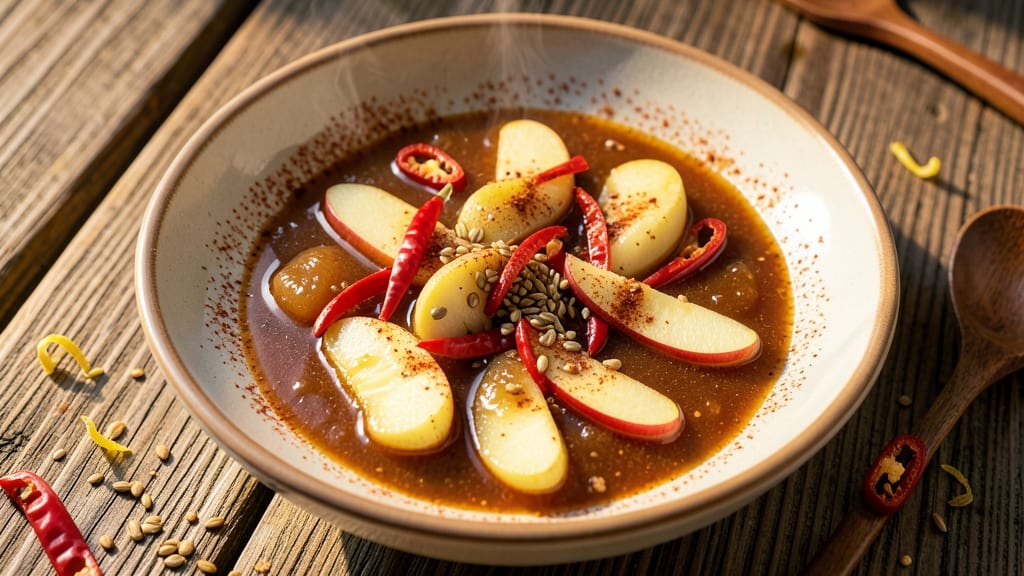
This apple chili sauce recipe transforms humble pantry staples into a versatile condiment that bridges sweet, smoky, and spicy flavors with surprising depth. 🔥 The secret lies in balancing caramelized apples with chili heat and vinegar's tang, creating a sauce that works as a dipping companion, marinade, or glaze.
I developed this after craving something that could elevate everything from grilled meats to roasted vegetables—something with complexity without requiring hours in the kitchen.
The process is straightforward but precise: simmering apples until tender, blending with chili peppers and spices, then reducing the mixture until it reaches a thick, glossy consistency. No specialized equipment is needed—just a saucepan, blender, and patience for the flavors to meld.
The result is a sauce that's richer than ketchup but with the bright acidity of chutney, perfect for those who love bold, multi-dimensional flavors.
What makes this sauce truly special is its adaptability. Use it as a dipping sauce for fried chicken or spring rolls, brush it on ribs before grilling, or drizzle it over tacos and nachos.
The sweetness of the apples balances the heat, creating a harmonious bite that lingers. Even better, it keeps well in the refrigerator for up to two weeks, making it a pantry staple for quick meals.
Once you taste this sauce, you'll find endless ways to incorporate it into your cooking—whether you're experimenting with fusion dishes or simply looking to add a flavor punch to everyday meals. Let's get started on creating this game-changing condiment that turns simple dishes into something extraordinary.
Ingredients for apple chili sauce
Nine ingredients blend sweet, smoky, and tangy for a sauce that transforms everything it touches.
| Ingredient | Amount | Notes |
|---|---|---|
| Honeycrisp Apples 🍎 | 4 medium | Peeled, cored, chopped |
| Fresh Red Chili Peppers 🌶️ | 4 whole | Such as jalapeño or serrano |
| Apple Cider Vinegar 💧 | ½ cup | For tangy brightness |
| Brown Sugar 🍚 | ½ cup | Packed, for caramel depth |
| Smoked Paprika 🌶️ | 1 tbsp | For smoky flavor |
| Ground Cumin 🌿 | 1 tsp | Toasted for warmth |
| Garlic Cloves 🧄 | 3 cloves | Minced for depth |
| Extra-Virgin Olive Oil 🫒 | 2 tbsp | For richness |
| Salt 🧂 | 1 tsp | Diamond Crystal preferred |
| Black Pepper 🌶️ | ½ tsp | Freshly ground |
The apples are the foundation—Honeycrisp or Fuji work best for their balance of sweetness and texture. Trader Joe's or local orchards often have them at peak season, but any crisp apple will do. Look for firm, unblemished fruit—avoid anything soft or shriveled. The chili peppers should be bright red or green, not wilted. If you can't find fresh, dried arbol chiles work in a pinch, but fresh gives that vibrant heat. For the vinegar, Bragg or Heinz are reliable, but anything organic is ideal.
No Honeycrisp apples? Gala or Granny Smith add different flavor profiles—Gala for extra sweetness, Granny Smith for tartness. Swap the brown sugar for maple syrup if you prefer a more liquid sweetener, though it'll change the consistency slightly. The smoked paprika is non-negotiable for that signature smokiness, but if you're out, liquid smoke at half the amount gets you close. Fresh garlic is best, but garlic powder at one-third the amount works in a bind. For heat control, remove seeds from the chili peppers before blending.
This sauce keeps beautifully—2 weeks in the fridge, 6 months frozen. Store it in a glass jar with a tight seal to preserve that glossy finish. The flavors actually deepen over time, so making a big batch is worth it. Freeze in ice cube trays for portion control—perfect for quick marinades or dipping sauce additions. If it thickens too much, just whisk in a splash of water or vinegar to loosen it up.
Why You'll Love This Recipe
- Five-Ingredient Magic: I swear by this recipe because it’s the kind of sauce where you don’t need to be a chef—just chop an apple, toss in a few peppers, and let the vinegar and paprika work their charm. Honestly, my kids think I’m a genius when I pull this out of the pantry.
- Sweet Heat Balance: That first bite of Honeycrisp’s crispness with the slow burn of fresh chili peppers? It’s like autumn in a jar. The brown sugar and vinegar marry the flavors so well, you’ll want to drizzle it on everything—grilled chicken, roasted veggies, even straight from the spoon.
- Weeknight & Holiday Hero: This sauce is my go-to for quick weeknight dinners (hello, tacos or stir-fry) and somehow still feels fancy enough for game day or Thanksgiving leftovers. Between us, it’s the kind of dish that makes you look like you planned ahead—even when you didn’t.
- No-Waste Pantry Gold: I make a big batch and keep it in the fridge for months. The apples soften beautifully over time, deepening the flavor, while the chili peppers stay vibrant. Plus, it’s cheaper than store-bought sauces and uses ingredients you’re probably already buying. (Yes, even on a Tuesday night.)
Step-by-step instructions for apple chili sauce
Here's how to balance sweet, smoky, and spicy flavors into a versatile sauce that's easier than it looks.
🍳 Step 1: Sauté Aromatics Until Fragrant
Heat the 2 tbsp extra-virgin olive oil in a medium saucepan over medium heat. Add the 3 minced garlic cloves and cook for 30 seconds until they just begin to sizzle—this prevents bitterness. Immediately add the 1 tbsp smoked paprika and 1 tsp toasted ground cumin, stirring constantly for 20 seconds to toast the spices.
Here's where the magic starts: the spices should smell earthy and warm, not burnt. If you notice any smoke, reduce the heat slightly. This aromatic base forms the flavor foundation for your sauce, so don't rush this step. I like to give it a quick taste at this point—just to confirm the spices are properly toasted and not raw.
🔥 Step 2: Cook the Chili Peppers Until Soft
Add the 4 whole fresh red chili peppers (jalapeño or serrano) to the pan. Cook for 5-6 minutes over medium heat, stirring occasionally, until the peppers soften and their skins begin to blister slightly. You want them tender enough to mash easily but not completely mushy—this ensures proper texture in your finished sauce.
Real talk: if you're using very mild peppers, you might want to keep them whole longer to preserve some heat. For extra spice, you can remove the seeds before cooking. As they cook, the peppers will release their oils and become more aromatic—this is when your kitchen starts smelling like a spice market. Don't walk away; they burn faster than you think.
🍎 Step 3: Build the Sauce with Apples and Sweet-Sour Balance
Add the 4 medium peeled, cored, and chopped Honeycrisp apples to the pan along with the 0.5 cup packed brown sugar and 0.5 cup apple cider vinegar. Stir well to combine everything with the softened peppers. Increase heat to medium-high and let the mixture simmer uncovered for 8-10 minutes, stirring occasionally, until the apples break down and the sauce begins to thicken.
You'll know it's ready when the mixture reduces by about half and takes on a syrupy consistency. The apples should be completely tender with no resistance when pierced with a fork. This is where the sweet and tangy elements marry perfectly—taste it now and adjust the sweetness if needed by adding a pinch more brown sugar or the tang with a splash more vinegar.
⏰ Step 4: Blend and Simmer to Perfection
Using an immersion blender (or carefully transferring to a blender), purée the sauce until completely smooth. Return it to the saucepan and add the 1 tsp salt and 0.5 tsp freshly ground black pepper. Simmer gently for 5-7 minutes until the sauce thickens to your desired consistency—it should coat the back of a spoon but still be pourable.
Here's the thing—this sauce will continue to thicken as it cools, so aim for a slightly thinner consistency than you think you need. If it's too thick, you can thin it with a splash of water or apple cider vinegar. For extra depth, you can strain it through a fine-mesh sieve to remove any remaining skin or seeds, though I often leave them in for added texture.
🍽️ Step 5: Cool and Store for Maximum Flavor
Remove the sauce from heat and let it cool to room temperature. The flavors will develop and meld even more as it cools. For best results, refrigerate the sauce for at least 1 hour before using—this allows all the components to fully integrate and the spices to bloom.
This sauce keeps beautifully in an airtight container in the refrigerator for up to 2 weeks or can be frozen for 3 months. The longer it sits, the more complex the flavors become. I like to give it a taste after a day or two—you'll be amazed at how much deeper the flavors have become. Serve it warm over grilled meats, roasted vegetables, or even as a dipping sauce for spring rolls.
Pro Tips For Making Apple Chili Sauce
- PEEL THE CHILIS: Don’t just toss whole peppers into the pot—blister them first over a gas flame or under a broiler for 3-4 minutes per side. The skin will peel off like magic, and the flavor concentrates into something deeper. (I used to skip this and wondered why my sauce always tasted a little flat.)
- COOK APPLES LOW AND SLOW: Chop the Honeycrisp into even ½-inch cubes and simmer them in the sauce for at least 15 minutes on medium-low heat. Rushing this step turns the apples mushy and dulls the vinegar’s brightness. Think "stewed," not "boiled"—the texture should soften but stay intact.
- SALT THE VINEGAR FIRST: Sprinkle a pinch of salt directly into the apple cider vinegar before adding it to the pot. This cuts through the sharpness right away and balances the sweetness of the brown sugar. I learned this the hard way after making a batch that tasted like a science experiment.
- STIR IN SMOKED PAPRIKA LAST: Add the smoked paprika just before removing the sauce from heat—it’s volatile and burns easily. A quick whisk blends it evenly without overpowering the apple’s natural sweetness. (Yes, even if you’re impatient like me, wait those 30 seconds.)
Best sauces and condiments for apple chili sauce
Sweet Heat Balance
This sauce thrives on its three core flavors: sweet from caramelized apples, smoky from the paprika, and tangy from apple cider vinegar. The brown sugar adds depth while the jalapeños provide heat—adjust their quantity based on your spice tolerance.
For extra complexity, I sometimes add 1 tsp of liquid smoke during the final simmer to intensify the smoky profile. 🌶️
Versatile Uses
Use this sauce as a dipping sauce for fried chicken or spring rolls—its sticky-sweet heat cuts through crispy textures beautifully. Brush it on grilled pork chops or ribs during the last 5 minutes of cooking for a caramelized glaze.
It also elevates tacos, nachos, or even roasted Brussels sprouts as a tangy topping. The possibilities are endless once you taste it!
Spice Level Control
For mild heat, remove seeds and membranes from the chili peppers before cooking. For extra kick, add 1-2 dried arbol chiles (stemmed and seeded) with the fresh peppers.
If you prefer smooth heat, blend the sauce longer or strain it through a fine-mesh sieve to remove any remaining pepper skins. Always taste as you go—adjustments are easier before thickening.
Flavor Boosters
Add 1 tsp of cinnamon during the simmer for warmth, or ½ tsp of ground coriander for brightness. A splash of orange juice (about 2 tbsp) at the end adds citrusy freshness that pairs perfectly with grilled meats.
For umami depth, stir in 1 tbsp of soy sauce during the final 5 minutes of simmering. These tweaks take the sauce to the next level without overpowering its core flavors.
Storage Secrets
Store in a glass jar with a tight lid in the fridge for up to 2 weeks—the flavors deepen over time. For freezing, portion into ice cube trays, then transfer to a freezer bag for easy use.
Thaw overnight in the fridge and stir well before reheating. If the sauce thickens too much after refrigeration, whisk in 1 tbsp of water or vinegar to restore consistency. ✨
Pairing Perfection
Serve this sauce with crispy fried foods like chicken tenders or mochi, where its sticky texture contrasts beautifully. It also complements spicy Asian dishes like dumplings or pho, balancing heat with sweetness.
For a dessert twist, drizzle it over vanilla ice cream or cheesecake—the heat and acidity cut through the richness surprisingly well. Trust me, this sauce becomes a crowd-pleaser in unexpected ways!
Nutrition facts
Frequently asked questions
Can I use green apples instead of Honeycrisp?
Granny Smith apples work beautifully—their tartness balances the sweetness perfectly. For extra depth, mix 2 Honeycrisp with 2 Granny Smith to get the best of both worlds. The tartness will complement the smoky spices and chili heat wonderfully. Just be aware the sauce may have a slightly brighter, more acidic profile.
How do I adjust the spice level for kids or sensitive eaters?
For milder heat, remove all seeds and membranes from the chili peppers before cooking. If you prefer a completely smooth texture, blend the sauce longer or strain it through a fine-mesh sieve to remove any remaining pepper skins. You can also reduce the number of peppers to 2-3 instead of 4 for a gentler kick.
Can I make this sauce without a blender?
Yes! If you don't have a blender, simply mash the softened peppers and apples with a potato masher or fork until smooth. For an even smoother texture, press the mixture through a fine-mesh sieve to remove any remaining chunks. The sauce will have a slightly rustic texture but still pack all the flavor.
What's the best way to reheat this sauce?
Gently reheat the sauce in a saucepan over low heat for 2-3 minutes, stirring constantly to prevent scorching. If it thickens too much, whisk in 1 tbsp of water or apple cider vinegar to restore the original consistency. For best results, reheat only until warmed through—overheating can make it too thick.
Can I add other fruits to this sauce?
You can experiment with other fruits like peaches or mango for a tropical twist, or pineapple for extra tang. Add 1 cup of chopped fruit along with the apples and adjust the sugar to taste. The sauce will have a different flavor profile, but the sweet-spicy balance will still shine. Just be mindful of cooking times—softer fruits will break down faster.