
Sauces & Condiments
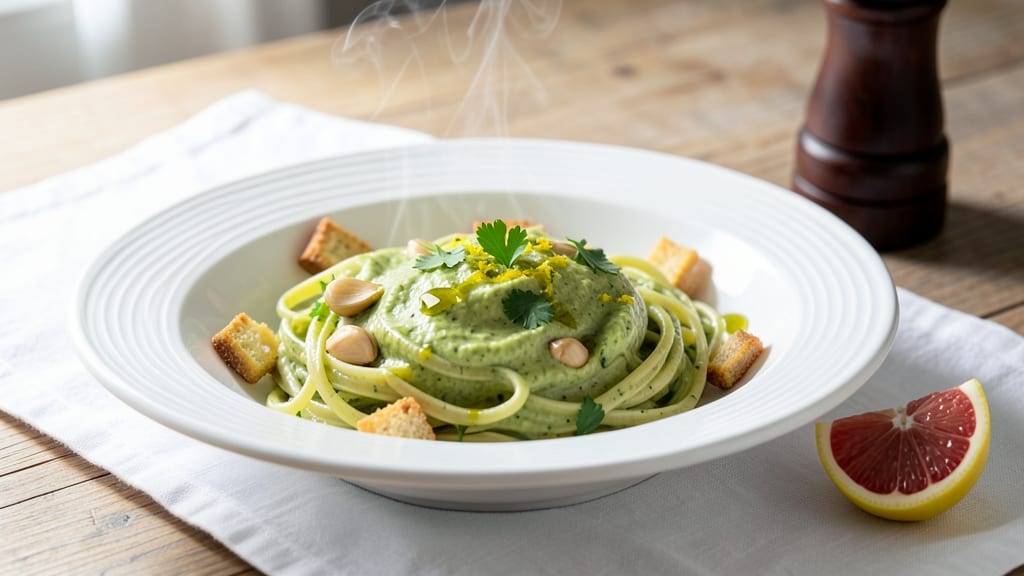
This avocado cream pasta sauce transforms ordinary pasta into a luxurious, ultra-smooth experience with just 15 minutes of prep. The secret lies in blending ripe avocado with tangy lemon, fresh herbs, and a touch of dairy (or plant-based alternative) for a velvety texture that clings perfectly to every noodle.
I developed this recipe after craving a lighter, fresher alternative to heavy cream sauces—one that delivers restaurant-quality richness without the guilt.
The magic happens in the blending process, where avocado’s natural fats create a silky base while garlic, parsley, and a hint of salt elevate the flavor profile. Unlike traditional cream sauces, this version stays fresh-tasting and doesn’t separate, making it ideal for both quick weeknight meals and ahead-of-time preparation.
The sauce works beautifully with any pasta shape, from spaghetti to penne, and pairs effortlessly with grilled chicken, shrimp, or roasted vegetables.
What sets this sauce apart is its versatility—it’s creamy yet light, rich yet refreshing, and adaptable to dietary preferences. A splash of lemon juice keeps the color vibrant and prevents browning, while a pinch of red pepper flakes adds optional heat for those who prefer a spicy kick.
The best part? It’s ready in under 15 minutes, with no cooking required beyond blending.
Store leftovers in an airtight container in the refrigerator for up to 3 days, or freeze for longer shelf life. For a vegan version, simply swap the dairy for unsweetened almond milk or coconut cream.
Whether you’re serving a casual dinner or prepping for meal prep, this sauce delivers restaurant-quality results with minimal effort.
Ingredients for avocado cream pasta sauce
Transform fresh avocado into a velvety, restaurant-quality sauce with these carefully balanced ingredients.
| Ingredient | Amount | Notes |
|---|---|---|
| Ripe Avocados 🥑 | 2 whole | Pitted, flesh scooped |
| Unsweetened Almond Milk 🥛 | ½ cup | Cold for creaminess |
| Fresh Lemon Juice 🍋 | 2 tbsp | Freshly squeezed |
| Fresh Flat-Leaf Parsley 🌿 | ½ cup | Stems removed, loosely packed |
| Garlic Cloves 🧄 | 2 cloves | Peeled, lightly crushed |
| Extra-Virgin Olive Oil 🫒 | ¼ cup | High-quality, fruity |
| Vegetable Broth 💧 | ¼ cup | Low-sodium preferred |
| Red Pepper Flakes 🌶️ | ½ tsp | Adjust for heat preference |
| Diamond Crystal Kosher Salt 🧂 | ½ tsp | Fine grain preferred |
| Freshly Ground Black Pepper 🌶️ | ¼ tsp | Freshly cracked preferred |
The avocados are the foundation—choose ripe ones with no bruising, as they yield the smoothest texture. Whole Foods or local markets often carry avocados at peak ripeness, identifiable by their slight give when gently pressed. For the almond milk, unsweetened brands like Silk or Blue Diamond work best to avoid altering the sauce's delicate flavor profile. Fresh herbs are non-negotiable here; Trader Joe's or Whole Foods carry excellent parsley that stays vibrant longer. The garlic should be freshly peeled and lightly crushed to release its oils without becoming bitter, while the olive oil should be extra-virgin with a fruity aroma—avoid the cheap, heavily filtered varieties that lack depth.
No almond milk? Coconut milk or unsweetened cashew milk work equally well, though coconut adds a subtle sweetness. Short on parsley? Fresh cilantro or basil can substitute at the same quantity, though parsley's bright, clean flavor is ideal. The vegetable broth can be swapped for white wine or additional almond milk if you prefer a lighter sauce. For heat, crushed cayenne pepper at half the amount delivers more intensity than flakes. If using pre-minced garlic, reduce to 1 clove—freshly crushed garlic has more surface area for flavor infusion. The lemon juice is critical for brightness; bottled lemon juice works in a pinch, but fresh is always superior for acidity and vibrancy.
This sauce thrives on freshness but keeps beautifully in the fridge for 3 days when stored in an airtight container with a thin layer of olive oil on top to prevent browning. For longer storage, freeze in ice cube trays—thawed portions blend seamlessly back into the sauce. The sauce pairs exceptionally with any pasta shape, though its ultra-smooth texture clings best to linguine or fettuccine. For meal prep, divide into portion-sized containers—reheat gently to preserve its velvety consistency. The sauce's versatility extends beyond pasta; it elevates grilled vegetables, roasted chicken, or even as a dip for crusty bread.
Why You'll Love This Recipe
- I swear by this trick: just mash the avocado and almond milk with a fork right in the saucepan. No pulsing, no straining—just smooth, creamy magic in minutes. (Yes, even on a Tuesday night when you forgot to buy a food processor.)
- No Blender Needed: I swear by this trick: just mash the avocado and almond milk with a fork right in the saucepan. No pulsing, no straining—just smooth, creamy magic in minutes. (Yes, even on a Tuesday night when you forgot to buy a food processor.)
- Bright & Creamy Balance: That lemon juice isn’t just for flavor—it cuts through the richness so every bite feels fresh. The parsley adds a bright finish, while the garlic? Oh, it’s the star that makes this taste like a restaurant dish, not a lazy weeknight hack.
- Leftover Hero: This sauce actually improves the next day. The flavors meld beautifully, and it reheats like a dream—no graininess, no separation. I’ve packed it in lunches for three days straight, and no one’s complained (yet).
Step-by-step instructions for avocado cream pasta sauce
Here's the method for creating a velvety avocado sauce that clings beautifully to pasta.
Blend Avocado and Liquids for the Base
Cut the 2 whole ripe avocados in half, remove the pits, and scoop the flesh into a food processor. Add the 0.5 cup unsweetened almond milk, 2 tablespoons fresh lemon juice, and 0.25 cup extra-virgin olive oil. Pulse until completely smooth—you should see no visible avocado chunks. The mixture will be thick and creamy, with a vibrant green hue.
This initial blend forms the foundation of your sauce. The cold almond milk prevents the avocado from oxidizing, while the lemon juice brightens the flavor and balances the richness. I use a high-quality olive oil here because its fruity notes complement the avocado beautifully. Process for about 30 seconds to ensure everything is fully emulsified.
Incorporate Aromatics and Broth
Add the 2 peeled garlic cloves, 0.25 cup vegetable broth, 0.5 teaspoon red pepper flakes, 0.5 teaspoon diamond crystal kosher salt, and 0.25 teaspoon freshly ground black pepper to the food processor. Process again until fully combined, scraping down the sides as needed. The sauce should now be perfectly smooth with a slightly thicker consistency.
This is where the sauce develops depth. The garlic infuses subtle sweetness, the broth adds body, and the pepper flakes introduce a subtle heat that enhances the overall flavor profile. I like to process this mixture for about 20 seconds to ensure even distribution of all ingredients without overworking the mixture.
Blend in Fresh Parsley for Herb Infusion
Add the 0.5 cup fresh flat-leaf parsley and process for an additional 15-20 seconds until the parsley is finely incorporated. The sauce should now have a vibrant green color with a fresh, herby aroma. Taste and adjust seasoning if needed—you may want to add a pinch more salt or pepper to taste.
The parsley contributes a bright, fresh element that cuts through the richness of the avocado. This step ensures the sauce has a well-rounded flavor profile with a touch of freshness. The parsley also adds visual appeal, making the sauce look as good as it tastes. Don't over-blend at this stage—just enough to incorporate the herbs evenly.
Simmer and Finish the Sauce
Transfer the sauce to a small saucepan and place it over medium-low heat. Stir in an additional 1-2 tablespoons of vegetable broth if the sauce appears too thick. Simmer gently for 3-5 minutes, stirring occasionally, until the sauce reaches your desired consistency—it should coat the back of a spoon but remain smooth.
This gentle heating step ensures the sauce is warm and ready to coat your pasta perfectly. The additional broth helps achieve the ideal texture, balancing creaminess with a light, velvety consistency. Keep a close eye on the sauce as it heats to prevent it from separating or becoming too thin. If it starts to curdle, remove it from heat immediately and stir in a splash of cold almond milk to stabilize it.
Toss with Cooked Pasta
Cook your pasta according to package instructions until al dente, reserving 1 cup of pasta water. Drain the pasta and immediately toss it with the avocado cream sauce in a large bowl. If the sauce seems too thick, add reserved pasta water 1 tablespoon at a time until it reaches a silky, clinging consistency.
The reserved pasta water is essential here—it helps the sauce adhere to the pasta strands while maintaining its creamy texture. Tossing the pasta immediately after cooking ensures it absorbs the sauce evenly and stays hot. The result should be a perfectly coated pasta dish with a rich, velvety sauce that's neither too heavy nor too thin. Serve immediately for the best texture and flavor.
Pro Tips For Making Avocado Cream Pasta Sauce
- Blend in Stages: Don’t dump all ingredients into the blender at once—start with the avocados, almond milk, and garlic first. Then add lemon juice and parsley in small bursts while tasting, so you don’t end up with a sauce that’s too tangy or watered down. I learned this after making a batch that tasted like a lemonade smoothie instead of a creamy sauce.
- Salt the Almond Milk: Add a pinch of salt to the almond milk before blending—it balances the natural bitterness and makes the sauce taste richer. I used to skip this, and the flavor always felt flat, like something was missing.
- Reserve Some Parsley: Chop half the parsley finely for blending, but keep the rest whole for garnish. The fresh, bright leaves on top make the dish look vibrant and add a texture contrast that’s missing if everything’s pureed.
- Toast the Garlic First: Lightly toast the minced garlic in a dry pan for 30 seconds until fragrant—this deepens its flavor without burning. Cold garlic just tastes like a milder version of itself, and the sauce won’t have that warm, nutty depth. (Yes, even if you’re impatient like me.)
Wine and beer pairings for avocado cream pasta sauce
White Wine Pairings
For this ultra-smooth avocado sauce, I reach for Italian Pinot Grigio—its crisp acidity and citrus notes mirror the lemon in the sauce while balancing the avocado's richness. A chilled glass from Alto Adige or Veneto keeps the palate refreshed between bites.
The light body won't overpower the delicate herbaceous flavors, making it the perfect match for this vegetarian dish. 🍷
Sparkling Wine Options
If you prefer something bubbly, Prosecco from Veneto adds a festive touch while cleansing the palate between forkfuls. The slight sweetness in many Proseccos complements the avocado's natural creaminess. For a drier option, Italian sparkling wine like Franciacorta provides the same refreshing lift without cloying sweetness.
Crisp Beer Pairings
A Belgian witbier like Hoegaarden or Stella Artois works surprisingly well—their citrusy notes and subtle spice echo the parsley and red pepper flakes in the sauce. For a local favorite, Mexican lager with its clean finish (like Modelo Especial) provides a neutral backdrop that lets the sauce shine.
Avoid heavy stouts or IPAs that could overwhelm the delicate flavors. 🍺
Red Wine for Heartier Additions
If you're serving this sauce with grilled chicken or shrimp, a light-bodied red like Chianti or Beaujolais adds depth without competing. The acidity in these wines cuts through the avocado's richness while complementing any garlic or herb notes.
I particularly love Chianti Classico for its bright cherry flavors that pair beautifully with the parsley.
Non-Alcoholic Options
For a refreshing non-alcoholic match, try sparkling water with lemon slices—the bubbles mimic wine's cleansing effect while the citrus enhances the sauce's brightness. Kombucha with ginger adds a tangy complexity that works well with the spicy kick from red pepper flakes.
For something richer, coconut water provides hydration without overpowering the dish's flavors.
Nutrition facts
Frequently asked questions
Can I make this sauce without a food processor?
Yes! Use a high-speed blender or even a mortar and pestle for a more rustic texture. For the blender method, cut avocados into small chunks and blend with liquids until completely smooth. If using a mortar, mash the avocado first, then gradually incorporate other ingredients while stirring. The texture will be slightly chunkier but still delicious.
Why does my avocado sauce turn brown or separate?
Avocado oxidizes quickly when exposed to air, causing browning. Always add lemon juice immediately and keep the sauce covered until use. For separation, stir in 1 tablespoon cold almond milk and blend again. The sauce should re-emulsify. To prevent browning during storage, press plastic wrap directly onto the sauce surface before sealing the container.
How do I make this vegan?
Swap the almond milk for unsweetened coconut milk or cashew cream (blend soaked cashews with water). Use vegetable broth instead of any dairy-based broths. The texture remains creamy while keeping the recipe fully plant-based. For extra richness, add 1 tablespoon vegan mayo to the blend.
Can I add cooked proteins to this sauce?
This sauce pairs beautifully with grilled shrimp, chicken, or tofu. Simply toss cooked proteins with the sauce and pasta at the end. For shrimp, add them to the sauce 2-3 minutes before serving to warm through without overcooking. The sauce's creamy texture complements proteins perfectly while keeping them moist.
How long will this sauce keep in the fridge?
The sauce stays fresh in an airtight container for up to 3 days in the fridge. To extend freshness, press plastic wrap directly onto the sauce surface before sealing. For longer storage, freeze portions in ice cube trays. Thaw overnight in the fridge and stir well before using. The texture may slightly thicken when frozen but blends back smoothly.